
Start here
The story, in brief
Manaoag’s own basilica introduces its founding account as folk tradition. A farmer reportedly saw a woman in a tree and heard a request for a church. The image now at the center of devotion is Our Lady of the Rosary, affectionately called Apo Baket. The story’s power lies in being called toward prayer and community; its historical status should remain as candid as the shrine’s own introduction. [SRC-01]
The origin is labeled tradition
The basilica does not present an inspected contemporary apparition deposition. [SRC-01]
The institution has a detailed history
Augustinian and Dominican ministry, rebuilding, and modern custody are documented by the shrine. [SRC-01; SRC-02]
Coronation concerns the image
The 1926 act must not be relabeled an apparition-authentication decree. [SRC-01]
Explore the chapters
The farmer and the call
The received story describes a woman holding a child and a rosary, asking that a church be built where she appeared. The basilica connects the local name with the idea of a lady who calls. This is how the community explains the devotion’s origin, rather than an independently established account of a witnessed supernatural event. [SRC-01]
The religious theme is intelligible without embellishment. The child and rosary place Mary’s invitation within attention to Christ and a shared practice of prayer. The story directs people toward a church, not merely toward the farmer’s exceptional experience. [SRC-01]
From a mission chapel to Dominican care
The basilica’s history traces an early chapel served by Augustinians and its transfer to Dominican ministry in the seventeenth century. It names Juan de San Jacinto and later resident priest Tomás Jiménez among the early figures. This institutional history provides a firmer chronological structure than the unnamed farmer’s origin tradition. [SRC-01]
A shrine develops through people’s work: clergy, local residents, donors, and successive communities. Following that history explains how the devotion endured even where the earliest apparition claim lacks a complete documentary file. [SRC-01; SRC-02]
The image and the building have their own histories
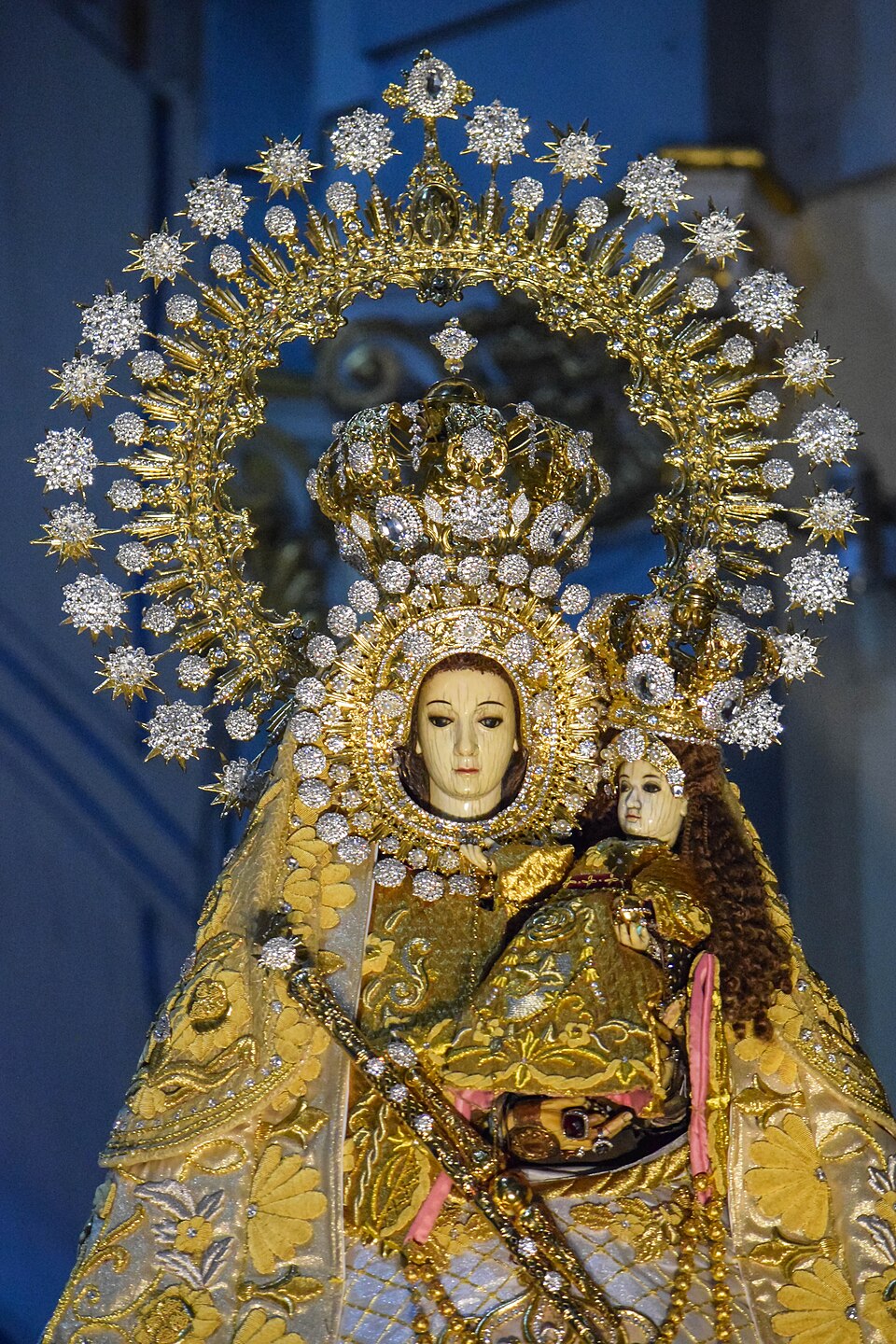
The shrine identifies the devotional image as ivory and places it at the main altar. It describes major church building under the sponsorship of Gaspar de Gamboa and Agata Yangta, later damage, rebuilding, and an altar made by the Tampinco studio. These are parts of a material and artistic history. [SRC-01]
A later building or altar can carry an older tradition without being a surviving witness to its beginning. The image’s identity, the church’s construction, and the apparition’s occurrence are separate historical questions. [SRC-01; SRC-02]
What the murals tell a visitor
The basilica describes murals of the founding apparition, reported healings, and protection from danger. They show which stories the community chose to remember. They are devotional representations, not contemporary medical or military records establishing each event. [SRC-01]
A visitor can appreciate them as expressions of gratitude while asking what lies behind a particular claim. A reported restoration of life, for example, would require evidence about the person’s actual condition before and afterward, not only a painted narrative. [SRC-01]
The 1926 canonical coronation
The shrine dates the canonical coronation to 21 April 1926 and names the ecclesiastical participants in the request and ceremony. That establishes a formal honor to the devotional image and recognition of its place in Catholic life. [SRC-01]
It is not the same kind of act as a decree judging a particular apparition supernatural. Keeping the distinction clear gives the actual coronation its due significance without borrowing an authority it does not demonstrate. [SRC-01; SRC-02]
The basilica’s modern standing
The institutional account distinguishes the 2014 grant of minor-basilica status from the public proclamation in 2015. These dates concern the shrine’s standing. Its Catholic identity and Dominican custodianship are well established in the published institutional history. [SRC-01; SRC-02]
Neither title requires converting the folk account into a contemporary eyewitness document. The living practice of Mass, Rosary, and pilgrimage can be described positively while the origin story retains its traditional status. [SRC-01; SRC-02]
What remains worth investigating
The earliest records of the origin account, the image’s provenance, and the exact coronation instrument would sharpen the history. Individual miracle stories need separate source trails. The fuller picture is a real devotional community with an enduring invitation to prayer, alongside an origin claim whose cause remains unresolved. [SRC-01; SRC-02]
The accompanying image shows the actual devotional image associated with Manaoag. It gives a reader the object of present veneration to consider, while the origin story remains a separate historical claim. [MEDIA-01]
Catholic reflection & discussion
Consider the message as well as the event
Explore the devotional meaning described in this article alongside the history of the report and the Church's response. Make space for both a personal response and questions about the record.
These editorial prompts invite reflection on the article. They are distinct from Church teaching and the evidence findings.
Pause and reflect
- Which part of the reported message or its reception would you like to understand more deeply?
- What exactly does the Church's recorded decision cover, and which questions does it leave open?
- What would it look like to approach this story with both a receptive heart and care for the truth?
Discuss with family or a group
Choose questions suited to your readers' ages and experiences. Anyone can pass or keep a response private.
- Identify who reported the experience, who investigated it, and who made a Church decision. Why does each person's role matter?
- How could you speak respectfully with someone whose response to this story differs from your own?
Questions people ask
Open any question for a fuller answer and its sources.
Does the basilica call the origin account documented fact?
It introduces it as folk tradition. That qualification should remain visible in modern retellings. [SRC-01]
What is Apo Baket?
The basilica presents it as an affectionate local name for the venerated Lady associated with Manaoag. [SRC-01]
Was the image canonically crowned?
The shrine records its canonical coronation in 1926. That honor concerns the image and devotion. [SRC-01]
Do the murals prove the depicted miracles?
No. They preserve devotional memory. The underlying healing or protection claims require their own historical evidence. [SRC-01]
What the evidence can establish
Evidence verdict: unresolved
What does the basilica document about the origin story, image, and canonical coronation, and was the apparition itself formally approved?
The official basilica labels the origin account as folk tradition and documents the image's canonical coronation. The coronation recognizes the devotional image, not the historical truth of an apparition.
Church or institutional status
Image canonically crowned; apparition remains folk tradition
- Authority
- Catholic Church / Minor Basilica of Manaoag
- Scope of the finding
- The formal canonical coronation of the devotional image.
- Limits of the finding
- The cited source does not document a formal finding that the apparition occurred.
- Official sources
- [SRC-01]
Sources and notes
Back to the overviewSource labels describe a document's type and role, not the strength of a claim. Where provided, notes explain its use, access limits, and outstanding checks.
Describes the apparition story as folk tradition and documents the image and 1926 canonical coronation. What it does not establish: Does not establish a formal apparition decree.
Documents current shrine/basilica custody and institutional history. What it does not establish: Basilica status does not authenticate the apparition.
Documents the image source and CC BY-SA 4.0 rights record. What it does not establish: Exact devotional image; not evidence of the origin story.
Corrections and updates
Expanded this file with a sourced narrative, 7 chapters and 4 answers to common questions. The existing evidence verdict label and institutional status are retained. Independent human review remains pending.