
Start here
The question, explored through Catholic faith
Yes: named people have reported seeing the Virgin Mary, and some reports became the focus of major shrines and formal Church decisions. A harder question follows immediately: what does the evidence establish about what those people experienced?
Lourdes illustrates the distinction. The sanctuary publishes Bishop Laurence’s 1862 recognition of Bernadette Soubirous’s reported apparitions. That is a documented historical judgment with religious significance. Reading the judgment establishes what the bishop decided; deciding what caused the reported experience is a further question. [MA-03]
The Catholic account is neither that every vision must be believed nor that God could never act beyond ordinary expectation. It places alleged apparitions within a faith already centered on Christ, then asks about the particular testimony, message, effects, and competent Church decision. [MA-01]
A report and its cause differ
Evidence that someone reported seeing Mary does not automatically establish who or what caused the experience.
The exact decision matters
A historical recognition and a modern permission for devotion must be read according to their own wording. [MA-03; MA-06]
Apparitions do not replace the Gospel
Catholic teaching gives private revelation a supporting role; it cannot revise the definitive revelation in Christ. [MA-01]
Explore the chapters
What does someone mean by seeing Mary?
A claim might describe a visible figure, an interior vision, a voice, a dream, or a sense of presence. These are different descriptions of experience. Before explaining a cause, an investigation needs the claimant’s own account: what was perceived, under what circumstances, and how the person distinguished perception from interpretation.
The Vatican’s theological commentary on Fátima distinguishes ordinary external perception, interior perception, and spiritual vision. It explains that an interior vision involves the recipient’s faculties and symbolic forms. Within this Catholic account, a visionary experience should not automatically be pictured as a camera recording an ordinary object that every nearby observer could see. [MA-05]
That distinction helps avoid a false test. A nearby person’s failure to see the figure does not necessarily contradict a claim of an interior vision. It also does not confirm that vision’s divine cause. The question must be matched to the actual kind of experience being alleged.
Respectful attention to a witness and scrutiny of the explanation can coexist. A witness might be sincere while uncertain about what happened. Treating every unresolved report as dishonesty confuses sincerity with accuracy just as much as treating sincerity as proof does.
Why would Mary appear, according to Catholic belief?
Catholic teaching places Mary within the life of Christ and the communion of the Church. Lumen Gentium presents her maternal role as entirely dependent on Christ’s mediation. Marian devotion should deepen attention to Christ and should avoid exaggerations that misrepresent her place in the faith. [MA-07]
The DDF’s 2025 Mater Populi Fidelis explains Marian intercession as requesting gifts from God and helping people respond to divine grace. It insists that Christ’s redemptive work needs no supplement. In that framework, a claimed Marian intervention would have a purpose of directing people toward Christ, not establishing Mary as a second savior or independent source of revelation. [MA-08]
This provides a theological possibility and a standard of interpretation. It does not identify a particular report as authentic. The reasoning is conditional: if a Marian experience is understood in Catholic terms, its meaning must fit this relationship to Christ.
The practical implication is easy to see. A supposed message that makes access to God depend on loyalty to one visionary creates a different relationship from the one these teachings describe. Its religious vocabulary cannot substitute for examining the authority it claims.
What is private revelation, and why does the distinction matter?
The Catechism teaches that public revelation reaches its fullness in Jesus Christ. Private revelations, even when recognized by the Church, do not add a missing chapter to the deposit of faith or correct Christ’s revelation. Their proposed role is to help believers live that revelation in particular historical circumstances. [MA-01]
Private in this usage does not mean secret, insignificant, or known to only one person. An account can attract enormous public attention while remaining private revelation in the theological sense. Its status concerns the kind of authority it can have, not the size of its audience.
Benedict XVI’s Verbum Domini identifies orientation toward Christ as the criterion for evaluating private revelation and describes it as a help whose use is not obligatory. This leaves a Catholic free to be cautious about a particular apparition without rejecting the central faith of the Church. [MA-09]
That freedom should shape the conversation. A person does not acquire the right to accuse other Catholics of disobedience merely because they remain unconvinced by a favored apparition story. The actual Church decision and its scope matter more than a promoter’s enthusiasm.
What does the Lourdes record establish?
According to the sanctuary’s published account, Bishop Laurence established a commission in 1858 and issued his judgment on 18 January 1862. He considered Bernadette’s testimony and reported cures, recognized the apparitions, and authorized public devotion at Lourdes. His decree specifically concerned the Lourdes events; it was not a general authentication of every future report involving Mary. [MA-03]
The Lourdes sanctuary describes Bernadette’s reports of a lady at the Massabielle grotto in 1858, including a request for prayer and conversion. Its account dates the lady’s identification as the Immaculate Conception to 25 March, connecting the wording with the Marian dogma proclaimed in 1854. Those are reported features of the event, presented within the sanctuary’s interpretation. [MA-11]
The historical record gives a reader concrete questions to examine: how testimony was collected, what the commission considered, how objections were handled, and what the final decision actually said. The source is stronger than an unattributed internet claim because a named authority and an identifiable text can be examined.
But the levels of inference still differ. A document can establish that a decision occurred and provide reasons for it. Evaluating whether those reasons establish the cause of the experience requires assessing the underlying evidence. The distinction allows the religious significance of Lourdes to be explained without presenting a bishop’s decree as a laboratory result.
A separate claim of a physical healing requires its own medical record. The fact that a healing was reported at an apparition site does not make every later healing report part of the original apparition evidence.
Why does Fátima require more than a dramatic retelling?
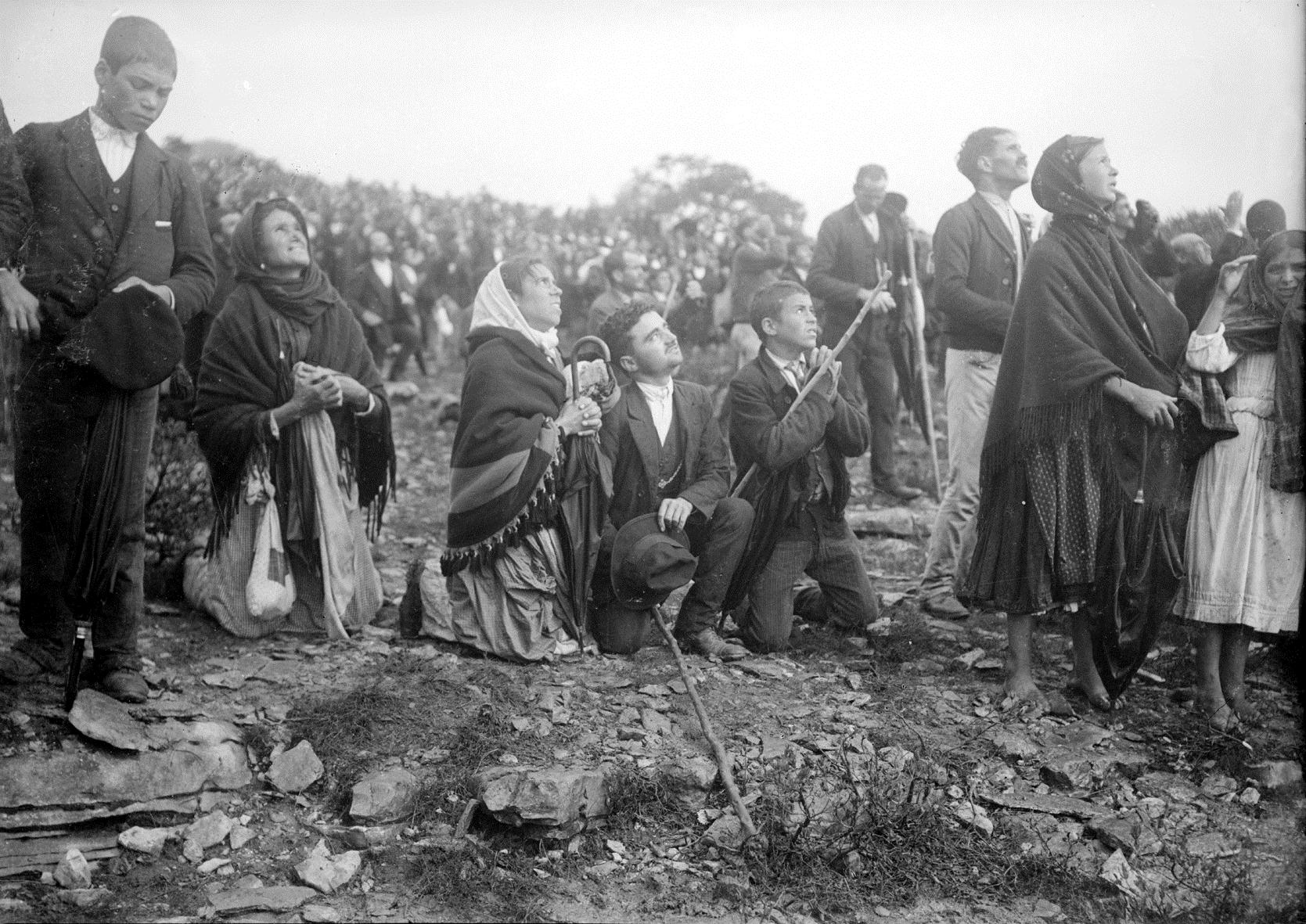
The Vatican’s account concerns three children—Lúcia, Francisco, and Jacinta—who reported visions at Fátima in 1917. It interprets the message as a call to prayer, conversion, and penance, rather than a license to decode every current event. [MA-05]
The Sanctuary of Fátima publishes a critical documentation series, including a selection covering 1917–1930. That offers a route into dated records and testimony rather than relying solely on a compressed modern story. A document’s date, author, purpose, and proximity to the reported event affect what it can establish. [MA-04]
The Vatican’s 2000 publication of the Fátima message includes both texts and theological commentary. It treats the vision’s language symbolically and rejects a reading in which it functions as a mechanically fixed film of future events. Prayer and conversion remain meaningful human responses; the commentary does not portray history as an unavoidable script decoded by the visionary. [MA-05]
This matters when a social post attaches a current event to an old prediction. Was that interpretation stated before the event? Does the original text contain the claimed detail? Have other plausible readings been ignored? A flexible text fitted to an event afterward cannot simply be counted as a precise advance prediction.
The archival and theological questions should therefore be asked together. What did the source actually say, and what kind of claim did its interpreter think it was making? Fátima is diminished, rather than clarified, when its documents are replaced with whatever a striking headline needs.
What changed in the Church’s 2024 discernment process?
The 2024 DDF norms establish six possible conclusions, generally without declaring a phenomenon supernatural. The local bishop investigates in dialogue with the Dicastery; the DDF approves the proposed determination. A nihil obstat permits prudent devotional adherence while leaving supernatural origin unestablished. The pope can authorize an exceptional procedure for a declaration about origin. [MA-02]
The consequence for a reader is substantial. Church-approved cannot safely serve as a single universal label. It may conceal permission to visit a site, approval of a devotion, a judgment on messages, or a historically different determination about an apparition. These propositions are not interchangeable.
A useful way to read a notice is to identify its noun and its verb. What exactly is being authorized, discouraged, restricted, or judged? Who is acting, and on what date? Is the action about the spiritual experience, the visionary, a publication, or the supernatural character of an event?
The historical context matters too. A decision issued in the nineteenth century should not be rewritten as though its author used a category introduced in 2024. Current norms help interpret current decisions; older acts should be quoted or summarized on their own terms.
Why is Medjugorje a useful example of careful wording?
The DDF’s September 2024 note on Medjugorje recognizes positive spiritual fruits and supports a nihil obstat for the spiritual experience. It expressly says this does not declare the alleged supernatural events authentic or the messages directly supernatural. It also requires caution about particular messages and distinguishes pastoral value from a judgment on alleged visionaries. [MA-06]
The difference can be expressed plainly: a pilgrimage can help someone return to prayer, confession, or community even when the origin of a reported apparition has not been established. Those effects matter within the Church’s pastoral judgment. They do not logically settle every historical or causal claim made about the site.
The note directs pilgrims toward an encounter with Christ through the Church’s ordinary spiritual life rather than making a meeting with alleged visionaries the purpose of the journey. That guidance illustrates the broader Catholic ordering of priorities. [MA-06]
For readers, the discipline is to preserve the qualifier. Replacing a positive assessment of a spiritual experience with a claim that the Vatican scientifically proved Mary appeared would tell a materially different story from the official document.
What would make a report worth taking seriously?
Begin with the earliest obtainable accounts and separate what witnesses independently observed from what they learned later. A reported figure, an unusual light, and a later interpretation are three claims even if a popular account presents them as one. Evidence should be mapped to the claim it actually supports.
Next ask about alternatives without choosing one merely because it is familiar. Mistaken identification, retrospective elaboration, a deliberate fabrication, and an experience with no settled explanation require different evidence. Proposing an ordinary cause is a hypothesis; showing that it fits the specific event is further work.
First John instructs believers to test claims to spiritual authority. Lumen Gentium warns against credulity in Marian devotion. Within Catholicism, careful scrutiny therefore need not be an enemy of faith. It can protect both the public and the meaning of the devotion from claims that exceed the record. [MA-10; MA-07]
A proportionate conclusion may be that an experience was reported, a devotion has value for believers, and its cause remains unresolved. That is a meaningful result when it accurately identifies what has been learned and what has not.
Catholic reflection & discussion
Make room for the question
Bring your own question to this explanation. Take time with the parts that offer understanding and with the parts that still leave you wondering.
These editorial prompts invite reflection on the article. They are distinct from Church teaching and the evidence findings.
Pause and reflect
- Which part of the Catholic explanation helps you understand the question more deeply?
- What objection or uncertainty would you want to discuss with someone you trust?
- What would be a useful next step: reading a source, asking a question, or taking time to reflect?
Discuss with family or a group
Choose questions suited to your readers' ages and experiences. Anyone can pass or keep a response private.
- Invite each person to name one idea they understood and one question they still have. Can everyone finish before the discussion moves to answers?
- Choose one claim together. Is it Church teaching, an interpretation, or a historical or scientific finding? Where does the article explain the difference?
Questions people ask
Open any question for a fuller answer and its sources.
Must Catholics believe every recognized apparition?
No. Private revelation does not command the same assent as the faith centered on Christ. Official teaching describes it as a possible aid to living that faith, not a required addition that every Catholic must adopt. [MA-09]
Does permission for pilgrimage mean an apparition is proven?
No. Medjugorje’s documented 2024 assessment illustrates how positive pastoral permission can coexist with an explicit refusal to declare alleged events authentic. Read the decision’s exact object and qualifications. [MA-06]
Does a large crowd settle what happened?
A crowd may strongly establish that an event drew attention. The evidential question is what individual witnesses independently perceived and recorded. A large number cannot by itself turn different observations into an identical experience or establish a divine cause.
Can a message override Catholic doctrine or ordinary obligations?
An alleged revelation cannot correct or supersede the revelation in Christ. A demand for secrecy, money, or obedience should be assessed on its own merits and authority; attaching Mary’s name does not provide an automatic exemption from scrutiny. [MA-01]
What can a reader conclude with confidence?
Primary records can establish that particular reports and institutional decisions exist. Catholic sources explain why the Church allows discernment and devotion while reserving the central place of Christ. Whether Mary caused a particular reported experience requires an assessment of that case; there is no single verdict that authenticates every apparition.
What the evidence can establish
Finding on the stated question: unresolved
Do the records establish that Marian-sighting reports in general were supernatural encounters with Mary?
The sources establish specific reports, theological interpretations, and scoped Church decisions. Those facts do not provide a general demonstration of the cause of private experiences, and a modern pastoral permission expressly leaves that causal question open.
This finding addresses the precise question above. It is not a rating of Catholic faith or of the reader's belief.
Catholic teaching and scope
Each apparition or spiritual experience has its own scoped Church status
- Authority
- Dicastery for the Doctrine of the Faith and competent local bishops
- Scope of the teaching
- The article distinguishes historical recognition at Lourdes from the documented 2024 Medjugorje assessment.
- Limits of this explanation
- No status is transferred to other reports, other messages, or every claim associated with a shrine.
Sources and notes
Back to the explanationSource labels describe a document's type and role, not the strength of a claim. Where provided, notes explain its use, access limits, and outstanding checks.
- MA-01Catechism 65–67 — Christ, Mediator and Fullness of Revelation (opens in a new tab)Official source
Private revelations do not complete or correct the revelation given in Christ.
- MA-02DDF — Norms for Alleged Supernatural Phenomena (17 May 2024) (opens in a new tab)Official source
Official discernment framework; permission for devotion is distinct from certainty of supernatural origin.
- MA-03Sanctuary of Lourdes — Recognition of the Lourdes Apparitions (opens in a new tab)Official source
Official account and excerpt of Bishop Laurence’s 18 January 1862 decision.
- MA-04Sanctuary of Fátima — Critical Documentation, Selected Documents 1917–1930 (opens in a new tab)Official source
A custodial primary-document publication; individual documents must be examined for individual claims.
Published texts and theological commentary distinguish symbolic vision from a photographic prediction.
- MA-06DDF — The Queen of Peace: Note on Medjugorje (19 September 2024), 38–41 (opens in a new tab)Official source
The documented positive pastoral assessment expressly does not authenticate alleged apparitions.
Marian devotion is related to Christ and should avoid both exaggeration and credulity.
Explains Mary’s subordinate cooperation and intercession within Christ’s unique saving work.
Private revelation is evaluated by its orientation to Christ and is not obligatory for faith.
A scriptural call to test claims to spiritual authority rather than accept them indiscriminately.
Custodial narrative of Bernadette’s reports, prayer and conversion, and the Immaculate Conception wording.
Corrections and updates
Expanded the brief overview into a source-mapped explanation with 8 substantive sections and 5 common questions. Clarified the Catholic teaching, the evidence and objections, and the exact question assessed by the verdict. Independent human review remains pending.