
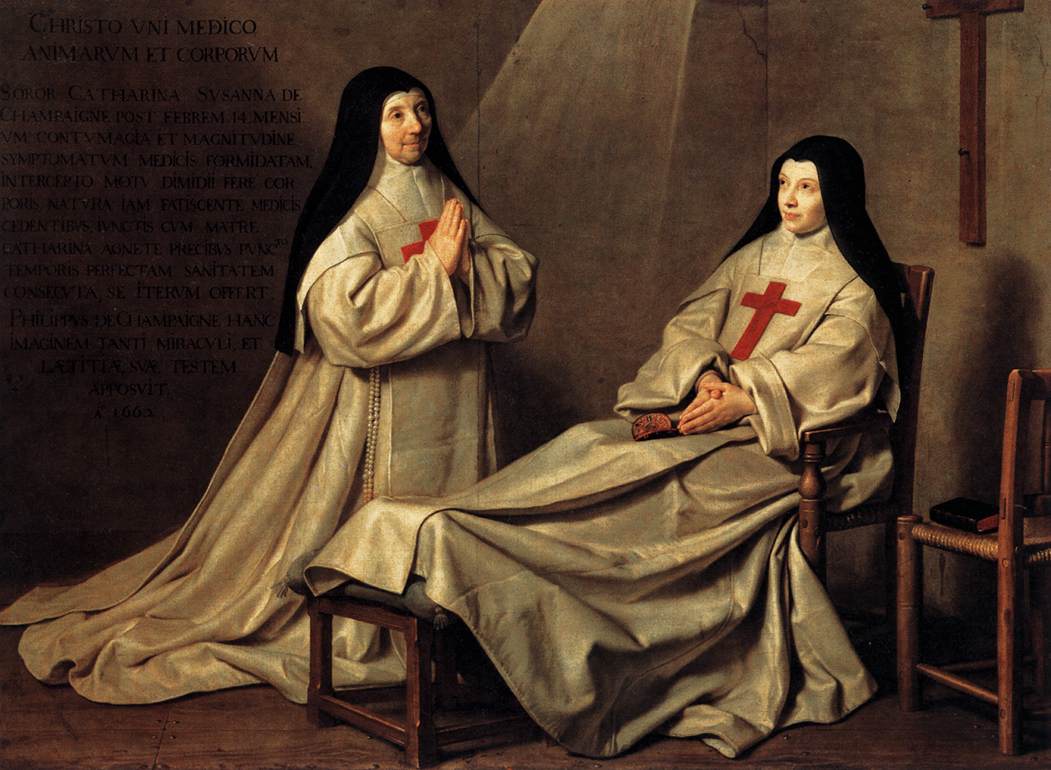
Start here
The question, explored through Catholic faith
For someone awaiting a diagnosis or sitting beside a hospital bed, this is rarely an abstract question. It can mean: Can God help? Is it reasonable to ask? Does prayer make a measurable difference? And what does it mean when a person prayed for with great love still dies?
Catholics believe God can truly heal. Ordinary medicine and recovery can be understood within providence, while healing prayer asks for divine help rather than merely a change in attitude. Catholic teaching joins that request to care of the sick and does not promise every person a cure. [PH-12; PH-01]
These distinctions matter because a theological belief, a person’s account of recovery, and a clinical trial answer different questions. An honest explanation needs all three, with their limits made visible. No one should have to choose between being taken seriously as a believer and receiving careful medical attention.
Prayer can include a real request for recovery
Catholic petition expresses dependence and hope; it is more than a way of describing a desired feeling. [PH-02]
A cure is not a measure of someone’s worth
The Catechism acknowledges that fervent prayer does not always result in physical healing. [PH-04]
Medical care remains part of the response
Catholic teaching treats care for health as a responsibility. Prayer offers no reason to abandon necessary care. [PH-10]
Explore the chapters
What are Catholics asking for when they pray for healing?
Petition is a real part of Catholic prayer. The Catechism describes requests arising from human need, including the desire for forgiveness and the coming of God’s kingdom. Prayer places those needs within a relationship with God; it does not turn them into a demand that a desired outcome must follow. [PH-02]
Applied to illness, that means a person can ask plainly for recovery without pretending the illness is welcome. The request may coexist with fear, uncertainty, gratitude for treatment, and difficulty finding words. These are examples of what a person might bring to prayer, not conditions that must be achieved before prayer becomes legitimate.
The question of efficacy still matters. If “healing” silently changes meaning whenever a physical cure fails to occur, the original question has been evaded. A careful explanation distinguishes bodily recovery, emotional support, and spiritual reconciliation from the start. They can all matter to a person, but they are not interchangeable outcomes.
Why ask other people or saints to pray?
Intercession means asking on behalf of someone else. The Catechism relates Christian intercession to Christ’s intercession and to the communion of saints. Its orientation is toward another person’s good, including people outside a person’s immediate circle. It does not present prayer as competition for access to a reluctant God. [PH-03]
The practical distinction is between accompanying someone and taking control of the person’s experience. Asking whether prayer would be welcome is different from promising a cure, publicizing a diagnosis, or telling someone what an illness must mean. A sick person remains entitled to privacy and to decide what support is helpful.
Intercessory prayer is also a narrower research category than all religious activity. A trial assigning strangers to pray for patients addresses that specified practice. It cannot stand in for every form of personal prayer, a visit from a chaplain, sacramental participation, community support, or the entire Catholic account of providence.
Does Jesus’ healing ministry promise that every believer will recover?
Catholic teaching presents Jesus’ care of the sick as a sign of the kingdom and of salvation involving the whole person. It also states that Jesus did not cure everyone and that even intense prayer does not always obtain the healing requested. The ultimate horizon is victory over sin and death, rather than permanent immunity from illness during earthly life. [PH-04]
This blocks a particularly harmful inference: a person who remains ill cannot be ranked as less faithful merely from that outcome. It also prevents a successful recovery from becoming a boast about superior spirituality. The two people may have prayed with equal seriousness while receiving different medical outcomes.
The difficult question remains why one request appears answered while another does not. A theological distinction can prevent blame without removing grief. An explanation should acknowledge that remaining question directly, instead of treating the absence of a guaranteed cure as though it made the loss emotionally uncomplicated.
What does Anointing of the Sick offer?
The Catechism describes the sacrament’s effects in terms of strength, peace, courage, forgiveness in the relevant circumstances, and union with Christ. It includes bodily healing when conducive to the person’s salvation, while treating spiritual assistance as more fundamental than a guaranteed medical reversal. [PH-05]
This is why sacramental language should be translated carefully for a visitor. “Healing” in this setting may refer to reconciliation and the capacity to face illness, not a claim that a scan will necessarily become normal. That distinction should be explained before the sacrament is offered, rather than after someone’s expectations have been disappointed.
A person seeking the sacrament can speak with a priest about eligibility and circumstances. A priest’s role and a clinician’s role are different forms of service. Pastoral support can accompany diagnosis, treatment, or end-of-life care without being represented as an alternative diagnostic method.
What did the major STEP trial actually find?
Benson and colleagues’ 2006 STEP trial randomized 1,802 coronary-bypass patients at six U.S. hospitals. Among patients uncertain whether study prayer was being provided, 30-day complications occurred in 52% with assigned prayer and 51% without it; the difference was not statistically significant. In the group certain of receiving prayer, complications occurred in 59%, higher than among the uncertain recipients. Major events and 30-day mortality were similar across groups. [PH-06]
The result does not support a benefit for the tested primary outcome. The higher complication rate in the informed group does not establish why it occurred or show that every kind of prayer is harmful. [PH-06]
For a reader, the useful question is what changed between the groups and what was counted as an outcome. “Prayer was tested” is incomplete unless those details are supplied. A study of assigned prayer for surgical patients should not be repackaged as a test of every experience to which a person might give the name prayer.
Is one trial the whole scientific picture?
A 2009 Cochrane review considered ten randomized studies totaling 7,646 participants. It found no clear overall effect on outcomes including death and general clinical state, and described limitations and inconsistent individual results. Its search ended in June 2007, so it should not be presented as a current exhaustive survey of all subsequent research. [PH-07]
This dated review and STEP support a limited conclusion: these studies do not establish assigned intercessory prayer as an effective medical treatment. They do not establish that every possible prayer practice has been studied adequately. Claims that prayer reliably cures disease need affirmative clinical evidence; theological importance cannot supply a missing treatment effect. [PH-07]
It is also necessary to distinguish a patient feeling supported from a disease being reversed. Both may be worth studying, but the outcomes require different measurements. If someone reports less loneliness during illness, that is not a tumor measurement. If a tumor changes, that alone does not identify the cause. Precision protects meaningful experiences from being pressed into claims they cannot support.
How does Lourdes examine a reported cure?
The Lourdes process begins with a reported recovery and gathers the medical history. Review compares records before and after the event, seeks specialist assessment, and considers whether recovery is exceptional in light of existing knowledge. The sanctuary describes criteria including seriousness of illness and a complete, lasting, sudden cure. Medical review and referral for a bishop’s judgment are distinct stages. [SRC-02]
This asks a different question from a randomized trial. The case inquiry examines whether one reported recovery is well established and medically exceptional. A trial estimates whether an assigned intervention changes outcomes across comparable groups. A carefully documented individual case cannot provide the denominator needed to calculate how often a practice helps.
Likewise, a negative average trial result does not automatically explain every unusual recovery in a separate case file. The responsible response is to read the actual record. What was diagnosed? What treatment occurred? What changed, and when? How long was it followed? What can an outside reader inspect, rather than only hear summarized?
What if prayer appears unanswered?
The Catechism treats apparently unanswered petition as a serious difficulty. Its account of trust describes prayer as a relationship that forms the petitioner, while refusing to treat God as an instrument at the petitioner’s disposal. It does not provide observers with a key to the reason for each individual loss. [PH-08]
For someone supporting a bereaved family, “there must have been a reason” can close the conversation before their actual question is heard. A person can acknowledge not knowing why the death occurred while remaining available to help. Such accompaniment can matter even while the problem of suffering remains unresolved.
Nor should a person be pressured to report a spiritual benefit in order to make the experience acceptable. Some people find meaning gradually; others remain angry or bewildered. Explaining Catholic hope does not require inventing a hidden medical explanation or declaring that the loss was necessary for someone else’s improvement.
Can prayer and medical treatment belong together?
Catholic teaching calls life and bodily health gifts deserving reasonable care, with attention to the needs of others and the common good. The instruction on healing prayer also affirms the use of natural means to preserve and restore health. Religious hope therefore provides no general exemption from the work of caring for the sick. [PH-10; PH-01]
The U.S. National Center for Complementary and Integrative Health advises against using an unproven practice to replace or postpone conventional care. That is the relevant medical boundary here: a claim of spiritual significance is not evidence that a prescribed treatment has become unnecessary. Decisions about treatment changes belong in discussion with qualified health professionals. [PH-11]
Useful support can be concrete: transport, meals, help keeping track of appointments, or simply company when it is wanted. Prayer can accompany those actions. A public healing claim deserves particular caution if it asks a person to demonstrate faith by abandoning care, concealing symptoms, or accepting a promised result without medical confirmation.
How can a healing testimony be heard respectfully and examined seriously?
Start by distinguishing the person’s experience from the explanation assigned to it. “The pain stopped during prayer” reports a temporal sequence. “Prayer caused the underlying disease to disappear” is a stronger claim. A testimony may be sincere while the stronger inference remains unestablished. Asking for precision need not accuse the person of dishonesty.
Next identify the relevant records and the person’s consent to use them. A public story can omit important clinical details for legitimate privacy reasons. The appropriate response to that gap is limited confidence, not a demand that the person surrender privacy or an assumption that hidden records would prove the claim.
Finally, keep care of the person independent of the verdict. A reported recovery that turns out to have an ordinary explanation can still be welcome. A person who does not recover still deserves support. The Catholic discussion is at its most credible when its concern for the sufferer does not depend on producing a remarkable success story.
Catholic reflection & discussion
Bring hope without placing a burden on the sick
Consider this question with the person who is ill at the center. Make room for their hopes, their choices about care, and the feelings they may not find easy to express.
These editorial prompts invite reflection on the article. They are distinct from Church teaching and the evidence findings.
Pause and reflect
- What are you hoping for when you pray for healing?
- How would you support someone whose condition has not improved?
- Which distinction in the article helps you understand the relationship between prayer, medical evidence and care?
Discuss with family or a group
Choose questions suited to your readers' ages and experiences. Anyone can pass or keep a response private.
- Use a hypothetical example so nobody needs to disclose an illness. What forms of practical help could accompany a promise to pray?
- How could you respond to disappointment without suggesting that the person lacked faith?
Questions people ask
Open any question for a fuller answer and its sources.
Should someone stop treatment after feeling healed?
A feeling of improvement does not establish that treatment is no longer needed. Seek medical assessment and discuss any proposed change with the treating clinician. Unproven practices should not replace or delay conventional care. [PH-11]
Did STEP prove that praying harms patients?
No. The higher complication rate in the informed group does not establish a universal effect of prayer or the reason for that difference. [PH-06]
Does a recognized Lourdes cure show the odds that prayer will work?
No. A selected individual case and an estimate of treatment effectiveness answer different questions. Calculating the odds would require reliable information about a defined population, comparable outcomes, and the relevant alternative explanations.
Is continued illness a spiritual failure?
No. Catholic teaching does not guarantee bodily recovery after fervent prayer. The person who remains ill deserves the same dignity, care, and accompaniment as someone whose recovery becomes a public testimony. [PH-04]
What the evidence can establish
Finding on the stated question: unresolved
Do the cited clinical studies establish intercessory prayer as an effective medical treatment or explain individual Lourdes recoveries?
The cited trials do not establish a reliable treatment benefit for their specified interventions; their scope differs from individual recovery investigations and theological claims about divine action.
Sources: [PH-06; PH-07; SRC-02]
This finding addresses the precise question above. It is not a rating of Catholic faith or of the reader's belief.
Catholic teaching and scope
Catholic healing prayer accompanies care; Lourdes has a separate case-review process
- Authority
- Catholic Church; Lourdes sanctuary and competent bishops
- Scope of the teaching
- Teaching on healing prayer and the assessment of reported Lourdes recoveries.
- Limits of this explanation
- These sources do not promise a cure or establish prayer as a substitute medical treatment.
Sources and notes
Back to the explanationSource labels describe a document's type and role, not the strength of a claim. Where provided, notes explain its use, access limits, and outstanding checks.
Theological meaning, care, and regulation.
Especially 1505 and 1508.
Benson et al., American Heart Journal 151:934–942; PMID 16569567. Original abstract.
Ten trials; search through June 2007. Dated evidence, not a new review.
Staged medical assessment and episcopal referral.
- PH-11NCCIH — Are you considering a complementary health approach? (opens in a new tab)Official source
Unproven practices should not replace or delay conventional care.
Ordinary created action within divine providence.
Corrections and updates
Expanded the brief overview into a source-mapped explanation with 10 substantive sections and 4 common questions. Clarified the Catholic teaching, the evidence and objections, and the exact question assessed by the verdict. Independent human review remains pending.