
Start here
The story, in brief
A boy carrying milk, another child selling buttermilk, and sailors caught in a storm: Vailankanni’s received history gathers very different people around the same maternal figure. The accounts place help for ordinary human needs at the beginning of devotion to Our Lady of Good Health. [SRC-02]
The shrine on India’s Bay of Bengal became important enough to host the 2002 World Day of the Sick. John Paul II described its attraction for Christians and people of other religions, especially Hindus. Its meaning is wider than the question of how any one early episode occurred. [EX-01]
Three received origin stories
The early episodes are reported devotional traditions, not a surviving modern investigation.
Care is the central theme
The title Our Lady of Good Health links prayer with compassion for suffering people.
A meeting place
Catholic sources describe a shrine visited by people of different religions.
Explore the chapters
The milk boy and an unexpected request
The US bishops’ publication on Indian American Catholics recounts a boy taking milk to a customer in Nagapattinam. Resting near a pond, he encounters a woman carrying a child and gives her some milk. When he reaches the customer, the account says the milk is unexpectedly abundant. [SRC-02]
The episode is a received origin story, not a contemporary delivery record. Its devotional emphasis is nevertheless clear: a child’s willingness to share interrupts an ordinary errand. The story presents generosity toward a mother and child as the setting for recognizing divine care. [SRC-02]
The buttermilk seller and a place for prayer
A second account concerns a widow’s son with impaired mobility selling buttermilk. A woman with a child requests a drink; the story links his healing to a request that a Catholic man help establish a chapel. The humble place of refreshment becomes a place of prayer under the title Our Lady of Good Health. [SRC-02]
This account joins the boy, his mother and a person with the resources to build. Read devotionally, its movement is from individual need toward shared responsibility. Read historically, it still requires care: the pastoral publication preserves the tradition but does not supply an independently assessed medical file for the child. [SRC-02]
The sailors’ vow
The third story concerns Portuguese sailors endangered by a storm. They promise a church in gratitude for rescue, reach Vailankanni, and help develop the shrine. In the received account their arrival is associated with September 8, the feast of Mary’s Nativity. [SRC-02]
The maritime episode explains another dimension of the devotion: thanksgiving after vulnerability far from home. It also connects the local stories of children and food with the dangers of travel and the wider Indian Ocean world. The historical details of the rescue should remain attributed to the tradition rather than presented as a verified ship’s log. [SRC-02]
What Catholics mean by “Good Health”
The title expresses trust in Mary’s intercession and care for those who suffer. John Paul II’s message for the shrine’s World Day of the Sick connects that trust to Christ’s Passion, death and Resurrection. Christian hope concerns the whole person, including people whose illness is not cured. [EX-01]
The same message rejects a passive response to suffering. It calls attention to hospitals, medical research, nurses, doctors, volunteers and the Good Samaritan’s practical compassion. Prayer at Vailankanni therefore belongs beside the work of caring for a sick person; it is not presented as a reason to abandon that work. [EX-01]
Why people of different religions come
John Paul II described Vailankanni as a meeting point where Hindus as well as Christians recognize a compassionate maternal presence. That observation concerns a real pattern of pilgrimage and religious encounter. It does not mean that every visitor gives the same theological explanation for what happens there. [EX-01]
For Catholic visitors, the Mother of God points toward Jesus and his concern for suffering humanity. The shrine’s welcome allows that identity to be expressed alongside hospitality to neighbors whose beliefs differ. Shared grief, gratitude and hope help explain why its appeal reaches beyond one community. [EX-01]
A devotion carried into the diaspora
The US bishops’ account follows the devotion into Indian American Catholic life. An oratory dedicated to Our Lady of Vailankanni at the National Shrine of the Immaculate Conception in Washington was dedicated in 1997; the publication recalls its twenty-fifth anniversary in 2022. [SRC-02]
That development shows how a local pilgrimage tradition can become a way of remaining connected to family, language and faith after migration. Vailankanni’s story continues through communities that pray far from the original shoreline, not only through repetition of the earliest miracle accounts. [SRC-02]
What the Church’s embrace establishes
The official basilica and the papal World Day of the Sick message establish Vailankanni’s place in Catholic worship and pastoral life. The US bishops’ publication explains its cultural and devotional history. These are strong sources for the shrine’s significance, but they are different from a formal investigation of the early apparition stories. [SRC-01; SRC-02; EX-01]
No specific apparition-approval decree or original clinical documentation for the early healings is reproduced in this dossier. More secure historical claims would require early records with clear provenance. Meanwhile, the shrine’s published purpose—prayer, thanksgiving, compassion and care—can be understood without inflating the surviving evidence. [SRC-01; SRC-02; EX-01]
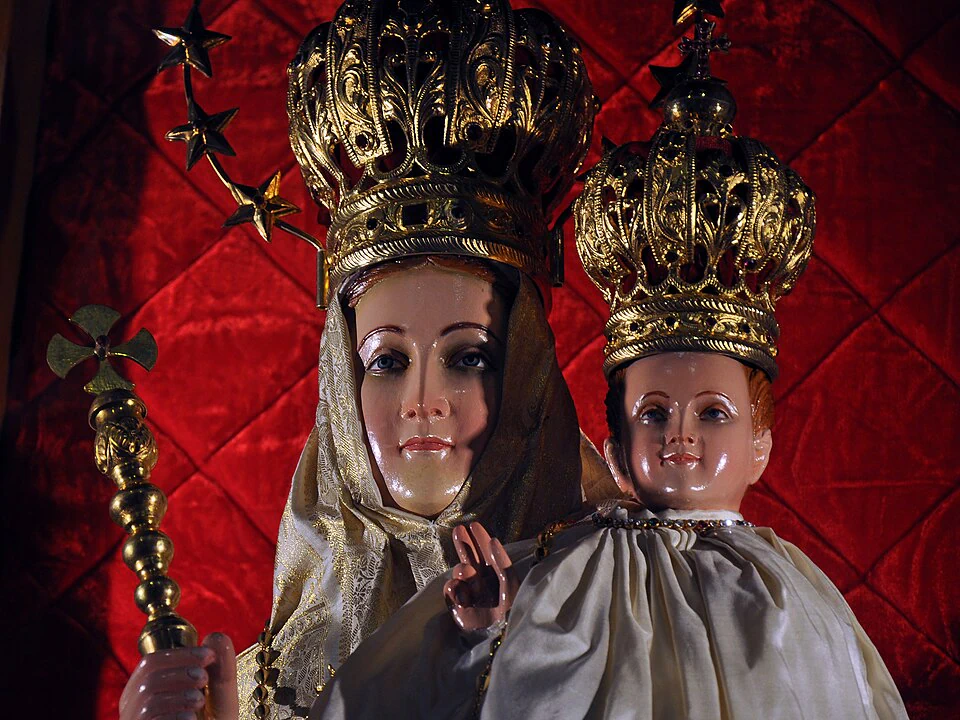
The accompanying image is a later representation of Our Lady of Vailankanni in Lyon. It illustrates how the devotion traveled beyond India; it should not be mistaken for the original shrine image or an eyewitness record of its origin stories. [MEDIA-01]
Catholic reflection & discussion
Consider the message as well as the event
Explore the devotional meaning described in this article alongside the history of the report and the Church's response. Make space for both a personal response and questions about the record.
These editorial prompts invite reflection on the article. They are distinct from Church teaching and the evidence findings.
Pause and reflect
- Which part of the reported message or its reception would you like to understand more deeply?
- What exactly does the Church's recorded decision cover, and which questions does it leave open?
- What would it look like to approach this story with both a receptive heart and care for the truth?
Discuss with family or a group
Choose questions suited to your readers' ages and experiences. Anyone can pass or keep a response private.
- Identify who reported the experience, who investigated it, and who made a Church decision. Why does each person's role matter?
- How could you speak respectfully with someone whose response to this story differs from your own?
Questions people ask
Open any question for a fuller answer and its sources.
Are the three origin stories independently verified?
The cited episcopal publication reports them as part of the shrine’s received history. It is a pastoral and cultural account, not a surviving contemporary inquiry into each episode. [SRC-02]
Why is Vailankanni sometimes compared with Lourdes?
John Paul II used that comparison in discussing a major Marian pilgrimage center associated with sick people and hope for healing. The comparison does not give Vailankanni the same medical records or investigation process as Lourdes. [EX-01]
Can someone pray here without receiving a cure?
Yes. The papal explanation includes consolation, solidarity, care and the meaning of suffering in relationship with Christ. It does not promise a bodily cure to every pilgrim. [EX-01]
Does welcoming Hindu pilgrims erase the shrine’s Catholic identity?
The papal message describes both its dedication to the Mother of God and its role in interreligious encounter. Hospitality and a clear Catholic identity appear together in that explanation. [EX-01]
What the evidence can establish
Evidence verdict: unresolved
What do official Catholic sources document about Vailankanni's apparition tradition and shrine status, separate from the historical truth of the reported events?
Official Catholic sources document a longstanding Indian Marian shrine and report the apparition tradition. The early episodes rest largely on later/oral tradition and are not independently established.
Church or institutional status
Official Catholic shrine and basilica; no apparition decree located
- Authority
- Basilica of Our Lady of Good Health / Catholic Church in India
- Scope of the finding
- The shrine, devotion, and reported tradition.
- Limits of the finding
- Shrine or basilica status does not itself declare the reported events supernatural.
Sources and notes
Back to the overviewSource labels describe a document's type and role, not the strength of a claim. Where provided, notes explain its use, access limits, and outstanding checks.
- SRC-01Basilica of Our Lady of Good Health, Vailankanni — official site (opens in a new tab)Official source
Confirms the current shrine and its Catholic custodianship. What it does not establish: The home page alone does not expose a primary apparition dossier or decree.
- SRC-02USCCB — Preserving the Apostolic Faith: Indian American Catholics PDF (opens in a new tab)Official source
Documents Vailankanni's importance and reports its apparition/devotional history in a current episcopal publication. What it does not establish: A pastoral/cultural publication, not a formal supernatural finding.
Documents the image source and Public domain rights record. What it does not establish: Later devotional representation in Lyon, not the original Vailankanni shrine image or an event record.
- EX-01John Paul II — Message for the 2002 World Day of the Sick at Vailankanni (opens in a new tab)Official sourceCited in this file
Read the source note for the passage used and any limits on what it supports.
Message dated August 6, 2001 explains Vailankanni’s interreligious pilgrimage and Christian care for suffering people; does not authenticate the early apparition narratives.
Corrections and updates
Expanded this file with a sourced narrative, 7 chapters and 4 answers to common questions. The existing evidence verdict label and institutional status are retained. Independent human review remains pending.