
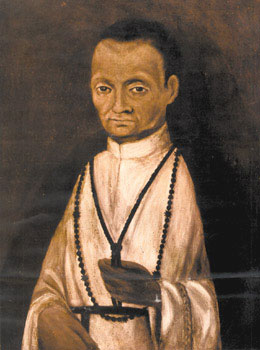
Start here
The story, in brief
Martin de Porres had practical skills before he acquired a saintly title. Trained through work associated with a pharmacy and a barber-surgeon, he brought care to sick and poor people in colonial Lima. [SAINT-SAINT-MARTIN-DE-PORRES-S01]
His biography also records racial barriers within the religious world he entered. The Church’s later celebration of his charity should make that inequality visible, not turn it into a harmless backdrop. [SAINT-SAINT-MARTIN-DE-PORRES-S01]
Practical care
Food, medicine, and clothing give substance to the word charity. [SAINT-SAINT-MARTIN-DE-PORRES-S01]
Social barriers mattered
Race and status shaped his opportunities in colonial Lima. [SAINT-SAINT-MARTIN-DE-PORRES-S01]
A lay brother
The body of the official biography identifies his religious role accurately. [SAINT-SAINT-MARTIN-DE-PORRES-S01]
Explore the chapters
A life within colonial hierarchies
Born in Lima in 1579 to a Spanish father and a Black mother, Martin grew up in a society that assigned status through ancestry and legitimacy. The official biography connects these barriers with his early subordinate position among the Dominicans. These facts are essential to understanding the setting in which his service took place. [SAINT-SAINT-MARTIN-DE-PORRES-S01]
Healing work before modern professional titles
The source describes skills learned through pharmacy work and apprenticeship to a barber-surgeon. Calling him a modern physician would impose a later credentialing system on that training. The narrower and useful fact is that he had practical knowledge with which to care for people who were sick. [SAINT-SAINT-MARTIN-DE-PORRES-S01]
The religious brother behind the label
The Dicastery’s introductory line calls him a priest, but its own narrative identifies him as a cooperating brother, consistent with the preserved editorial profile. This article uses Dominican lay brother. Recognizing the inconsistency protects the actual form of religious life through which he served. [SAINT-SAINT-MARTIN-DE-PORRES-S01]
What charity looked like
John XXIII’s 1962 canonization homily describes food, clothing, medicines, care of the sick, and assistance to people doing society’s least valued work. The account’s force lies in those ordinary objects. Compassion becomes assessable when someone receives what they need, rather than remaining only an admirable feeling. [SAINT-SAINT-MARTIN-DE-PORRES-S01]
Why the Catholic explanation begins with kinship
The papal homily interprets Martin’s care through the belief that other people are children of God and therefore brothers and sisters. Love of God and neighbor belong together. On that account, race and social position cannot define whose hunger or illness deserves attention. [SAINT-SAINT-MARTIN-DE-PORRES-S01]
Humility should not excuse the barrier
The biography praises Martin’s humility, including a reported willingness to be sold to relieve the community’s debt. Such a passage should be read as devotional testimony about self-giving, not an endorsement of slavery or a reason disadvantaged people should accept abuse. The social hierarchy remains a moral problem in the story. [SAINT-SAINT-MARTIN-DE-PORRES-S01]
What recognition adds—and what it does not
Martin died in 1639, was beatified in 1837, and canonized in 1962. Catholic recognition honors his life and religious witness. A claim about attributed remains still needs the relevant physical records. His enduring challenge is already concrete: whether proclaimed equality becomes care for people whom a society has trained itself to overlook. [SAINT-SAINT-MARTIN-DE-PORRES-S01]
Catholic reflection & discussion
Look for the person within the story
Spend a moment with the choices, relationships and hardships in this life. Consider what you might learn from the person as well as from the extraordinary claims examined in the file.
These editorial prompts invite reflection on the article. They are distinct from Church teaching and the evidence findings.
Pause and reflect
- Which choice or experience in this life stays with you, and why?
- What would you like to understand better about the person's faith and the world they lived in?
- Is there a small act of patience, courage or service that this reading invites you to consider?
Discuss with family or a group
Choose questions suited to your readers' ages and experiences. Anyone can pass or keep a response private.
- Ask each person to choose a moment from the life described here. What makes that moment worth remembering?
- Which details have clear sources, and which remain uncertain? How could you tell the story honestly without losing its human meaning?
Questions people ask
Open any question for a fuller answer and its sources.
Was Martin a priest?
This article follows the biographical identification as a Dominican lay brother; the official page’s introductory use of priest is inconsistent with its own narrative. [SAINT-SAINT-MARTIN-DE-PORRES-S01]
Was he a doctor in the modern sense?
The source describes practical training connected with pharmacy and a barber-surgeon. It does not establish a modern medical qualification. [SAINT-SAINT-MARTIN-DE-PORRES-S01]
Why discuss racial barriers on a saint’s page?
They shaped the opportunities available to him and are explicitly part of the official account. Omitting them would obscure the stakes of his life. [SAINT-SAINT-MARTIN-DE-PORRES-S01]
Does humility make discrimination acceptable?
No. The religious commendation of his response does not transform the barrier itself into a just arrangement. His care for people across social divisions is the central Catholic lesson drawn by the canonization homily. [SAINT-SAINT-MARTIN-DE-PORRES-S01]
What the evidence can establish
Evidence verdict: unresolved
Does the available evidence establish that the displayed or attributed remains of Saint Martin de Porres are the naturally preserved, substantially intact body of that person, without undisclosed embalming, reconstruction, wax covering, replacement, or later conservation treatment?
Canonized Catholic saint. Official sources confirm that status or custody for Saint Martin de Porres. They do not provide the independent anatomical evidence, custody documentation, or treatment history needed to answer whether the remains are naturally preserved.
Sources: [SAINT-SAINT-MARTIN-DE-PORRES-S01]
Church or institutional status
Canonized Catholic saint
- Authority
- Dicastery for the Causes of Saints
- Scope of the finding
- The cited official record documents the person's Catholic canonization and saintly title.
- Limits of the finding
- It does not authenticate the attributed remains, establish natural preservation, or prove a miracle.
- Official sources
- [SAINT-SAINT-MARTIN-DE-PORRES-S01]
Sources and notes
Back to the overviewSource labels describe a document's type and role, not the strength of a claim. Where provided, notes explain its use, access limits, and outstanding checks.
- SAINT-SAINT-MARTIN-DE-PORRES-S01Dicastery for the Causes of Saints profile — Saint Martin de Porres (opens in a new tab)Official source
Identifies this person and records the stated Catholic beatification/canonization or liturgical status; it does not establish the physical preservation claim. What it does not establish: This institutional record establishes only the stated act, status, teaching, or account; it does not independently establish material identity, preservation mechanism, or supernatural causation.
Corrections and updates
Expanded this file with a sourced narrative, 7 chapters and 4 answers to common questions. The existing evidence verdict label and institutional status are retained. Independent human review remains pending.