
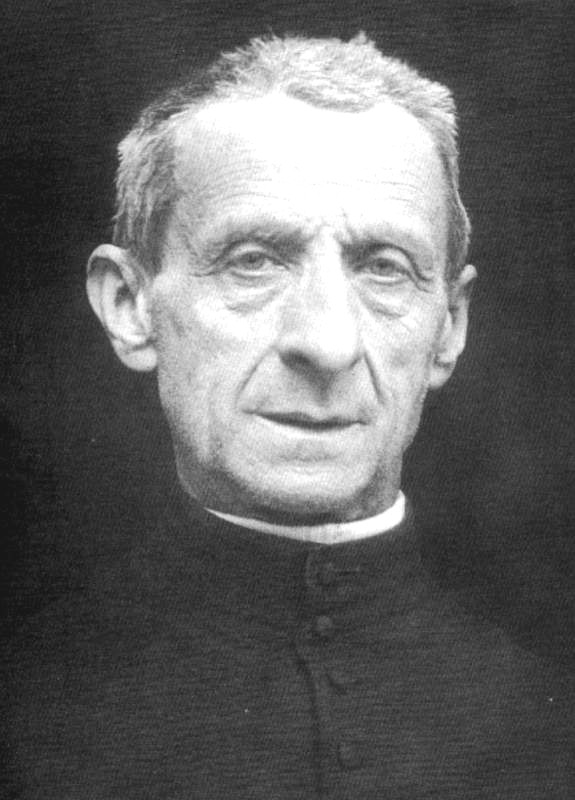
Start here
The story, in brief
Industrial Turin offered work without guaranteeing that young people would be protected or educated. Leonardo Murialdo encountered poor families through parish and oratory work and built a religious mission around their children. [SAINT-SAINT-LEONARDO-MURIALDO-S01]
His official biography also records a serious youthful spiritual crisis. The adult educator was therefore not presented as someone for whom confidence had always come easily. [SAINT-SAINT-LEONARDO-MURIALDO-S01]
Mercy before achievement
His biography connects renewed faith with an experience of forgiveness. [SAINT-SAINT-LEONARDO-MURIALDO-S01]
Concrete education
School, recreation, and religious formation formed a common project. [SAINT-SAINT-LEONARDO-MURIALDO-S01]
Continuity
The 1873 foundation gave the work a community beyond its founder. [SAINT-SAINT-LEONARDO-MURIALDO-S01]
Explore the chapters
An education interrupted from within
Born in Turin in 1828, Murialdo attended a school run by the Piarists in Savona. The official account describes an adolescent existential and spiritual crisis, followed by an early return home. Its significance is not a diagnosis but a turning point: religious maturity is represented as a process that included struggle. [SAINT-SAINT-LEONARDO-MURIALDO-S01]
Mercy became a starting point
Murialdo connected his renewed religious commitment with a general confession and a rediscovery of divine mercy. He chose priesthood and was ordained in 1851. The Catholic explanation of his later work begins with receiving mercy and responding to it, rather than constructing a heroic identity through achievement. [SAINT-SAINT-LEONARDO-MURIALDO-S01]
John Bosco opens a door
Bosco recognized his work as a catechist and encouraged him to lead the Saint Louis oratory at Porta Nuova. Murialdo held that responsibility until 1865. The relationship places him within a network of Turin initiatives rather than treating every educational foundation as the isolated inspiration of a single saint. [SAINT-SAINT-LEONARDO-MURIALDO-S01]
Visits made poverty concrete
The official biography emphasizes his visits to the homes of poor people. Schooling, religious instruction, and recreation became elements of his educational approach. The point is practical: understanding a child’s circumstances changes what assistance must include. An institution cannot meet a need it has never taken the trouble to encounter. [SAINT-SAINT-LEONARDO-MURIALDO-S01]
A community designed to continue
In 1873 Murialdo founded the Congregation of Saint Joseph, with particular concern for poor and abandoned young people. Founding a community gave the work continuity beyond one priest’s available hours. The educational mission became a shared responsibility that could survive its founder. [SAINT-SAINT-LEONARDO-MURIALDO-S01]
What the canonization homily adds
At his 1970 canonization, Paul VI asked for knowledge of Murialdo before celebration, drawing attention to documentary biography and the social setting of nineteenth-century Turin. He described Christian holiness as grace embodied in a distinctive human life. That approach invites readers to examine concrete action rather than stop at a saintly label. [SAINT-SAINT-LEONARDO-MURIALDO-S01]
The life and the attributed remains
Murialdo died in 1900. Beatification in 1963 and canonization in 1970 are recorded by the Dicastery. These establish recognition, while any claim about his body still needs its material history. The reader already has a substantial legacy to consider: whether education and dependable community can change the prospects of young people left vulnerable by economic change. [SAINT-SAINT-LEONARDO-MURIALDO-S01]
Catholic reflection & discussion
Look for the person within the story
Spend a moment with the choices, relationships and hardships in this life. Consider what you might learn from the person as well as from the extraordinary claims examined in the file.
These editorial prompts invite reflection on the article. They are distinct from Church teaching and the evidence findings.
Pause and reflect
- Which choice or experience in this life stays with you, and why?
- What would you like to understand better about the person's faith and the world they lived in?
- Is there a small act of patience, courage or service that this reading invites you to consider?
Discuss with family or a group
Choose questions suited to your readers' ages and experiences. Anyone can pass or keep a response private.
- Ask each person to choose a moment from the life described here. What makes that moment worth remembering?
- Which details have clear sources, and which remain uncertain? How could you tell the story honestly without losing its human meaning?
Questions people ask
Open any question for a fuller answer and its sources.
Was he a Salesian?
He worked with John Bosco but founded the distinct Congregation of Saint Joseph in 1873. [SAINT-SAINT-LEONARDO-MURIALDO-S01]
Why include his youthful crisis?
It belongs to the official biography and prevents the story from implying that his later religious commitment was effortless or automatic. [SAINT-SAINT-LEONARDO-MURIALDO-S01]
What did his educational approach include?
The source identifies catechesis, schooling, and recreation, informed by contact with poor families. [SAINT-SAINT-LEONARDO-MURIALDO-S01]
Does his social legacy establish incorruption?
No. Educational work and canonization are documented on a different evidentiary basis from anatomical preservation. [SAINT-SAINT-LEONARDO-MURIALDO-S01]
What the evidence can establish
Evidence verdict: unresolved
Does the available evidence establish that the displayed or attributed remains of Saint Leonardo Murialdo are the naturally preserved, substantially intact body of that person, without undisclosed embalming, reconstruction, wax covering, replacement, or later conservation treatment?
Canonized Catholic saint. Official sources confirm that status or custody for Saint Leonardo Murialdo. They do not provide the independent anatomical evidence, custody documentation, or treatment history needed to answer whether the remains are naturally preserved.
Sources: [SAINT-SAINT-LEONARDO-MURIALDO-S01]
Church or institutional status
Canonized Catholic saint
- Authority
- Dicastery for the Causes of Saints
- Scope of the finding
- The cited official record documents the person's Catholic canonization and saintly title.
- Limits of the finding
- It does not authenticate the attributed remains, establish natural preservation, or prove a miracle.
- Official sources
- [SAINT-SAINT-LEONARDO-MURIALDO-S01]
Sources and notes
Back to the overviewSource labels describe a document's type and role, not the strength of a claim. Where provided, notes explain its use, access limits, and outstanding checks.
- SAINT-SAINT-LEONARDO-MURIALDO-S01Dicastery for the Causes of Saints profile — Saint Leonardo Murialdo (opens in a new tab)Official source
Identifies this person and records the stated Catholic beatification/canonization or liturgical status; it does not establish the physical preservation claim. What it does not establish: This institutional record establishes only the stated act, status, teaching, or account; it does not independently establish material identity, preservation mechanism, or supernatural causation.
Corrections and updates
Expanded this file with a sourced narrative, 7 chapters and 4 answers to common questions. The existing evidence verdict label and institutional status are retained. Independent human review remains pending.