
Start here
The story, in brief
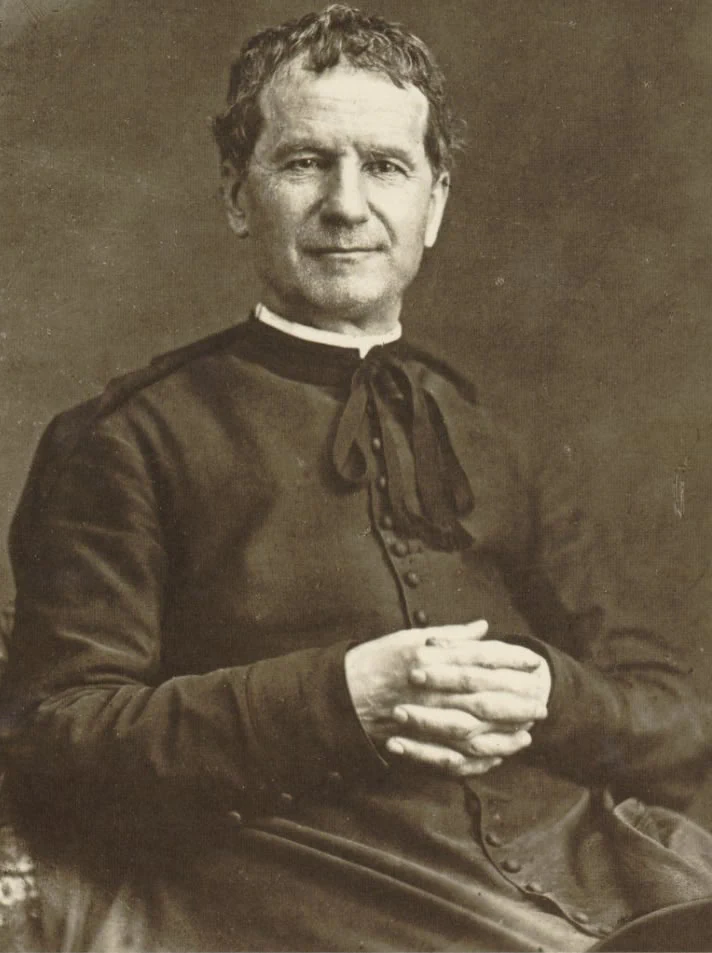
A boy arriving in industrial Turin needed more than a warning to behave. He needed skills, dependable adults, and somewhere to belong. John Bosco’s official biography describes a ministry among young people he encountered in streets, workplaces, and prisons. [SAINT-SAINT-JOHN-BOSCO-S01]
The result grew into the Salesian movement. Following that development gives the reader a reason to care about Bosco before encountering the lifelike wax figure associated with his relics—a display that should never be mistaken for exposed untreated flesh. [SAINT-SAINT-JOHN-BOSCO-S01] [SAINT-SAINT-JOHN-BOSCO-S02]
A practical mission
Bosco joined education, work, and religious formation for vulnerable young people. [SAINT-SAINT-JOHN-BOSCO-S01]
A wider community
The movement includes the collaboration of Mary Mazzarello and education of girls. [SAINT-SAINT-JOHN-BOSCO-S01]
A constructed likeness
The official source identifies a wax figure enclosing remains. [SAINT-SAINT-JOHN-BOSCO-S02]
Explore the chapters
He knew interrupted education
Born in 1815, Bosco lost his father in childhood and struggled to continue studying. The Dicastery biography describes employment in several trades while he pursued education. These details illuminate his later work: the distance between a young person’s ability and their available opportunities was a problem he had encountered personally. [SAINT-SAINT-JOHN-BOSCO-S01]
The city changed the scale of the problem
After his 1841 ordination, Bosco worked with poor young people in Turin. The official account places this ministry within migration from the countryside and industrial change. A reader need not imagine every boy sharing the same experience to see the challenge: a growing city could offer employment while leaving newcomers without stable social support. [SAINT-SAINT-JOHN-BOSCO-S01]
The oratory offered a community
Bosco organized an oratory, eventually established at Valdocco, around religious formation and practical care. The biography connects his approach with Francis de Sales and Philip Neri. The important development was a continuing setting in which young people could return, learn, and build relationships, rather than a single inspiring encounter. [SAINT-SAINT-JOHN-BOSCO-S01]
Education before repression
The official portrait emphasizes a preventive educational approach. Its goal joined preparation for work with Christian life. The reader can understand that wager without treating every later Salesian institution as automatically successful: Bosco’s model proposes that presence, formation, and patient guidance can accomplish something that punishment after failure cannot. [SAINT-SAINT-JOHN-BOSCO-S01]
Girls belong in the wider story
The work expanded through the Salesian congregation and, in 1872, the Daughters of Mary Help of Christians with Mary Mazzarello. Including this collaboration prevents the movement’s development from becoming the accomplishment of one man alone. The institutional history reaches beyond boys and beyond a single neighborhood. [SAINT-SAINT-JOHN-BOSCO-S01]
What the wax figure actually means
An official Archdiocese of Perth homily discussing Bosco’s relics explains that his body is enclosed in a life-size wax figure. A lifelike face is therefore part of the presentation of relics. It is not evidence that the face itself is naturally preserved human tissue. This distinction can be understood without diminishing either the devotional purpose or Bosco’s educational legacy. [SAINT-SAINT-JOHN-BOSCO-S02]
Recognition and the question still open
The Dicastery records beatification in 1929 and canonization in 1934. Those acts recognize Bosco’s Catholic sainthood. The precise condition and treatment of enclosed remains still require item-specific documentation. His life offers a substantial legacy to assess—education, work, community, and religious formation—while that narrower material inquiry continues. [SAINT-SAINT-JOHN-BOSCO-S01] [SAINT-SAINT-JOHN-BOSCO-S02]
Catholic reflection & discussion
Look for the person within the story
Spend a moment with the choices, relationships and hardships in this life. Consider what you might learn from the person as well as from the extraordinary claims examined in the file.
These editorial prompts invite reflection on the article. They are distinct from Church teaching and the evidence findings.
Pause and reflect
- Which choice or experience in this life stays with you, and why?
- What would you like to understand better about the person's faith and the world they lived in?
- Is there a small act of patience, courage or service that this reading invites you to consider?
Discuss with family or a group
Choose questions suited to your readers' ages and experiences. Anyone can pass or keep a response private.
- Ask each person to choose a moment from the life described here. What makes that moment worth remembering?
- Which details have clear sources, and which remain uncertain? How could you tell the story honestly without losing its human meaning?
Questions people ask
Open any question for a fuller answer and its sources.
Was Bosco’s work only religious instruction?
The biography joins Christian formation with preparation for work and sustained care of disadvantaged young people. [SAINT-SAINT-JOHN-BOSCO-S01]
Who helped extend the work to girls?
Mary Mazzarello collaborated in founding the Daughters of Mary Help of Christians in 1872. [SAINT-SAINT-JOHN-BOSCO-S01]
Is the lifelike figure his exposed body?
The official archdiocesan source describes a life-size wax figure enclosing remains. Its visible appearance cannot be treated as untreated flesh. [SAINT-SAINT-JOHN-BOSCO-S02]
Does that make the whole display fraudulent?
An identified wax figure can serve as a devotional reliquary. The problem arises when its appearance is misrepresented as anatomical evidence; the official description itself makes the distinction. [SAINT-SAINT-JOHN-BOSCO-S02]
What the evidence can establish
Evidence verdict: debunked
Is the lifelike visible figure in Turin an untreated, directly visible whole body of John Bosco?
The official Catholic archdiocesan source identifies it as a life-size wax effigy enclosing the body. This does not dispute custody of relics.
Sources: [SAINT-SAINT-JOHN-BOSCO-S01; SAINT-SAINT-JOHN-BOSCO-S02]
Church or institutional status
Canonized Catholic saint
- Authority
- Dicastery for the Causes of Saints
- Scope of the finding
- The Dicastery records Bosco's Catholic recognition; an official Catholic archdiocesan homily explains the Turin display as a life-size wax effigy enclosing the body.
- Limits of the finding
- Canonization is not a finding of incorruption; the visible effigy is not exposed untreated tissue.
- Official sources
- [SAINT-SAINT-JOHN-BOSCO-S01]
Sources and notes
Back to the overviewSource labels describe a document's type and role, not the strength of a claim. Where provided, notes explain its use, access limits, and outstanding checks.
- SAINT-SAINT-JOHN-BOSCO-S01Dicastery for the Causes of Saints profile — Saint John Bosco (opens in a new tab)Official source
Records John Bosco's Catholic status. What it does not establish: This institutional record establishes only the stated act, status, teaching, or account; it does not independently establish material identity, preservation mechanism, or supernatural causation.
- SAINT-SAINT-JOHN-BOSCO-S02Official Catholic archdiocesan page — Saint John Bosco (opens in a new tab)Official source
States that the body is enclosed within a life-size wax effigy in the Turin basilica. What it does not establish: This institutional record establishes only the stated act, status, teaching, or account; it does not independently establish material identity, preservation mechanism, or supernatural causation.
Corrections and updates
Expanded this file with a sourced narrative, 7 chapters and 4 answers to common questions. The existing evidence verdict label and institutional status are retained. Independent human review remains pending.