
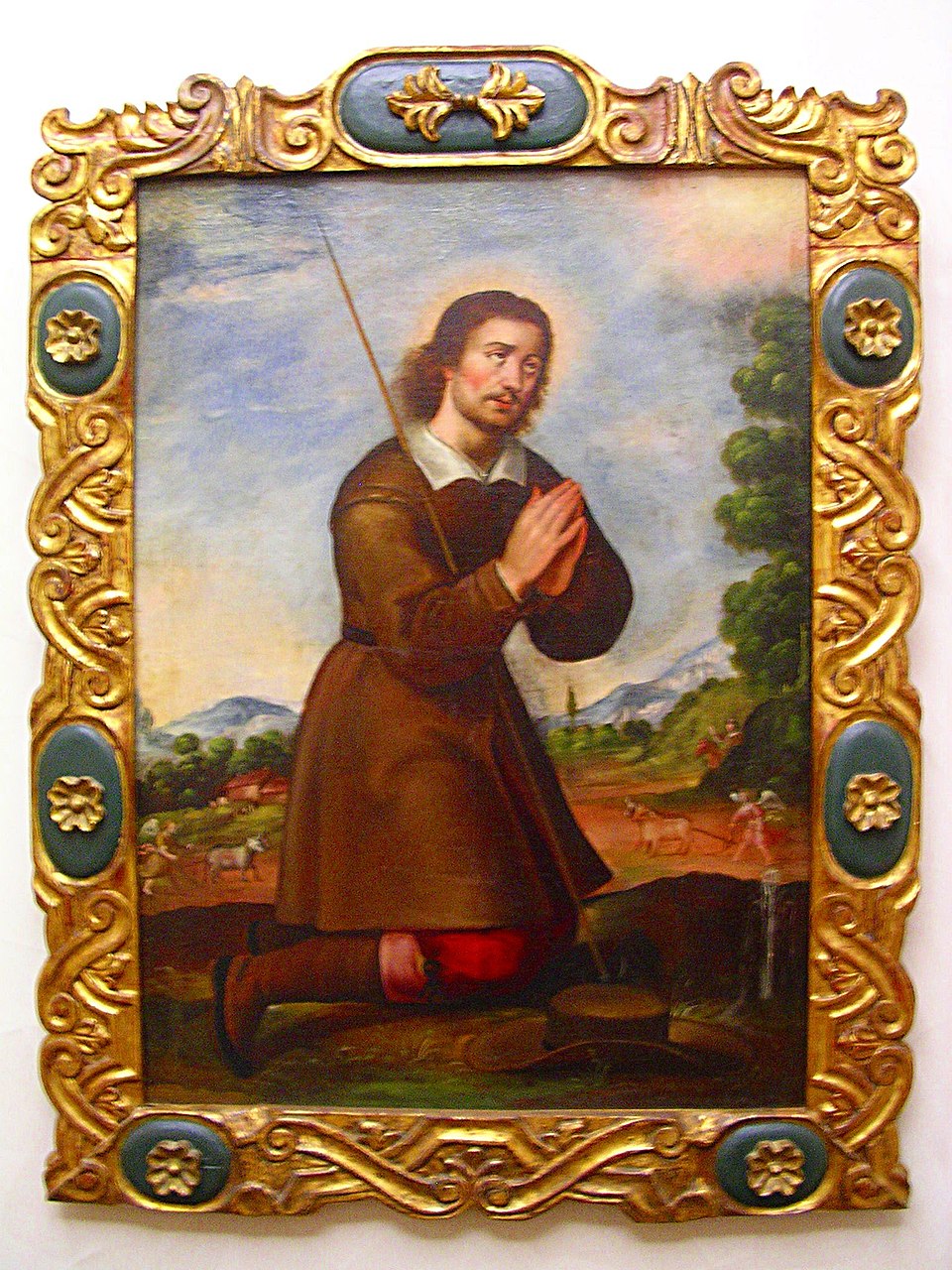
Start here
The story, in brief
A farm laborer has a practical problem: the work still has to be done. Medieval Madrid’s Isidore is remembered as someone who took that obligation seriously while making room for prayer and neighbors who had less. His appeal begins with a recognizable life, not an extraordinary occupation. [SAINT-SAINT-ISIDORE-THE-LABORER-S01]
The Catholic Church canonized him in 1622. This file follows the married worker behind that recognition, then asks the separate question raised by remains attributed to him: what evidence would establish their identity and preservation? The first question concerns a life; the second requires records about a body. [SAINT-SAINT-ISIDORE-THE-LABORER-S01]
An ordinary setting
Isidore was a married layman and agricultural worker, remembered for combining labor, prayer, and care for poor neighbors. [SAINT-SAINT-ISIDORE-THE-LABORER-S01]
A shared vocation
The official biography places his wife, María de la Cabeza, within a household marked by generosity. [SAINT-SAINT-ISIDORE-THE-LABORER-S01]
Two different judgments
His canonization is documented. The present anatomical condition and treatment history of attributed remains are not established by that act. [SAINT-SAINT-ISIDORE-THE-LABORER-S01]
Explore the chapters
A saint with a working day
Isidore belongs to the world of medieval Madrid and agricultural labor. The official Catholic account places him around 1070–1130 and describes a man whose religious life unfolded alongside demanding work. He was neither a ruler nor the founder of a religious order. [SAINT-SAINT-ISIDORE-THE-LABORER-S01]
That setting changes the question a reader brings to his story. It is easy to admire a life that appears available only to exceptional people. Isidore’s remembered combination of fieldwork and prayer instead invites examination of repeated choices: whether work becomes an excuse to neglect others, whether religious devotion makes someone more dependable, and what a person does with resources that already feel insufficient. This is an interpretation of the biography’s central pattern, not a reconstruction of his private thoughts. [SAINT-SAINT-ISIDORE-THE-LABORER-S01]
Marriage belongs inside the story
The official profile identifies María de la Cabeza as Isidore’s wife and remembers their shared concern for poor people. His domestic life is therefore part of his religious identity. Presenting him only as a solitary figure in a field would lose the household through which practical generosity was exercised. [SAINT-SAINT-ISIDORE-THE-LABORER-S01]
The meaningful tension is between obligations that are all real: care for one’s household, the demands of paid work, and the needs of neighbors. His biography offers a model for thinking about those competing responsibilities. It does not provide a budget, a complete account of their marriage, or permission to invent intimate scenes to make the lesson more vivid. [SAINT-SAINT-ISIDORE-THE-LABORER-S01]
Why Catholics remember a laborer
The devotional force of Isidore’s story lies in its accessibility. Prayer and generosity are presented as part of ordinary employment, rather than achievements possible only after someone leaves work behind. The Church’s decision to recognize this layman gives his apparently unremarkable circumstances public religious importance. [SAINT-SAINT-ISIDORE-THE-LABORER-S01]
A useful way to read the story is to ask what it asks of the reader before asking what marvels it contains. Does devotion result in attention to another person’s hunger? Can work be performed without making productivity the whole measure of a human being? Those are enduring questions raised by the official portrait, even for someone who withholds judgment about later physical claims. [SAINT-SAINT-ISIDORE-THE-LABORER-S01]
What happened in 1622?
The Dicastery for the Causes of Saints records Isidore’s canonization on 12 March 1622. That is a specific institutional fact: the Catholic Church formally recognized him as a saint. It is much later than the medieval life being commemorated, a chronology readers should keep in view when assessing different kinds of evidence. [SAINT-SAINT-ISIDORE-THE-LABORER-S01]
The material reviewed here does not supply the complete proceedings or identify a particular miracle as having carried a defined role in that cause. A popular miracle story and a formally accepted cause miracle are not interchangeable entries in a timeline. Naming the latter requires the relevant official record. [SAINT-SAINT-ISIDORE-THE-LABORER-S01]
The body question needs its own evidence
This dossier’s unresolved finding concerns attributed remains: whether they are substantially intact, naturally preserved human remains of Isidore, and whether treatment or reconstruction affects what visitors see. The official biography establishes his identity and Catholic recognition; it does not provide the anatomical and conservation record needed to resolve that physical proposition. [SAINT-SAINT-ISIDORE-THE-LABORER-S01]
The decisive next materials would be a documented sequence of custody, dated examinations describing which tissues survive, and a record of treatments and display construction. These are questions for further investigation, not allegations that a particular intervention occurred. A compelling devotional photograph cannot supply that missing history. [SAINT-SAINT-ISIDORE-THE-LABORER-S01]
What survives beyond the display?
Isidore’s importance does not have to rise or fall with the appearance of a reliquary. The documented Catholic memory concerns a married worker who prayed and shared. That is the reason his life remains a useful subject even while the narrower claim about preservation stays unresolved. [SAINT-SAINT-ISIDORE-THE-LABORER-S01]
The household, the fields, and the neighbor in need remain the settings in which the official account locates Isidore’s faith. A reader can return to those ordinary relationships while a separate investigation seeks the history and condition of the remains. [SAINT-SAINT-ISIDORE-THE-LABORER-S01]
Catholic reflection & discussion
Look for the person within the story
Spend a moment with the choices, relationships and hardships in this life. Consider what you might learn from the person as well as from the extraordinary claims examined in the file.
These editorial prompts invite reflection on the article. They are distinct from Church teaching and the evidence findings.
Pause and reflect
- Which choice or experience in this life stays with you, and why?
- What would you like to understand better about the person's faith and the world they lived in?
- Is there a small act of patience, courage or service that this reading invites you to consider?
Discuss with family or a group
Choose questions suited to your readers' ages and experiences. Anyone can pass or keep a response private.
- Ask each person to choose a moment from the life described here. What makes that moment worth remembering?
- Which details have clear sources, and which remain uncertain? How could you tell the story honestly without losing its human meaning?
Questions people ask
Open any question for a fuller answer and its sources.
Was Isidore a priest or a monk?
No. The official biography presents a married layman who worked in agriculture. Those ordinary circumstances are central to the significance of his life. [SAINT-SAINT-ISIDORE-THE-LABORER-S01]
Why include his wife?
María de la Cabeza belongs to the official account of his life and its shared generosity. Including her prevents the household dimension of the story from disappearing behind a solitary saint’s image. [SAINT-SAINT-ISIDORE-THE-LABORER-S01]
Does UNRESOLVED mean his sainthood is disputed?
No. The verdict answers the specific preservation question. His Catholic canonization on 12 March 1622 is separately documented. [SAINT-SAINT-ISIDORE-THE-LABORER-S01]
What would improve this investigation?
Original cause records would clarify the recognition history. Custody documents, anatomical examinations, and conservation records would address the remains. Each would improve a different part of the file. [SAINT-SAINT-ISIDORE-THE-LABORER-S01]
What the evidence can establish
Evidence verdict: unresolved
Does the available evidence establish that the displayed or attributed remains of Saint Isidore the Laborer are the naturally preserved, substantially intact body of that person, without undisclosed embalming, reconstruction, wax covering, replacement, or later conservation treatment?
Canonized Catholic saint. Official sources confirm that status or custody for Saint Isidore the Laborer. They do not provide the independent anatomical evidence, custody documentation, or treatment history needed to answer whether the remains are naturally preserved.
Sources: [SAINT-SAINT-ISIDORE-THE-LABORER-S01]
Church or institutional status
Canonized Catholic saint
- Authority
- Dicastery for the Causes of Saints
- Scope of the finding
- The cited official record documents the person's Catholic canonization and saintly title.
- Limits of the finding
- It does not authenticate the attributed remains, establish natural preservation, or prove a miracle.
- Official sources
- [SAINT-SAINT-ISIDORE-THE-LABORER-S01]
Sources and notes
Back to the overviewSource labels describe a document's type and role, not the strength of a claim. Where provided, notes explain its use, access limits, and outstanding checks.
- SAINT-SAINT-ISIDORE-THE-LABORER-S01Dicastery for the Causes of Saints profile — Saint Isidore the Laborer (opens in a new tab)Official source
Identifies this person and records the stated Catholic beatification/canonization or liturgical status; it does not establish the physical preservation claim. What it does not establish: This institutional record establishes only the stated act, status, teaching, or account; it does not independently establish material identity, preservation mechanism, or supernatural causation.
Corrections and updates
Expanded this file with a sourced narrative, 6 chapters and 4 answers to common questions. The existing evidence verdict label and institutional status are retained. Independent human review remains pending.