
Start here
The story, in brief
Zita entered domestic service while still a child and became so closely associated with Lucca that the archdiocese recalls Dante identifying the city through her name. The worker usually outside public view became part of its public identity. [ZIT-04]
Her attributed remains later entered a very different record: publications describing a natural mummy and analysis of lung tissue. Understanding that turn requires distinguishing the life, the scientific publication, and what the sample can actually establish. [ZIT-01] [ZIT-02]
Labor with dignity
Her household work became a lasting religious example. [ZIT-04]
Real published research
Scientific records describe a natural-mummy investigation. [ZIT-01] [ZIT-02]
Limited inference
A tissue finding does not establish every part of a body’s history. [ZIT-03]
Explore the chapters
A working life in Lucca
The archdiocese places her birth in 1218 and her entry into the Fatinelli household’s service at twelve. It remembers a combination of duty, prayer, and generosity toward poor people. The religious significance is closely tied to ordinary labor rather than a position of authority. [ZIT-04]
The bread-and-flowers story
The diocesan page explicitly introduces as legend a story in which bread carried for poor people becomes flowers when questioned. Its value as devotional narrative is different from its value as eyewitness history. The story dramatizes generosity and suspicion, but it should not be silently upgraded into a verified physical transformation. [ZIT-04]
Recognition of work normally overlooked
The archdiocese records confirmation of her cult by Innocent XII in 1695 and patronage of domestic workers and homemakers under Pius XII in 1955. These acts give a precise Catholic recognition history. They also explain why her life continues to matter: household work and care are treated as religiously significant. [ZIT-04]
What the 1989 publication establishes
Pub Med indexes a paper describing FT-IR microspectroscopy of pulmonary tissue from remains attributed to Saint Zita, identified in the title as a natural mummy. That is firm bibliographic evidence of a scientific investigation. The Pub Med record itself does not supply the full article or enough detail to independently assess every reported result. [ZIT-01]
The further records and their limits
A1997 University of Pisa catalogue entry also identifies a study of a natural mummy, but provides no attached full text and qualifies its metadata. A separate scholarly index reproduces an abstract reporting lung findings and absence of conservative treatment in the sampled tissue. Those are attributed research statements, not a complete item-level chain of evidence. [ZIT-02] [ZIT-03]
A sample is not the whole history
A finding about sampled pulmonary tissue cannot establish that every part of the remains escaped every intervention. The original publication, sampling authorization, specimen chain, and full treatment record would materially strengthen the assessment. The existing verdict therefore keeps natural mummification plausible while excluding any claim that science has demonstrated supernatural preservation. [ZIT-01] [ZIT-02] [ZIT-03]
Art tells a different part of the story
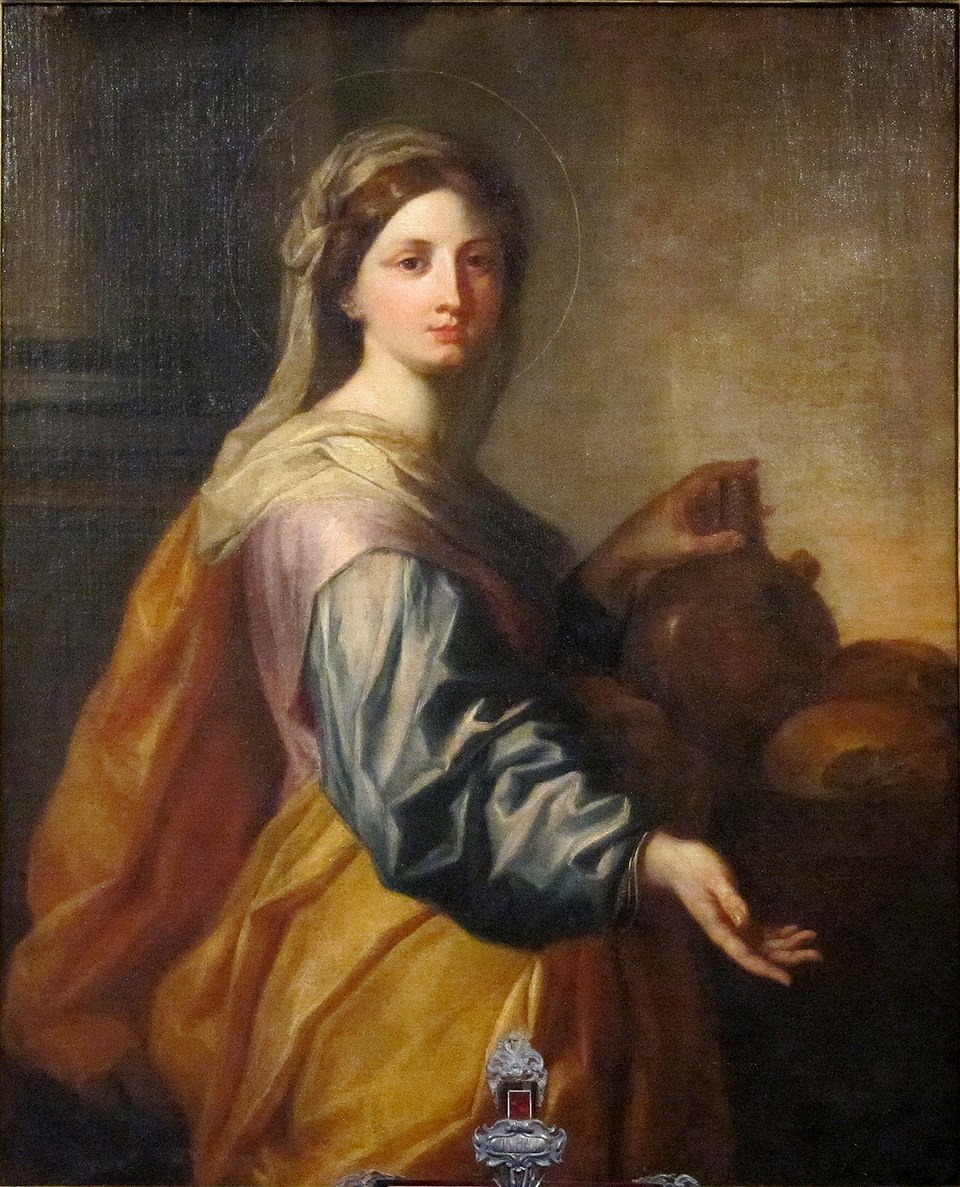
The registered Arnould de Vuez painting, photographed by Velvet, is devotional context. Its licensing and attribution can be documented, but the painting does not show a scientific examination of the remains. Keeping art, work history, and material research distinct lets each contribute something useful to the reader. [ZIT-05] [ZIT-04]
Catholic reflection & discussion
Look for the person within the story
Spend a moment with the choices, relationships and hardships in this life. Consider what you might learn from the person as well as from the extraordinary claims examined in the file.
These editorial prompts invite reflection on the article. They are distinct from Church teaching and the evidence findings.
Pause and reflect
- Which choice or experience in this life stays with you, and why?
- What would you like to understand better about the person's faith and the world they lived in?
- Is there a small act of patience, courage or service that this reading invites you to consider?
Discuss with family or a group
Choose questions suited to your readers' ages and experiences. Anyone can pass or keep a response private.
- Ask each person to choose a moment from the life described here. What makes that moment worth remembering?
- Which details have clear sources, and which remain uncertain? How could you tell the story honestly without losing its human meaning?
Questions people ask
Open any question for a fuller answer and its sources.
Does the research prove a miracle?
No. The publication record identifies a natural mummy and reported tissue analysis, not supernatural causation. [ZIT-01]
Does untreated lung tissue prove an untreated whole body?
No. A sample-specific statement cannot replace a complete intervention history. [ZIT-03]
Is the bread-and-flowers event established?
The archdiocese explicitly presents it as legend. [ZIT-04]
Why is Zita associated with household workers?
The archdiocese connects her life in domestic service with a 1955 papal patronage declaration. [ZIT-04]
What the evidence can establish
Evidence verdict: plausible
Are Saint Zita's remains a naturally mummified body, preserved without conservative treatment?
Published peer-reviewed literature (a 1989 FT-IR study indexed in PubMed and a 1997 University of Pisa proceeding) classifies the remains as a natural mummy, and the 1989 abstract reports that the sampled pulmonary tissue had not received conservative treatment. Because the complete article, the sampling authorization, and the specimen chain were not inspected, the classification is plausible rather than verified, and it says nothing about supernatural causation.
Church or institutional status
Cult confirmed in 1695; patronage declared in 1955.
- Authority
- Pope Innocent XII's reported 1695 confirmation of cult, with Pius XII's 1955 patronage declaration.
- Scope of the finding
- Confirmation of Zita's longstanding cult and later patronage of domestic workers and homemakers.
- Limits of the finding
- Confirmation of cult and patronage authorize veneration and a patronal title; they do not authenticate scientific sampling, classify the mummy, or establish supernatural preservation.
- Official sources
- [ZIT-04]
Sources and notes
Back to the overviewSource labels describe a document's type and role, not the strength of a claim. Where provided, notes explain its use, access limits, and outstanding checks.
Authoritative PubMed bibliographic record. The title directly supports the narrow proposition that a published analysis identifies pulmonary tissue from a natural mummy attributed to Saint Zita. PubMed lists Paleopathology Newsletter 68, pages 5-8, and DOI 10.1117/12.969572; the page provides no abstract, so it does not by itself support more granular findings.
- ZIT-02University of Pisa research catalogue, “Santa Zita di Lucca: malattie, ambiente e società dallo studio di una mummia naturale del XIII secolo” (opens in a new tab)Scholarly source
Institutional bibliographic record for a 1997 conference proceeding with authors, year, proceeding type, and ISBN. No file is attached, and the repository warns that the metadata have not been university-validated; use it to corroborate publication and title only.
- ZIT-03OpenAlex record W2293882980 for the 1989 Saint Zita FT-IR paper (opens in a new tab)Scholarly source
Secondary scholarly index reproducing the authors' abstract and DOI metadata. It reports pulmonary histology, anthracosis, FT-IR observations, and the authors' statement that the analyzed tissue had not received conservative treatment. Bibliographic fields conflict with parts of the PubMed citation, so it supports attributed findings only and requires verification against the original publication.
Official archdiocesan page reporting burial at San Frediano, Innocent XII's 1695 ratification and confirmation of cult, and Pius XII's 1955 patronage declaration. It does not make a scientific or supernatural-preservation judgment.
Image rights: Arnould de Vuez's 1696 painting Sainte Zite, photographed by Velvet and licensed CC BY-SA 3.0 (with older alternative licenses also listed). Commercial reuse is allowed; attribution, source and license links, change disclosure, and ShareAlike are required. The displayed 960-by-1187-pixel file is resized and re-encoded from the 1500-by-1855-pixel original. It is relevant devotional art, not evidence about the remains.
Corrections and updates
Expanded this file with a sourced narrative, 7 chapters and 4 answers to common questions. The existing evidence verdict label and institutional status are retained. Independent human review remains pending.