
Start here
The story, in brief
Maria Stein’s official chapel description identifies two True Cross relics with different uses. One occupies the center of the main altar display. Another, kept in the former tabernacle area, can be removed for prayer. The distinction is small but essential: a claim about one object is not automatically a claim about the other. [SRC-01]
The surrounding collection grew from the work of priests and the Sisters of the Precious Blood. Understanding that history explains how an Ohio chapel became a place where visitors encounter the Cross alongside the lives of many saints. [EX-02]
Two objects, two contexts
The shrine identifies a central display particle and a removable prayer relic. [SRC-01]
The chapel joins two collections
Its descriptions distinguish the Father Brunner collection from the Father Gartner collection. [SRC-01]
Veneration concerns Christ
Catholic cross devotion recalls the Passion within the hope of the Resurrection. The fragment’s ancient identity remains a separate historical question. [EX-01]
Explore the chapters
How the collection came together
The Sisters’ institutional account traces relics at Maria Stein to Father Francis de Sales Brunner in the nineteenth century. It describes Father J. M. Gartner’s later arrival with relics brought from Europe for safekeeping and their consolidation with those already entrusted to the Sisters. [EX-02]
The official chapel page likewise distinguishes these two streams. Its main altar houses the Gartner collection, while the glass altar contains the Brunner collection. The distinction helps a visitor locate an object within the history of acquisition instead of treating every relic as though it arrived together. [SRC-01]
The fixed particle at the center
The main altar’s central True Cross relic sits within the Gartner display. Its position gives the Christian story an organizing center: the saints around it are remembered in relation to Christ, whose life, death and Resurrection ground their faith. The location is supplied by the shrine; the theological relationship is explained in the Church’s guidance on relics and the Cross. [SRC-01; EX-01]
Central placement is evidence of devotional importance. It does not, by itself, establish when the wood grew, when it was removed from an earlier object or how it came into Gartner’s possession. Those are questions for the particle’s own records.
The removable particle serves a different purpose
The chapel identifies two removable prayer relics in the area of a former tabernacle: one attributed to the True Cross and one associated with Saint Peregrine. This is a functional description of access for devotion, not a second name for the fixed central particle. [SRC-01]
A movable object may accumulate a history of blessings, pilgrimages and handling distinct from that of an altar display. Matching its certificate, container and seals is therefore especially useful. Evidence attached to the fixed relic should not silently be transferred to this one.
Why the Sisters built a public place of prayer
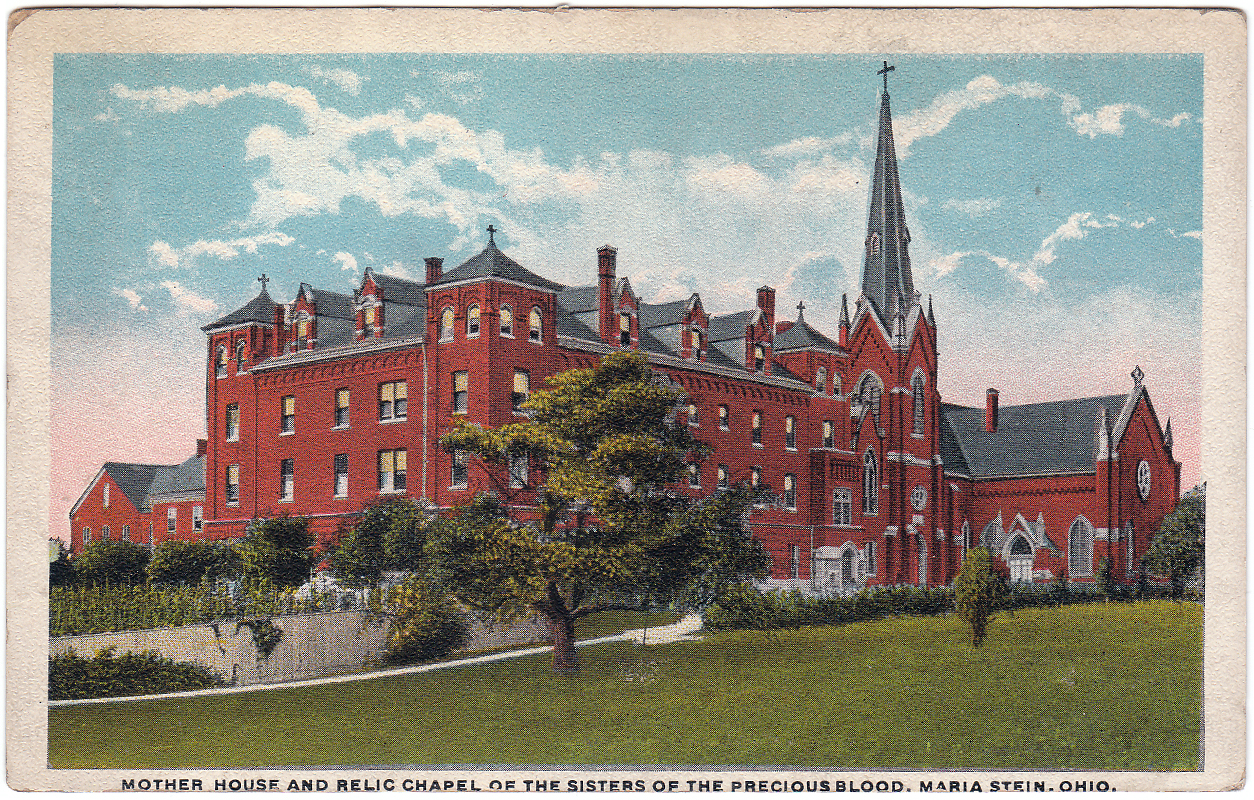
The Relic Chapel was dedicated in 1892. The Sisters explain that its separate entrance allowed the public to pray with the relics while respecting the enclosed life of the community in the adjoining chapel. The architecture answered a practical question: how could the collection be shared without disrupting the Sisters’ prayer? [EX-02]
The same institutional account presents the saints as companions whose lives encourage visitors. This is a fuller explanation of the shrine than its collection size alone. The point is to bring remembered examples of faith into the concerns of people who come through the door. [EX-02]
What Catholics mean by honoring a cross
The Directory on Popular Piety teaches that the Cross belongs with the empty tomb and Resurrection. It interprets cross devotion as remembrance of Christ’s saving love and victory over death, rather than fascination with an instrument of suffering in isolation. [EX-01]
This also explains why visitors might pray before a fragment whose complete provenance they have not personally examined. Their prayer is directed toward Christ. Historical investigation still matters, because the public description of a particular object should be truthful and proportionate to the surviving evidence.
What the documentation does—and does not—show
The Sisters’ account reports that the relics are sealed and accompanied by official documentation. That is meaningful evidence about the institution’s custodial practice. Neither that account nor the cited chapel description reproduces the particular documents for both True Cross particles. [EX-02; SRC-01]
The next question is therefore specific: which certificate belongs to each particle, what source does it name and how far back can its transfers be followed? A general statement about the collection cannot answer every object-level question. A radiocarbon date, if one were eventually obtained, would address material age rather than prove participation in one historical crucifixion.
A meaningful shrine with an open historical question
The existing finding is unresolved regarding the particles’ identity as crucifixion wood. The positive institutional evidence remains clear: Maria Stein identifies the two objects and explains their places in its worshipping community. No public scientific authentication is supplied by the cited sources. [SRC-01; EX-02]
The most useful next step would be a paired object record showing each relic, its container, its certificate and its known transfers. Until then, the two-particle distinction, the Brunner–Gartner history and the Catholic explanation of the Cross give visitors a substantial and honest way into the case.
Catholic reflection & discussion
Let the object open a larger question
Pause over what this object brings to mind: a person, a place, an act of devotion, or a question about the past. Let that curiosity guide a careful reading of both its history and its meaning.
These editorial prompts invite reflection on the article. They are distinct from Church teaching and the evidence findings.
Pause and reflect
- What draws your attention to this object, and what are you hoping to understand through it?
- How does the article distinguish the object's documented history from the meaning people give it?
- If an attribution remains uncertain, which questions about faith, memory or devotion would still be worth exploring?
Discuss with family or a group
Choose questions suited to your readers' ages and experiences. Anyone can pass or keep a response private.
- Begin with a familiar family keepsake. What can an object help someone remember, and what would be needed to establish its history?
- Choose one image or description in the file. Which things can you observe, and which would you need a source to know?
Questions people ask
Open any question for a fuller answer and its sources.
How many True Cross relics does this page discuss?
Two: the central main-altar particle and a removable prayer relic described by the shrine. [SRC-01]
Did every object belong to Father Brunner?
No. The chapel distinguishes the Brunner and Gartner collections, with the main-altar display associated with Gartner. [SRC-01]
Does the shrine report authentication documents?
Yes. The Sisters’ account describes sealed relics with official documentation. It does not reproduce each True Cross object’s certificate. [EX-02]
Is the removable True Cross relic the Saint Peregrine relic?
No. They are separate prayer relics described together because both can be removed from their usual place. [SRC-01]
Does Catholic faith depend on accepting these particular particles?
The theological focus is Christ’s Passion and Resurrection. The Catholic explanation of cross devotion does not itself establish the ancient identity of these two objects. [EX-01]
What the evidence can establish
Evidence verdict: unresolved
Does Maria Stein Shrine identify True Cross relics in its current collection, and is their ancient identity established?
The official shrine page identifies a central and a removable True Cross relic. It does not publish object-specific provenance sufficient to authenticate either as crucifixion wood.
Sources: [SRC-01]
Church or institutional status
Official shrine custody
- Authority
- Maria Stein Shrine of the Holy Relics
- Scope of the finding
- The two specifically described True Cross relics in the chapel.
- Limits of the finding
- Custody and veneration do not establish first-century identity.
- Official sources
- [SRC-01]
Sources and notes
Back to the overviewSource labels describe a document's type and role, not the strength of a claim. Where provided, notes explain its use, access limits, and outstanding checks.
Identifies two True Cross relics and their locations in the chapel. What it does not establish: Does not publish object-specific authenticums or material dating.
- EX-01Directory on Popular Piety and the Liturgy — the Cross, relics and sacred images (opens in a new tab)Official sourceCited in this file
Read the source note for the passage used and any limits on what it supports.
Official Catholic explanation, especially 128–134 and 236–241; establishes theological purpose and safeguards, not any object’s provenance.
- EX-02Sisters of the Precious Blood — Relic Chapel provides sanctuary with the saints (opens in a new tab)Official sourceCited in this file
Read the source note for the passage used and any limits on what it supports.
Institutional account of the collections, chapel design and custodial practice; does not publish the certificates for the two True Cross particles.
Corrections and updates
Expanded this file with a sourced narrative, 7 chapters and 5 answers to common questions. The existing evidence verdict label and institutional status are retained. Independent human review remains pending.