
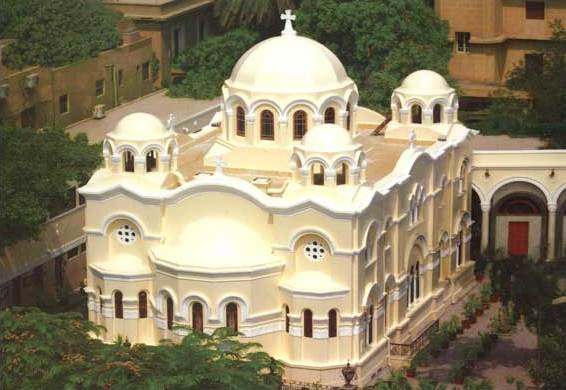
Start here
The story, in brief
In April 1968, reports of Mary’s appearance at Zeitoun in Cairo entered Egypt’s public life. Decades later, the Coptic Orthodox Church still commemorates the event. Pope Tawadros II presents it within a history of consolation after the 1967 war and of Mary’s special place in Egyptian Christian devotion. [SRC-01; SRC-02]
This is a Coptic Orthodox case. Its institutional recognition should be understood through that Church’s own authorities and worship, while historical questions about the reported phenomena remain distinguishable from the Church’s religious interpretation. [SRC-01; SRC-03]
Public rather than private
The tradition concerns widely reported appearances, not only a message delivered to one visionary.
Coptic recognition
The Coptic Orthodox Church affirms and commemorates the apparition.
Several kinds of evidence
A Church statement, crowd testimony and a photograph answer different questions.
Explore the chapters
Why 1968 mattered in Egypt
In his 2025 teaching, Tawadros II connects Zeitoun with the period following Egypt’s defeat in the 1967 war. He describes the appearance as a source of consolation and spiritual revival during the patriarchate of Pope Kyrillos VI. This situates the event within public grief and a search for hope. [SRC-01]
At the fifty-seventh anniversary, Tawadros also recalled that 1968 was the year of the return of relics of Saint Mark. In Coptic memory these events belong to a wider account of the Church’s continuity, renewal and connection to its apostolic roots. That religious context helps explain why Zeitoun became more than an isolated report of unusual light. [SRC-02]
A report that entered public life
The Coptic Church’s retrospective account describes an appearance reported publicly and discussed in the press, with the Church issuing a statement confirming it. This gives the case a different shape from an apparition known mainly through a visionary’s private journal. There are public reporting and institutional reception to investigate as well as individual experience. [SRC-01]
A large public response is historically significant, but the number of people discussing an event is not automatically the number of independent observations of the same detail. A careful reconstruction would distinguish direct observation, reports received from others and later retellings. The modern Church summaries do not supply a complete witness-by-witness reconstruction. [SRC-01; SRC-02]
Mary and the Holy Family in Egyptian faith
Tawadros explains Egyptian Marian devotion through the Holy Family’s flight into Egypt and the Church’s memory of that visit. Mary belongs within a story of God drawing near to people in a particular land. At Zeitoun, this older pattern of belonging becomes part of the interpretation of a modern event. [SRC-01; SRC-02]
The Church’s teaching connects love for Mary with love for Christ, prayer and a transformed life. Her importance does not depend only on whether a person has seen an apparition. The 2025 account directs attention to her relationship with Jesus and to the spiritual habits through which Christians remember and imitate her. [SRC-01]
What Coptic recognition actually means
The official Coptic account states that the Church confirmed the Zeitoun appearance under Kyrillos VI. Its present commemoration is documented in the words of Tawadros II; the dossier also identifies a Holy Synod record concerning the commemoration, whose exact Arabic wording still needs checking. [SRC-01; SRC-02; SRC-03]
This is a real institutional position and should not be reduced to “some people believe.” It is equally important to identify the institution accurately: the Pope of the Coptic Orthodox Church is not the Bishop of Rome. Catholic Vatican procedures should not be presented as the authority that made or governs this Coptic decision. [SRC-01; SRC-03]
What photographs could show
Photographs associated with Zeitoun invite a narrower question than the full theological claim: what did a particular camera record, when, and under what conditions? The official retrospective sources do not provide an authenticated collection of original negatives with an independent optical analysis. A reproduced image alone cannot supply that missing history. [SRC-01; SRC-02]
Conversely, noticing that an image is ambiguous does not establish that every observer was deceptive or that every account had one cause. The responsible inquiry would compare original image material with dated direct testimony and the physical circumstances of each observation. The institutional summaries leave that event-level analysis open. [SRC-01; SRC-02]
Why Christians and Muslims appear in the story
Tawadros notes that Mary is honored by both Christians and Muslims in Egypt. This helps explain how an event centered on Mary could attract attention beyond the Coptic community. A shared respect for her does not mean that the two religions make identical claims about Christ or about her place in salvation. [SRC-01]
The devotion’s public importance can therefore be studied without treating all participants as theologically interchangeable. The Coptic explanation sees a sign of maternal consolation and God’s care; the larger social history concerns how different communities encountered and remembered the reports. [SRC-01; SRC-02]
The strongest conclusion available here
The evidence firmly establishes that Zeitoun occupies a recognized place in Coptic Orthodox memory and present teaching. The Church’s own sources affirm the appearance rather than merely permitting a neutral cultural commemoration. That exact position deserves clear presentation. [SRC-01; SRC-02]
To determine more about the external phenomena, the most useful additions would be the complete original confirmation statement, the witness records behind it, and original photographic material with traceable custody. Those records would allow the historical and optical questions to be examined at the same level of detail as the institutional recognition. [SRC-01; SRC-03]
Catholic reflection & discussion
Consider the message as well as the event
Explore the devotional meaning described in this article alongside the history of the report and the Church's response. Make space for both a personal response and questions about the record.
These editorial prompts invite reflection on the article. They are distinct from Church teaching and the evidence findings.
Pause and reflect
- Which part of the reported message or its reception would you like to understand more deeply?
- What exactly does the Church's recorded decision cover, and which questions does it leave open?
- What would it look like to approach this story with both a receptive heart and care for the truth?
Discuss with family or a group
Choose questions suited to your readers' ages and experiences. Anyone can pass or keep a response private.
- Identify who reported the experience, who investigated it, and who made a Church decision. Why does each person's role matter?
- How could you speak respectfully with someone whose response to this story differs from your own?
Questions people ask
Open any question for a fuller answer and its sources.
Was Zeitoun approved by the Catholic Church?
Does the Coptic Church still remember the event?
Does a crowd rule out a natural explanation?
Why is the 1967 war part of the explanation?
Tawadros II places Zeitoun in the aftermath of that defeat and describes its consoling and renewing significance. This explains an important aspect of the Church’s interpretation; it does not by itself establish the physical cause of the reported appearance. [SRC-01]
What the evidence can establish
Evidence verdict: unresolved
What does the Coptic Orthodox Church officially state about the 1968–1971 Zeitoun phenomena, and what can photographs or mass testimony establish?
The Coptic Orthodox Church officially commemorates and states that the apparition occurred. That institutional recognition and mass-report history do not by themselves identify the cause of every light, image, or photograph.
Church or institutional status
Formally confirmed and currently commemorated by the Coptic Orthodox Church
- Authority
- Coptic Orthodox Church / Pope Kyrillos VI and Holy Synod
- Scope of the finding
- The Zeitoun apparition as recognized in Coptic Church tradition.
- Limits of the finding
- Church recognition does not substitute for event-specific optical, photographic, or witness analysis.
Sources and notes
Back to the overviewSource labels describe a document's type and role, not the strength of a claim. Where provided, notes explain its use, access limits, and outstanding checks.
- SRC-01Coptic Orthodox Church — 2025 'Stories of the Planted Tree' (opens in a new tab)Official source
States that the Coptic Church issued an official statement confirming the Zeitoun appearance. What it does not establish: Summarizes rather than reproduces the 1968 statement and its evidence.
- SRC-02Coptic Orthodox Church — Pope Tawadros II on the 57th anniversary (opens in a new tab)Official source
Documents current official commemoration of the 1968 event. What it does not establish: Commemoration is not independent optical or photographic analysis.
Records Holy Synod adoption of the Zeitoun apparition commemoration. What it does not establish: Arabic source; exact scope and translation need verification.
Corrections and updates
Expanded this file with a sourced narrative, 7 chapters and 4 answers to common questions. The existing evidence verdict label and institutional status are retained. Independent human review remains pending.