
Start here
The story, in brief
The Kibeho reports began at a school on 28 November 1981. Soon there were more alleged visionaries and more messages than a simple “approved apparition” label could responsibly cover. The Church’s eventual answer was selective: three initial visionaries, a defined body of public events, and explicit exclusions. [KIB-01]
That selectivity is part of the interest of Kibeho. The bishop did not merely endorse a popular phenomenon. He distinguished the founding reports from later claims and situated the shrine’s purpose in conversion, compassion, and reconciliation. [KIB-01]
Three people are named
The judgment identifies Alphonsine Mumureke, Nathalie Mukamazimpaka, and Marie-Claire Mukangango. [KIB-01]
The title points to Christ
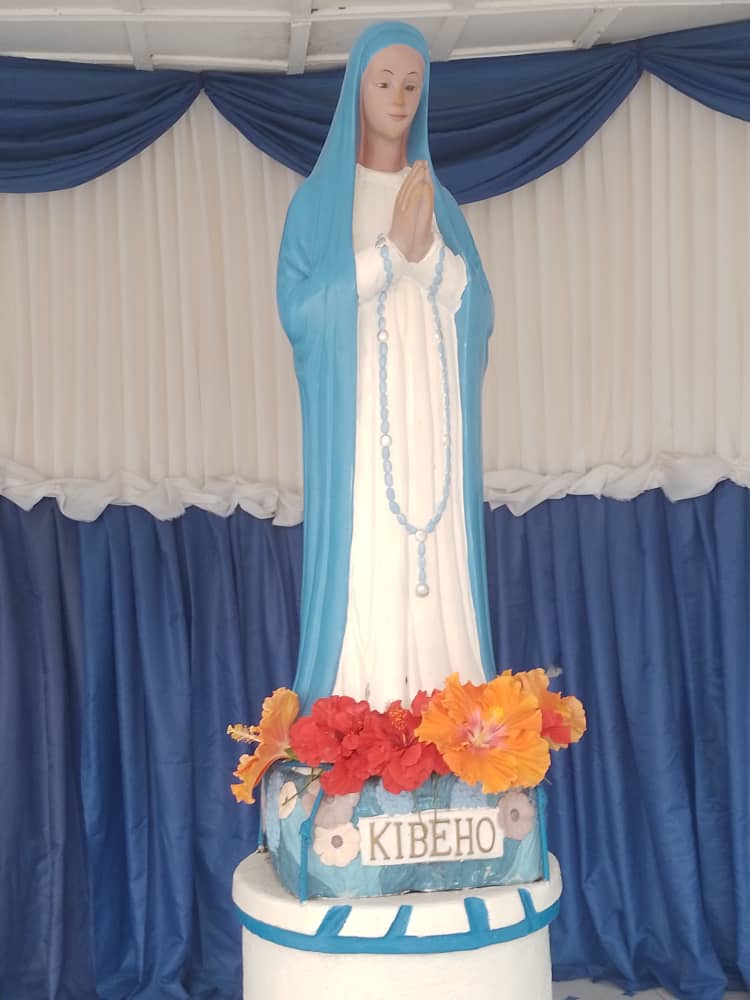
Mother of the Word is the Marian title given in the recognized account. [KIB-01]
Recognition has boundaries
The act excludes alleged appearances of Jesus and does not endorse every later visionary. [KIB-01]
Explore the chapters
The school reports became a national question
The published diocesan account describes unusual events beginning at the Kibeho school and a proliferation of claimants both locally and elsewhere in Rwanda. Medical and theological commissions were working by April 1982. This early institutional response matters because the final judgment was not made after only a brief devotional visit. [KIB-01]
The hard question was not simply whether Kibeho attracted prayer. It was which experiences, people, and messages could be responsibly recommended. The larger a phenomenon becomes, the less adequate a single endorsement is as a description of everything associated with its name. [KIB-01; KIB-03]
Why only the first three visionaries?
Bishop Augustin Misago’s 2001 declaration retained Alphonsine, Nathalie, and Marie-Claire. His published explanation points to their place in the early events and their satisfaction of the Church’s discernment criteria. Later claimants were not put forward as reliable references for the faithful. [KIB-01]
This is a meaningful limit, not a minor footnote. A message attributed to “Kibeho” cannot inherit authority until its speaker and place in the recognized record are identified. The judgment gives a reader a way to ask better questions about the many later retellings. [KIB-01]
Mother of the Word: a title with a theological center
The recognized account uses Nyina wa Jambo, translated in the diocesan summary as Mother of the Word and explained in relation to Mother of God. The title directs attention to who Jesus is in Christian faith. Mary’s significance is inseparable from her relation to him; she is not being introduced as a separate divine figure. [KIB-01]
The bishop describes the message as consistent with Scripture and the living tradition of the Church. In this framework an apparition reminds people of the faith they are called to live. It does not add a new revelation that displaces Christ or makes the visionary an independent teaching authority. [KIB-01; KIB-04]
Why 1982 and 1983 matter most
The published judgment identifies those two years as decisive for the message and the signs considered in the investigation. It limits the assessment to public apparitions, meaning events in the presence of several witnesses, not necessarily a crowd. That does not mean every person present claimed to see Mary. [KIB-01]
The distinction helps separate observation of a visionary from participation in the visionary’s experience. It also prevents later material from being silently folded into the original assessment. A dated early record is more useful to the case than a dramatic quotation with no traceable source. [KIB-01; KIB-03]
Permission in 1988 was not the final judgment
Public devotion was permitted in 1988 while authenticity and the selection of visionaries remained unsettled. The final diocesan judgment came on 29 June 2001. Those were different steps answering different questions. Treating the earlier permission as the complete later finding erases the work the Church still considered necessary. [KIB-01]
The Holy See Press Office published the diocesan account, but publication there does not turn Bishop Misago’s act into a papal decree. Accurate attribution allows the reader to understand who decided, what was decided, and what evidence was described. [KIB-01]
Reconciliation is more than an epilogue
The bishop presents Kibeho as a place for conversion, reparation, compassion, and reconciliation after the region’s troubled years. That gives the devotion a practical moral horizon: a pilgrim’s response should concern relations with other people, not only fascination with extraordinary experiences. [KIB-01]
Claims that the visions precisely predicted the 1994 genocide require a dated, authoritative record of the relevant wording. The inspected public summary does not provide that complete evidentiary chain. Such claims should not overwhelm the concrete call to reconciliation that the published Church account does support. [KIB-01]
A serious judgment that acknowledges its limits
The bishop’s own explanation says apparition judgments are not infallible and do not produce absolute certainty. It leaves Christians free to adhere. That is not an embarrassed retreat from recognition; it describes the kind of judgment being made about testimony, doctrine, and spiritual results. [KIB-01; KIB-03]
The complete 23-page act, commission reports, medical files, and original testimony transcripts have not been inspected here. Those are the materials that would deepen an independent historical analysis. Until then, the public judgment should be reported precisely, with its positive conclusion and its explicit exclusions together. [KIB-01]
Catholic reflection & discussion
Consider the message as well as the event
Explore the devotional meaning described in this article alongside the history of the report and the Church's response. Make space for both a personal response and questions about the record.
These editorial prompts invite reflection on the article. They are distinct from Church teaching and the evidence findings.
Pause and reflect
- Which part of the reported message or its reception would you like to understand more deeply?
- What exactly does the Church's recorded decision cover, and which questions does it leave open?
- What would it look like to approach this story with both a receptive heart and care for the truth?
Discuss with family or a group
Choose questions suited to your readers' ages and experiences. Anyone can pass or keep a response private.
- Identify who reported the experience, who investigated it, and who made a Church decision. Why does each person's role matter?
- How could you speak respectfully with someone whose response to this story differs from your own?
Questions people ask
Open any question for a fuller answer and its sources.
Did the Church approve every Kibeho visionary?
No. The declaration selects three initial visionaries and declines to recommend later claimants as a group. [KIB-01]
Were alleged appearances of Jesus included?
No. They are explicitly excluded from the declaration’s assessment. [KIB-01]
Does “public” mean everyone saw the apparition?
No. In the published definition it means the event occurred before several witnesses. That is not equivalent to a shared vision of the figure. [KIB-01]
Is a precise genocide prophecy established here?
No. That requires a separately dated and authenticated source chain. The public statement inspected for this file does not supply it. [KIB-01]
What the evidence can establish
Evidence verdict: unresolved
Does independently reviewable evidence establish that the public phenomena reported by the three named initial visionaries at Kibeho in 1981–83 were supernatural?
The official record establishes a long diocesan investigation and a carefully limited, probabilistic Church judgment. The complete commission evidence and contemporary transcripts were not publicly inspected, so the available evidence neither independently establishes nor excludes supernatural causation.
Church or institutional status
Diocesan recognition—Kibeho (2001); limited, non-infallible, and non-obligatory.
- Authority
- Bishop Augustin Misago, local Ordinary of Gikongoro, 29 June 2001.
- Scope of the finding
- Diocesan recognition is limited to the public apparitions associated with the three named initial visionaries.
- Limits of the finding
- The declaration describes its conclusion as probabilistic and non-infallible, not an article of faith; it does not approve later alleged seers, alleged apparitions of Jesus, or every later claim associated with Kibeho.
- Official sources
- [KIB-01]
Sources and notes
Back to the overviewSource labels describe a document's type and role, not the strength of a claim. Where provided, notes explain its use, access limits, and outstanding checks.
- KIB-01Holy See Press Office, "Declaration of the Bishop of Gikongoro Concerning the Apparitions of Kibeho (Rwanda)", 29 June 2001 (opens in a new tab)Official source
Official contemporaneous bulletin summarizing and quoting key parts of the bishop's 23-page declaration; establishes the commissions, recognized visionaries, exclusions, probabilistic standard, and non-obligatory character. It is not the complete 23-page act.
- KIB-03Congregation for the Doctrine of the Faith, "Norms Regarding the Manner of Proceeding in the Discernment of Presumed Apparitions or Revelations", 25 February 1978 (opens in a new tab)Official source
Preliminary note and sections I–III — Framework then in force for positive and negative criteria and the competence of the local Ordinary. General framework, not evidence that every procedure was performed in this case.
Recognized private revelations do not belong to the deposit of faith and do not improve or complete Christ's definitive Revelation.
Corrections and updates
Expanded this file with a sourced narrative, 7 chapters and 4 answers to common questions. The existing evidence verdict label and institutional status are retained. Independent human review remains pending.