
Start here
The story, in brief
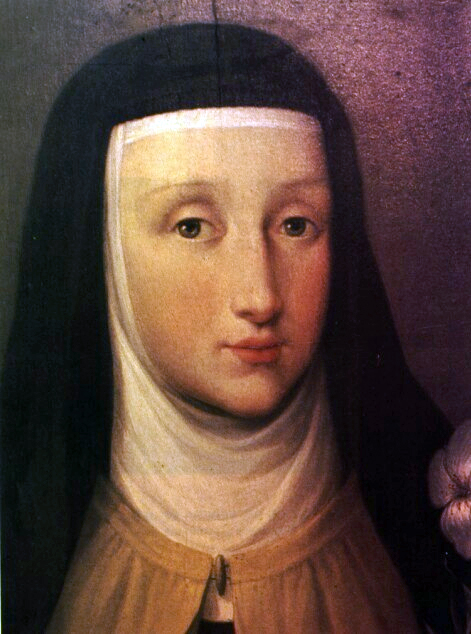
Teresa Margaret of the Sacred Heart died before turning twenty-three. Her official biography remembers prayer and care for elderly sisters, an apparently small field of action with real human consequences. [SAINT-SAINT-TERESA-MARGARET-OF-THE-SACRED-HEART-S01]
The same source describes her body as incorrupt. That statement can be reported accurately without making it the only reason to remember a young woman whose religious life was directed toward attentive love. [SAINT-SAINT-TERESA-MARGARET-OF-THE-SACRED-HEART-S01]
A brief life
She died before age twenty-three. [SAINT-SAINT-TERESA-MARGARET-OF-THE-SACRED-HEART-S01]
Care close to home
Service to elderly sisters gave her devotion a practical form. [SAINT-SAINT-TERESA-MARGARET-OF-THE-SACRED-HEART-S01]
Distinct evidence
The bodily claim is not established by canonization alone. [SAINT-SAINT-TERESA-MARGARET-OF-THE-SACRED-HEART-S01]
Explore the chapters
Anna Maria Redi chooses Carmel
Born in Arezzo in 1747, Anna Maria was educated in Florence and entered the Carmelite monastery there in 1764. She received the religious habit and the name Teresa Margaret the following year. The official account identifies Teresa ofÁvila as an important inspiration in that decision. [SAINT-SAINT-TERESA-MARGARET-OF-THE-SACRED-HEART-S01]
A short sentence becomes a way of life
The biography connects her spiritual development with the First Letter of John’s teaching that God is love. Its significance is practical: a theological statement becomes something to live through the treatment of other people. The question is whether the belief changes the quality of daily attention. [SAINT-SAINT-TERESA-MARGARET-OF-THE-SACRED-HEART-S01]
The elderly sisters were not incidental
Her service to older members of the community is specifically identified by the Dicastery. Enclosure did not remove dependence, aging, or the need for care. Her remembered contribution belongs to those ordinary relationships, showing how a limited physical setting can contain substantial moral responsibility. [SAINT-SAINT-TERESA-MARGARET-OF-THE-SACRED-HEART-S01]
Why a quiet life can matter
John Paul II’s 1994 address places her among witnesses to prayer and a demanding religious vocation. The Catholic interpretation does not require a famous public career. It locates significance in a life shaped by love of God and expressed through the responsibilities actually given to a person. [SAINT-SAINT-TERESA-MARGARET-OF-THE-SACRED-HEART-S01]
An early death and a bodily report
The official biography dates her death to 7 March 1770 and attributes it to peritonitis. It also reports fragrance and an incorrupt body at the Florentine Carmel. These are claims in the institutional biography; the source does not supply the clinical, anatomical, or conservation materials needed to independently evaluate them. [SAINT-SAINT-TERESA-MARGARET-OF-THE-SACRED-HEART-S01]
What the Church recognized
Beatification in 1929 and canonization in 1934 are recorded on the official page. Those acts establish Catholic recognition. They do not convert every reported bodily feature into a separately demonstrated miracle. The person’s life, the cause, and the remains each deserve their own evidentiary attention. [SAINT-SAINT-TERESA-MARGARET-OF-THE-SACRED-HEART-S01]
A useful question to take away
The life invites a simple but demanding examination: does a belief about love make someone more attentive to the people who repeatedly need help? That interpretation follows the source’s connection between prayer and elder care. It remains intelligible even while the preservation question awaits stronger material evidence. [SAINT-SAINT-TERESA-MARGARET-OF-THE-SACRED-HEART-S01]
Catholic reflection & discussion
Look for the person within the story
Spend a moment with the choices, relationships and hardships in this life. Consider what you might learn from the person as well as from the extraordinary claims examined in the file.
These editorial prompts invite reflection on the article. They are distinct from Church teaching and the evidence findings.
Pause and reflect
- Which choice or experience in this life stays with you, and why?
- What would you like to understand better about the person's faith and the world they lived in?
- Is there a small act of patience, courage or service that this reading invites you to consider?
Discuss with family or a group
Choose questions suited to your readers' ages and experiences. Anyone can pass or keep a response private.
- Ask each person to choose a moment from the life described here. What makes that moment worth remembering?
- Which details have clear sources, and which remain uncertain? How could you tell the story honestly without losing its human meaning?
Questions people ask
Open any question for a fuller answer and its sources.
How old was she when she died?
The official dates place her death in 1770 before her twenty-third birthday. [SAINT-SAINT-TERESA-MARGARET-OF-THE-SACRED-HEART-S01]
What did she do within the convent?
The biography highlights prayer and care for elderly sisters. [SAINT-SAINT-TERESA-MARGARET-OF-THE-SACRED-HEART-S01]
Is the incorruption claim actually in an official source?
Yes. The Dicastery biography includes it, but does not publish an anatomical or conservation report. [SAINT-SAINT-TERESA-MARGARET-OF-THE-SACRED-HEART-S01]
What is distinctive about her spirituality?
The source connects her life with the conviction that God is love and its expression through daily service. [SAINT-SAINT-TERESA-MARGARET-OF-THE-SACRED-HEART-S01]
What the evidence can establish
Evidence verdict: unresolved
Does the available evidence establish that the displayed or attributed remains of Saint Teresa Margaret of the Sacred Heart are the naturally preserved, substantially intact body of that person, without undisclosed embalming, reconstruction, wax covering, replacement, or later conservation treatment?
Canonized Catholic saint. Official sources confirm that status or custody for Saint Teresa Margaret of the Sacred Heart. They do not provide the independent anatomical evidence, custody documentation, or treatment history needed to answer whether the remains are naturally preserved.
Sources: [SAINT-SAINT-TERESA-MARGARET-OF-THE-SACRED-HEART-S01]
Church or institutional status
Canonized Catholic saint
- Authority
- Dicastery for the Causes of Saints
- Scope of the finding
- The cited official record documents the person's Catholic canonization and saintly title.
- Limits of the finding
- It does not authenticate the attributed remains, establish natural preservation, or prove a miracle.
- Official sources
- [SAINT-SAINT-TERESA-MARGARET-OF-THE-SACRED-HEART-S01]
Sources and notes
Back to the overviewSource labels describe a document's type and role, not the strength of a claim. Where provided, notes explain its use, access limits, and outstanding checks.
- SAINT-SAINT-TERESA-MARGARET-OF-THE-SACRED-HEART-S01Dicastery for the Causes of Saints profile — Saint Teresa Margaret of the Sacred Heart (opens in a new tab)Official source
Identifies this person and records the stated Catholic beatification/canonization or liturgical status; it does not establish the physical preservation claim. What it does not establish: This institutional record establishes only the stated act, status, teaching, or account; it does not independently establish material identity, preservation mechanism, or supernatural causation.
Corrections and updates
Expanded this file with a sourced narrative, 7 chapters and 4 answers to common questions. The existing evidence verdict label and institutional status are retained. Independent human review remains pending.