
Start here
The story, in brief
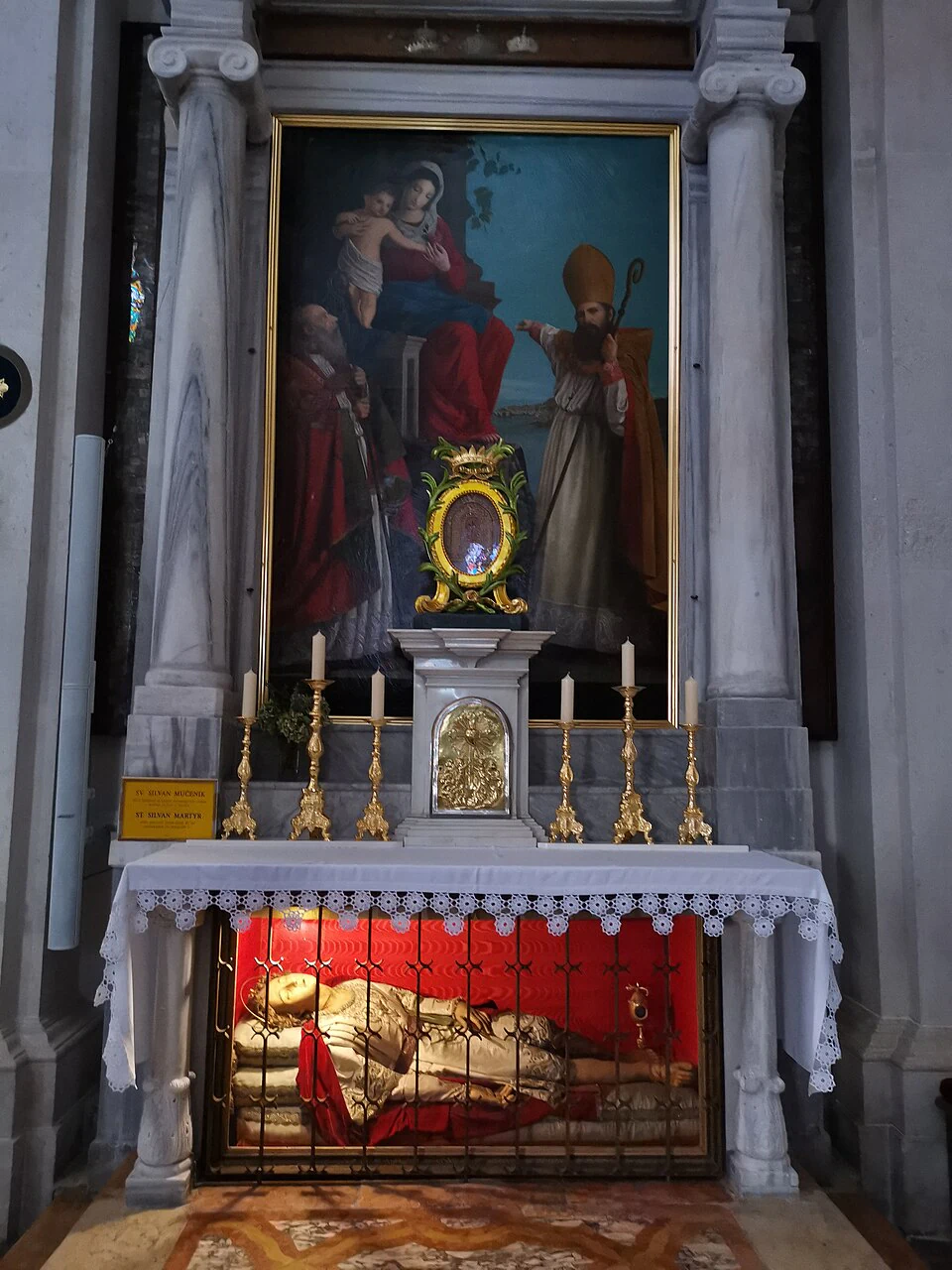
A lifelike face can create the impression that a person has survived intact. In this case, the official Cathedral guide supplies the crucial correction: Saint Silvan at the Church of Saint Blaise is an example of bones placed inside a wax figure. [SAINT-SAINT-SILVAN-S01]
The guide does not establish which historical Silvan is represented. That prevents a responsible page from supplying a dramatic ancient biography merely because it fits the name. The object has a story; the identity still needs evidence. [SAINT-SAINT-SILVAN-S01]
Wax and bones
The visible figure and enclosed material are different things. [SAINT-SAINT-SILVAN-S01]
Identity remains open
The name does not establish a complete biography. [SAINT-SAINT-SILVAN-S01]
A narrow correction
The intact-body claim is contradicted by the official description. [SAINT-SAINT-SILVAN-S01]
Explore the chapters
What the guide actually identifies
Dubrovnik Cathedral’s explanation of reliquaries explicitly uses this display as an example of bones within wax. That establishes construction in broad terms. It does not identify each bone, describe the complete inventory, or establish the age and biological identity of the material. [SAINT-SAINT-SILVAN-S01]
A reliquary is a container with a purpose
The guide explains relics as material connections with holy people and distinguishes different forms of their containers. A human-shaped figure can therefore be a reliquary rather than an exposed corpse. Understanding that purpose allows the object to be read as devotional presentation without demanding that its wax surface be supernatural flesh. [SAINT-SAINT-SILVAN-S01]
Why the face is not the evidence
The figure’s human appearance belongs to the artistic object. The physical identity question concerns the bones inside. Conflating the two transfers the emotional force of a recognizable body to material whose provenance has not yet been demonstrated in this file. The custodian’s own distinction helps prevent that mistake. [SAINT-SAINT-SILVAN-S01]
Which Silvan is the unresolved question
The source names Saint Silvan but does not provide an unambiguous biography or a specific historical recognition act. Similar saintly names are not sufficient to connect this display with a particular martyrdom account. A relic authentication, transfer inventory, and early label history would be meaningful next evidence. [SAINT-SAINT-SILVAN-S01]
What DEBUNKED means here
The dossier rejects the narrow proposition that the body-like display is a naturally preserved intact human body. It does not conclude that no human remains are present; the custodian says there are bones. Nor does it establish deliberate deception by the Church, the current caretakers, or an unknown maker. [SAINT-SAINT-SILVAN-S01]
An honest object can still reward attention
The display raises worthwhile questions about religious art, memory, and the human desire to encounter the past. The Cathedral’s account gives a useful starting point by explaining what such a container is. A richer biography should wait for identity evidence, while a richer object history can follow craftsmanship, custody, and devotional use. [SAINT-SAINT-SILVAN-S01]
Catholic reflection & discussion
Look for the person within the story
Spend a moment with the choices, relationships and hardships in this life. Consider what you might learn from the person as well as from the extraordinary claims examined in the file.
These editorial prompts invite reflection on the article. They are distinct from Church teaching and the evidence findings.
Pause and reflect
- Which choice or experience in this life stays with you, and why?
- What would you like to understand better about the person's faith and the world they lived in?
- Is there a small act of patience, courage or service that this reading invites you to consider?
Discuss with family or a group
Choose questions suited to your readers' ages and experiences. Anyone can pass or keep a response private.
- Ask each person to choose a moment from the life described here. What makes that moment worth remembering?
- Which details have clear sources, and which remain uncertain? How could you tell the story honestly without losing its human meaning?
Questions people ask
Open any question for a fuller answer and its sources.
Is the visible figure a naturally intact body?
No. The official Cathedral source identifies bones arranged in a wax figure. [SAINT-SAINT-SILVAN-S01]
Does that mean there are no human remains?
No. The source explicitly says bones are present; their precise identity and inventory are not established here. [SAINT-SAINT-SILVAN-S01]
Which historical Silvan is it?
The inspected source does not settle that question. This article does not attach an unsourced biography to the display. [SAINT-SAINT-SILVAN-S01]
Does DEBUNKED mean the custodian is lying?
No. The correction comes from the custodian’s own description. The verdict addresses the intact-body claim, not an allegation of intent. [SAINT-SAINT-SILVAN-S01]
What the evidence can establish
Evidence verdict: debunked
Is the body-like Saint Silvan display in the Church of Saint Blaise a naturally preserved, intact human body?
No. The official cathedral relic guide identifies it as bones placed within a wax figure. The official custodian says the body-like object is a wax figure containing bones. It is therefore not a naturally preserved intact body. Whether the bones are authentic, whose they are, and how much human material is present remain unresolved.
Sources: [SAINT-SAINT-SILVAN-S01]
Church or institutional status
Catholic local cult and diocesan shrine
- Authority
- Dubrovnik Catholic custodian
- Scope of the finding
- The current Catholic custodian identifies the figure and relic as Saint Silvan, but no exact formal canonization, confirmation of cult, or other recognition act tied unambiguously to this Silvan was located.
- Limits of the finding
- Ecclesial recognition, commemoration, or custodial attribution is separate from physical identity and preservation evidence.
- Official sources
- [SAINT-SAINT-SILVAN-S01]
Sources and notes
Back to the overviewSource labels describe a document's type and role, not the strength of a claim. Where provided, notes explain its use, access limits, and outstanding checks.
- SAINT-SAINT-SILVAN-S01Dubrovnik Cathedral — cathedral treasury/reliquaries (opens in a new tab)Official source
In its explanation of reliquary forms, the cathedral says that bones can be placed in a wax figure and gives Saint Silvan in the Church of Saint Blaise as the example: “kosti uložene u voštanu figuru (kao sv. Silvana u crkvi Sv. Vlaha).” What it does not establish: it establishes the display construction, but does not identify which Silvan is represented or publish an authenticum, inventory, anatomy, provenance, or treatment history for the bones.
Corrections and updates
Expanded this file with a sourced narrative, 6 chapters and 4 answers to common questions. The existing evidence verdict label and institutional status are retained. Independent human review remains pending.