
Start here
The story, in brief
Philippine Duchesne’s first Missouri school began in 1818; the original log building no longer survives. Her shrine instead preserves books and other objects associated with that early community. The absence of the first building makes the surviving traces more valuable. [SAINT-SAINT-ROSE-PHILIPPINE-DUCHESNE-S01]
Her life also includes work among the Potawatomi and decades of persistent religious education. The 1855 report about her exhumed body belongs within that longer story, not in place of it. [SAINT-SAINT-ROSE-PHILIPPINE-DUCHESNE-S01]
Education with a history
The 1818 foundation grew into a wider regional legacy. [SAINT-SAINT-ROSE-PHILIPPINE-DUCHESNE-S01]
A dated custodial report
The preservation account concerns the 1855 exhumation. [SAINT-SAINT-ROSE-PHILIPPINE-DUCHESNE-S01]
Objects invite inquiry
Books and surviving articles provide concrete historical anchors. [SAINT-SAINT-ROSE-PHILIPPINE-DUCHESNE-S01]
Explore the chapters
A French religious reaches Missouri
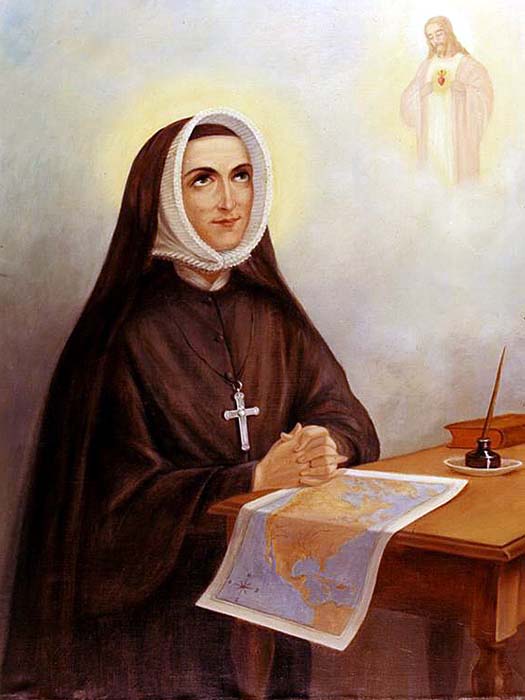
Duchesne arrived with the Sacred Heart mission in 1818. The custodian connects her small school for girls at Saint Charles with later Catholic education in the region. It is an institutional account of origins; a full educational history should also examine pupils, teachers, and the surrounding communities. [SAINT-SAINT-ROSE-PHILIPPINE-DUCHESNE-S01]
Making the work continue
The shrine describes schools in Missouri and Louisiana and the establishment of a novitiate. Those developments matter because teaching requires continuity: trained members, a common purpose, and somewhere for the next generation to learn. The legacy extended beyond the survival of one early schoolhouse. [SAINT-SAINT-ROSE-PHILIPPINE-DUCHESNE-S01]
The Potawatomi chapter
The custodial biography describes a year among the Potawatomi in Kansas and remembers her through a name associated with constant prayer. This is the congregation’s account of the encounter. A balanced expansion of the mission history also needs Indigenous voices and the wider context of displacement, rather than assuming a missionary narrative tells the entire story. [SAINT-SAINT-ROSE-PHILIPPINE-DUCHESNE-S01]
Objects can make an early life tangible
The shrine preserves books brought from France and modest articles associated with the pioneer community. It also identifies a crucifix connected with the Visitation convent in Grenoble. These objects offer a path into education, prayer, and daily life without asking a lifelike reconstruction to supply invented intimacy. [SAINT-SAINT-ROSE-PHILIPPINE-DUCHESNE-S01]
The 1855 exhumation report
Duchesne died in 1852. The shrine says her body was exhumed three years later and found intact, using a miraculous interpretation. It records reburial in a small shrine, then indoor relocation in 1949. The account establishes the custodian’s chronology and claim; the underlying examination remains necessary for a material assessment. [SAINT-SAINT-ROSE-PHILIPPINE-DUCHESNE-S01]
Why the present shrine has its shape
Construction began in 1951, and the sarcophagus entered the new shrine in 1952. The custodian explains that the originally planned larger building was not completed because funds ran out. This practical detail makes the memorial’s history human: devotion, architecture, and available resources all shaped what visitors now encounter. [SAINT-SAINT-ROSE-PHILIPPINE-DUCHESNE-S01] [SAINT-SAINT-ROSE-PHILIPPINE-DUCHESNE-S02]
Recognition and historical responsibility
The Church canonized Duchesne on 3 July 1988. Recognition does not remove the need to investigate the wider social history of frontier missions or the treatment of the remains. Her shrine is a starting point for both: it preserves a religious legacy and identifies concrete objects, dates, and places that can be examined. [SAINT-SAINT-ROSE-PHILIPPINE-DUCHESNE-S01] [SAINT-SAINT-ROSE-PHILIPPINE-DUCHESNE-S03]
Catholic reflection & discussion
Look for the person within the story
Spend a moment with the choices, relationships and hardships in this life. Consider what you might learn from the person as well as from the extraordinary claims examined in the file.
These editorial prompts invite reflection on the article. They are distinct from Church teaching and the evidence findings.
Pause and reflect
- Which choice or experience in this life stays with you, and why?
- What would you like to understand better about the person's faith and the world they lived in?
- Is there a small act of patience, courage or service that this reading invites you to consider?
Discuss with family or a group
Choose questions suited to your readers' ages and experiences. Anyone can pass or keep a response private.
- Ask each person to choose a moment from the life described here. What makes that moment worth remembering?
- Which details have clear sources, and which remain uncertain? How could you tell the story honestly without losing its human meaning?
Questions people ask
Open any question for a fuller answer and its sources.
Does the original 1818 school still stand?
The custodian says the original log building no longer exists, but associated objects are preserved. [SAINT-SAINT-ROSE-PHILIPPINE-DUCHESNE-S01]
What does the shrine say about the body?
It reports an intact body at the 1855 exhumation and interprets that condition religiously. The full examination record is not supplied here. [SAINT-SAINT-ROSE-PHILIPPINE-DUCHESNE-S01]
Why seek Indigenous perspectives?
The shrine tells the congregation’s mission history. Understanding encounters with the Potawatomi requires the people encountered to be subjects of the history as well. [SAINT-SAINT-ROSE-PHILIPPINE-DUCHESNE-S01]
Why is the shrine smaller than originally planned?
The custodian says funding limitations prevented completion of the full architectural plan. [SAINT-SAINT-ROSE-PHILIPPINE-DUCHESNE-S01]
What the evidence can establish
Evidence verdict: unresolved
Are the remains in the Saint Charles shrine a naturally preserved, substantially intact body without undisclosed treatment or reconstruction?
The custodian reports a historical exhumation observation and later transfers, but no current anatomy/treatment report was found. The shrine’s current custodian reports that a historic 1855 exhumation described the body as intact and documents later relocations. Without the underlying exhumation file or current anatomy and conservation records, natural substantial preservation remains unresolved.
Sources: [SAINT-SAINT-ROSE-PHILIPPINE-DUCHESNE-S01; SAINT-SAINT-ROSE-PHILIPPINE-DUCHESNE-S02; SAINT-SAINT-ROSE-PHILIPPINE-DUCHESNE-S03]
Church or institutional status
Canonized Catholic saint
- Authority
- Shrine of Saint Philippine Duchesne and Holy See
- Scope of the finding
- Roman Catholic saint, canonized by John Paul II on 3 July 1988.
- Limits of the finding
- Ecclesial recognition, commemoration, or custodial attribution is separate from physical identity and preservation evidence.
Sources and notes
Back to the overviewSource labels describe a document's type and role, not the strength of a claim. Where provided, notes explain its use, access limits, and outstanding checks.
- SAINT-SAINT-ROSE-PHILIPPINE-DUCHESNE-S01Society of the Sacred Heart — about the shrine (opens in a new tab)Official source
It says a 1855 exhumation, three years after death, found the body “miraculously intact”; it then describes a 1940 instruction from Rome and the 1949 move to a marble sarcophagus. What it does not establish: this is a custodian history; the quoted characterization is not a current independent examination and the page does not publish anatomy, treatment, or inventories.
- SAINT-SAINT-ROSE-PHILIPPINE-DUCHESNE-S02Society of the Sacred Heart — shrine groundbreaking retrospective (opens in a new tab)Official source
It corroborates the transfer/shrine chronology. What it does not establish: no physical analysis.
- SAINT-SAINT-ROSE-PHILIPPINE-DUCHESNE-S03John Paul II apostolic letter, 3 July 1988 (opens in a new tab)Official source
The canonization decretal letter documents the formal act/date. What it does not establish: canonization does not authenticate preservation.
Corrections and updates
Expanded this file with a sourced narrative, 7 chapters and 4 answers to common questions. The existing evidence verdict label and institutional status are retained. Independent human review remains pending.