
Start here
The story, in brief
People facing cancer often encounter Peregrine’s name because a healing tradition became central to his devotion. The appeal is understandable: the story meets fear about a threatened body and an uncertain future. [SAINT-SAINT-PEREGRINE-LAZIOSI-S01]
The official biography is also unusually candid about uncertainty in his conversion story. It offers a way to tell the tradition sympathetically without turning it into either a medical promise or a fully documented eyewitness narrative. [SAINT-SAINT-PEREGRINE-LAZIOSI-S01]
A Servite brother
The source distinguishes his vocation from priesthood. [SAINT-SAINT-PEREGRINE-LAZIOSI-S01]
A healing tradition
The reported recovery lacks a modern diagnostic record here. [SAINT-SAINT-PEREGRINE-LAZIOSI-S01]
Compassionate hope
Intercession should not become a promised outcome. [SAINT-SAINT-PEREGRINE-LAZIOSI-S01]
Explore the chapters
A young man in a divided city
Born at Forlì around 1265, Peregrine is associated with political and religious unrest involving papal authority. The Dicastery page says accounts differ about his reported assault on Philip Benizi. The familiar dramatic turning point should therefore be introduced as a disputed hagiographic episode, not secure dialogue from a courtroom record. [SAINT-SAINT-PEREGRINE-LAZIOSI-S01]
The Servite vocation is clearer than the turning point
He entered the Servants of Mary around age thirty and underwent formation at Siena before returning to Forlì. The source explicitly identifies him as a religious brother rather than a priest. His conversion’s precise circumstances remain uncertain, while the broad religious vocation is part of the official account. [SAINT-SAINT-PEREGRINE-LAZIOSI-S01]
Why service belongs beside the healing
The Dicastery’s introductory description emphasizes devotion to Christ and concern for poor people. That gives the life moral and religious content before illness enters it. Peregrine should not become only a name attached to a disease; he is remembered within a community and a practice of service. [SAINT-SAINT-PEREGRINE-LAZIOSI-S01]
The leg-healing tradition
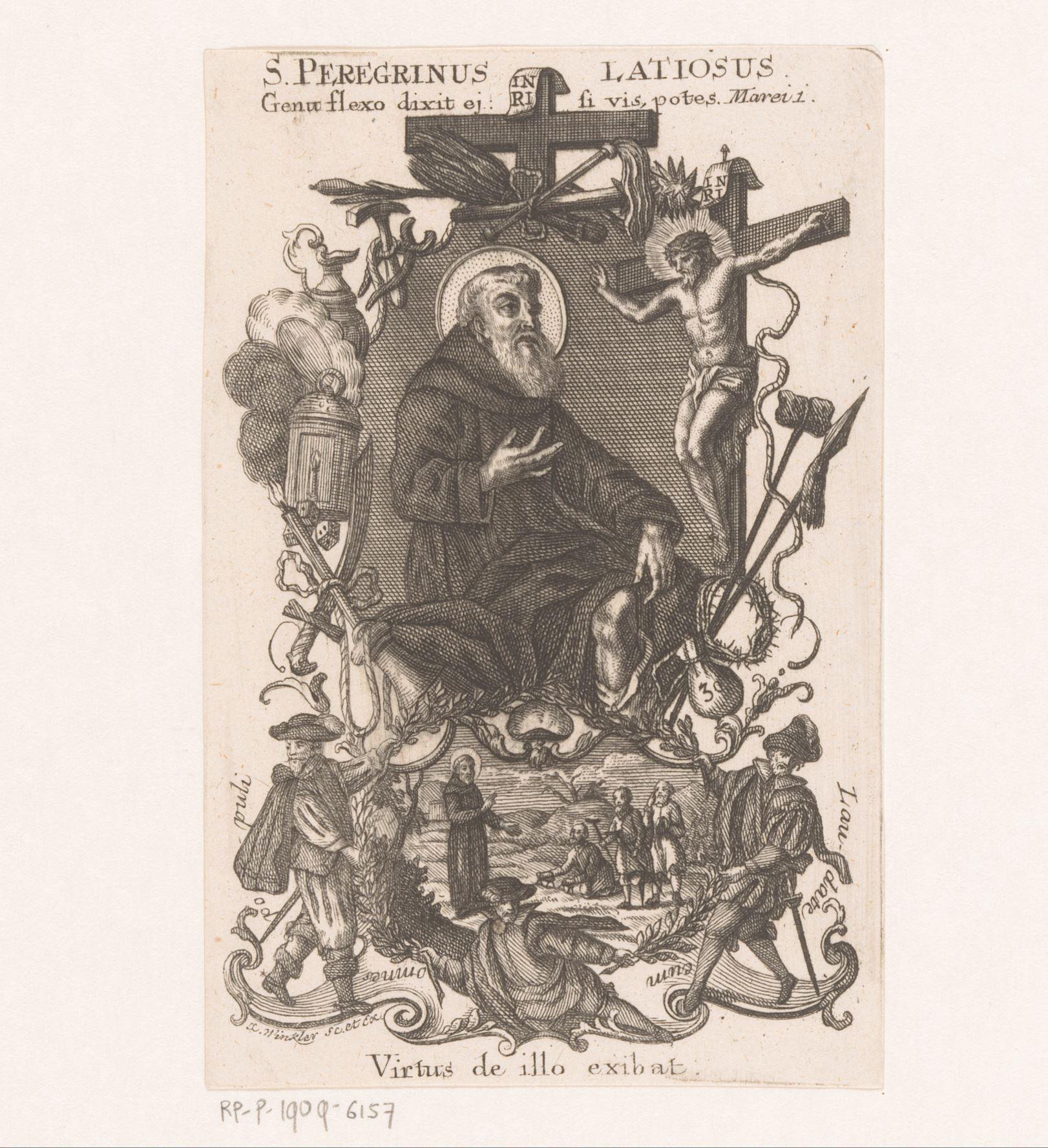
The biography describes severe illness of a leg and an extraordinary recovery associated with prayer before the Crucified Christ. This is a historical healing account. It does not provide modern pathology, a verified diagnosis, or the full clinical course needed to retrospectively classify a cancer or demonstrate its mechanism of disappearance. [SAINT-SAINT-PEREGRINE-LAZIOSI-S01]
Hope without a promised outcome
Devotion to Peregrine expresses intercession and solidarity with people who suffer. A historical recovery story cannot guarantee another person’s result or establish that failure to recover reflects inadequate faith. The article’s purpose is to explain the hope the tradition carries, not turn that hope into a prediction. [SAINT-SAINT-PEREGRINE-LAZIOSI-S01]
A cult recognized over time
The official page says Paul V authorized an existing cult with the title Blessed in 1609; canonization followed in 1726. These are specific recognition milestones. The source does not establish that the lifetime leg recovery was one of the formally accepted miracles at a particular cause stage. [SAINT-SAINT-PEREGRINE-LAZIOSI-S01]
The body is another question
A claim that attributed remains are naturally preserved needs custody, anatomical, and conservation documentation. The healing tradition does not provide it. The most useful next research would separately examine early Life manuscripts, recognition documents, and any records concerning the actual remains. [SAINT-SAINT-PEREGRINE-LAZIOSI-S01]
Catholic reflection & discussion
Look for the person within the story
Spend a moment with the choices, relationships and hardships in this life. Consider what you might learn from the person as well as from the extraordinary claims examined in the file.
These editorial prompts invite reflection on the article. They are distinct from Church teaching and the evidence findings.
Pause and reflect
- Which choice or experience in this life stays with you, and why?
- What would you like to understand better about the person's faith and the world they lived in?
- Is there a small act of patience, courage or service that this reading invites you to consider?
Discuss with family or a group
Choose questions suited to your readers' ages and experiences. Anyone can pass or keep a response private.
- Ask each person to choose a moment from the life described here. What makes that moment worth remembering?
- Which details have clear sources, and which remain uncertain? How could you tell the story honestly without losing its human meaning?
Questions people ask
Open any question for a fuller answer and its sources.
Was Peregrine a priest?
The inspected official biography says he entered the Servites as a religious brother, not a priest. [SAINT-SAINT-PEREGRINE-LAZIOSI-S01]
Is the slap of Philip Benizi securely documented?
The source explicitly notes disagreement among hagiographic accounts. [SAINT-SAINT-PEREGRINE-LAZIOSI-S01]
Does the story provide a modern cancer diagnosis?
No. It recounts a severe leg illness and recovery without the clinical evidence needed for retrospective diagnostic certainty. [SAINT-SAINT-PEREGRINE-LAZIOSI-S01]
Does devotion promise a cure?
This page does not treat the historical healing account as a guarantee for another person or a measure of their faith. [SAINT-SAINT-PEREGRINE-LAZIOSI-S01]
What the evidence can establish
Evidence verdict: unresolved
Does the available evidence establish that the displayed or attributed remains of Saint Peregrine Laziosi are the naturally preserved, substantially intact body of that person, without undisclosed embalming, reconstruction, wax covering, replacement, or later conservation treatment?
Canonized Catholic saint. Official sources confirm that status or custody for Saint Peregrine Laziosi. They do not provide the independent anatomical evidence, custody documentation, or treatment history needed to answer whether the remains are naturally preserved.
Sources: [SAINT-SAINT-PEREGRINE-LAZIOSI-S01]
Church or institutional status
Canonized Catholic saint
- Authority
- Dicastery for the Causes of Saints
- Scope of the finding
- The cited official record documents the person's Catholic canonization and saintly title.
- Limits of the finding
- It does not authenticate the attributed remains, establish natural preservation, or prove a miracle.
- Official sources
- [SAINT-SAINT-PEREGRINE-LAZIOSI-S01]
Sources and notes
Back to the overviewSource labels describe a document's type and role, not the strength of a claim. Where provided, notes explain its use, access limits, and outstanding checks.
- SAINT-SAINT-PEREGRINE-LAZIOSI-S01Dicastery for the Causes of Saints profile — Saint Peregrine Laziosi (opens in a new tab)Official source
Identifies this person and records the stated Catholic beatification/canonization or liturgical status; it does not establish the physical preservation claim. What it does not establish: This institutional record establishes only the stated act, status, teaching, or account; it does not independently establish material identity, preservation mechanism, or supernatural causation.
Corrections and updates
Expanded this file with a sourced narrative, 7 chapters and 4 answers to common questions. The existing evidence verdict label and institutional status are retained. Independent human review remains pending.