
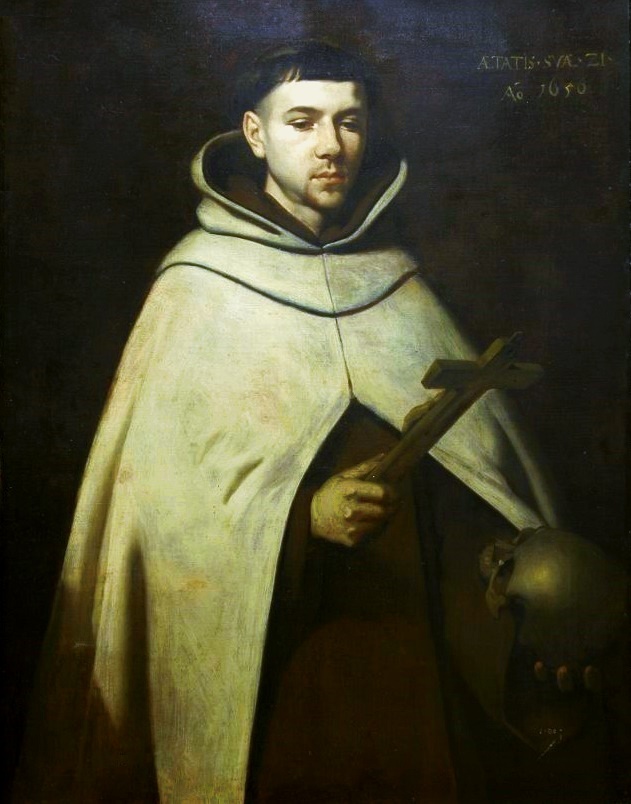
Start here
The story, in brief
John of the Cross’s imprisonment was not inflicted by an anonymous enemy of religion. The official account places it within conflict over Carmelite reform. In confinement he composed poetry that became part of a lasting account of the soul’s search for God. [SAINT-SAINT-JOHN-OF-THE-CROSS-S01]
The human question is compelling: how can a writer associated with darkness also speak so insistently about love? His answer deserves attention before claims about his later remains enter the discussion. [SAINT-SAINT-JOHN-OF-THE-CROSS-S01]
Reform had a cost
His collaboration with Teresa included opposition and imprisonment. [SAINT-SAINT-JOHN-OF-THE-CROSS-S01]
Love is the destination
Detachment is ordered toward union with God, not emptiness for its own sake. [SAINT-SAINT-JOHN-OF-THE-CROSS-S01]
Teaching and tissue differ
His recognized writings do not resolve the material history of his remains. [SAINT-SAINT-JOHN-OF-THE-CROSS-S01]
Explore the chapters
Poverty, study, and a decision
Born in 1542, John grew up in poverty and received education in Medina del Campo before joining the Carmelites. He later studied at Salamanca and was ordained in 1567. Benedict XVI’s account, reproduced by the Dicastery, places his intellectual formation alongside work and family hardship. [SAINT-SAINT-JOHN-OF-THE-CROSS-S01]
The meeting with Teresa
Teresa of Ávila invited him to help extend her reform to Carmelite men. Their collaboration led to a first reformed male community at Duruelo in 1568. John adopted the name associated with the Cross in this setting. Reform here meant building a particular form of common life, not merely expressing dissatisfaction with an institution. [SAINT-SAINT-JOHN-OF-THE-CROSS-S01]
Imprisoned within his own religious family
In 1577 he was imprisoned in Toledo during the dispute over reform. The official account describes months of deprivation before his escape in 1578. It associates the Spiritual Canticle with this period. The episode should not be romanticized as if mistreatment were necessary or justified because valuable writing emerged from it. [SAINT-SAINT-JOHN-OF-THE-CROSS-S01]
What the dark night is about
Benedict XVI explains John’s teaching as a purification of disordered attachments so that love of God becomes central. It is not merely having a difficult week or feeling that God is absent. Nor is it a command to hate created things. The target is the possessiveness that prevents a person from loving freely. [SAINT-SAINT-JOHN-OF-THE-CROSS-S01]
Four works, one developing argument
The Ascent of Mount Carmel, Dark Night, Spiritual Canticle, and Living Flame of Love explore related stages and images of spiritual transformation. John moves between disciplined detachment and the language of desire, encounter, and love. That combination explains why his writings matter as both theology and poetry. [SAINT-SAINT-JOHN-OF-THE-CROSS-S01]
A Doctor does not make suffering simple
The Church’s title Doctor of the Church recognizes a significant teaching legacy; John received it in 1926. His canonization had occurred in 1726. Those judgments do not mean every experience of distress should be classified using his terminology. The article presents a spiritual framework, not a diagnosis of a reader’s psychological or medical condition. [SAINT-SAINT-JOHN-OF-THE-CROSS-S01]
The writings survive; the remains need documentation
John died in 1591 and his remains were transferred to Segovia, according to the official account. The material history of those remains must be reconstructed from custody and treatment records. Meanwhile the writings offer a direct path into his significance: a reader can examine the argument about love instead of relying on the appearance of a relic. [SAINT-SAINT-JOHN-OF-THE-CROSS-S01]
Catholic reflection & discussion
Look for the person within the story
Spend a moment with the choices, relationships and hardships in this life. Consider what you might learn from the person as well as from the extraordinary claims examined in the file.
These editorial prompts invite reflection on the article. They are distinct from Church teaching and the evidence findings.
Pause and reflect
- Which choice or experience in this life stays with you, and why?
- What would you like to understand better about the person's faith and the world they lived in?
- Is there a small act of patience, courage or service that this reading invites you to consider?
Discuss with family or a group
Choose questions suited to your readers' ages and experiences. Anyone can pass or keep a response private.
- Ask each person to choose a moment from the life described here. What makes that moment worth remembering?
- Which details have clear sources, and which remain uncertain? How could you tell the story honestly without losing its human meaning?
Questions people ask
Open any question for a fuller answer and its sources.
Was John’s imprisonment part of a government persecution?
The official biography places this imprisonment within the conflict over reform in his own Carmelite order. [SAINT-SAINT-JOHN-OF-THE-CROSS-S01]
Does the dark night mean all depression is spiritual purification?
No. The source presents a theological account of attachment and union with God; it does not authorize diagnosing every form of distress as a mystical stage. [SAINT-SAINT-JOHN-OF-THE-CROSS-S01]
Why is he called a Doctor of the Church?
The title recognizes his teaching significance. Benedict XVI’s account records its conferral in 1926. [SAINT-SAINT-JOHN-OF-THE-CROSS-S01]
What should a curious reader explore first?
The relation between the Spiritual Canticle’s language of love and the Ascent’s account of attachment is a useful entry into the theology described by Benedict XVI. [SAINT-SAINT-JOHN-OF-THE-CROSS-S01]
What the evidence can establish
Evidence verdict: unresolved
Does the available evidence establish that the displayed or attributed remains of Saint John of the Cross are the naturally preserved, substantially intact body of that person, without undisclosed embalming, reconstruction, wax covering, replacement, or later conservation treatment?
Canonized Catholic saint and Doctor of the Church. Official sources confirm that status or custody for Saint John of the Cross. They do not provide the independent anatomical evidence, custody documentation, or treatment history needed to answer whether the remains are naturally preserved.
Sources: [SAINT-SAINT-JOHN-OF-THE-CROSS-S01]
Church or institutional status
Canonized Catholic saint and Doctor of the Church
- Authority
- Dicastery for the Causes of Saints
- Scope of the finding
- The cited official record documents Catholic canonization and recognition as a Doctor of the Church.
- Limits of the finding
- It does not authenticate the attributed remains, establish natural preservation, or prove a miracle.
- Official sources
- [SAINT-SAINT-JOHN-OF-THE-CROSS-S01]
Sources and notes
Back to the overviewSource labels describe a document's type and role, not the strength of a claim. Where provided, notes explain its use, access limits, and outstanding checks.
- SAINT-SAINT-JOHN-OF-THE-CROSS-S01Dicastery for the Causes of Saints profile — Saint John of the Cross (opens in a new tab)Official source
Identifies this person and records the stated Catholic beatification/canonization or liturgical status; it does not establish the physical preservation claim. What it does not establish: This institutional record establishes only the stated act, status, teaching, or account; it does not independently establish material identity, preservation mechanism, or supernatural causation.
Corrections and updates
Expanded this file with a sourced narrative, 7 chapters and 4 answers to common questions. The existing evidence verdict label and institutional status are retained. Independent human review remains pending.