
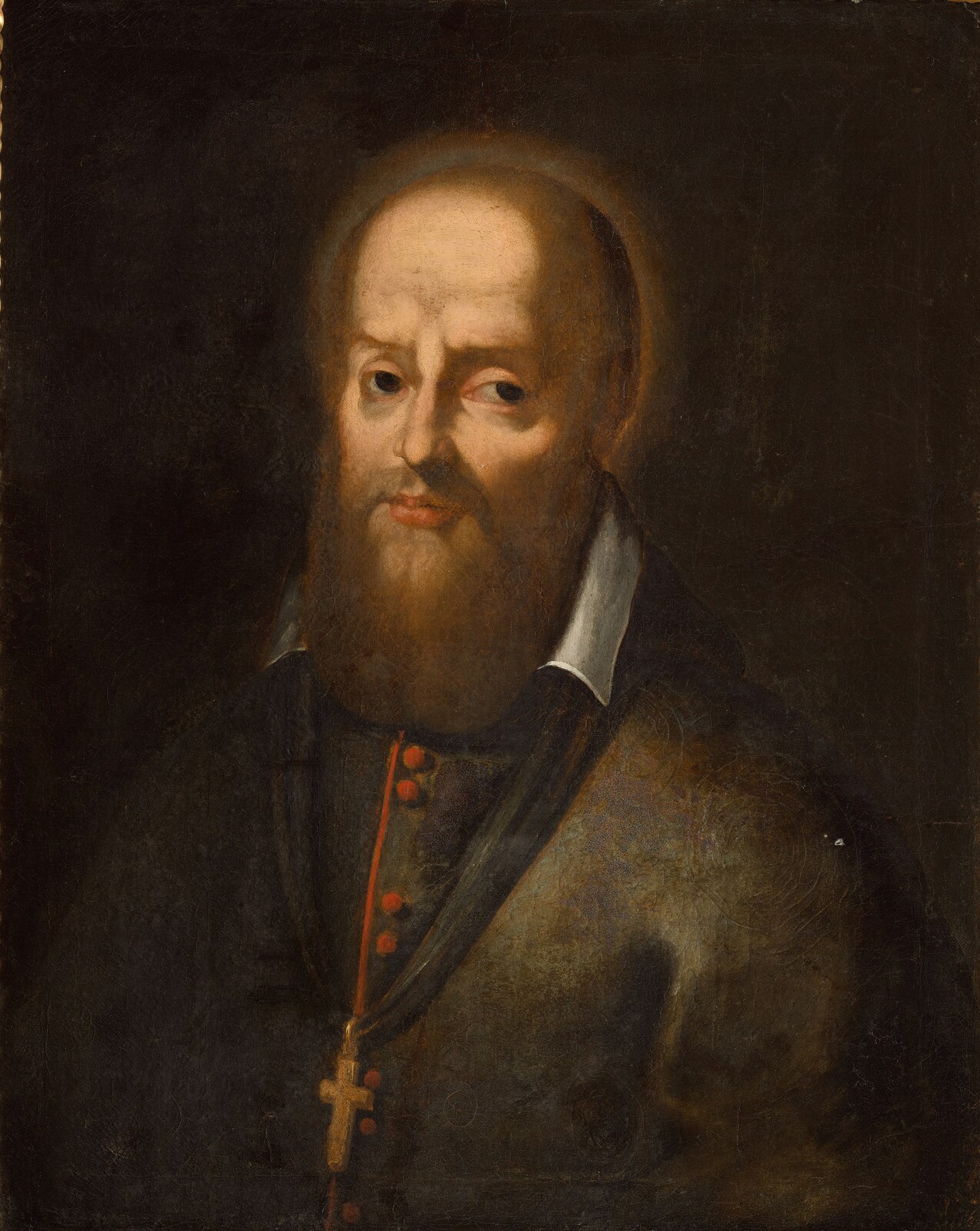
Start here
The story, in brief
Francis de Sales did not write only for people who could leave work and family behind. His account of devotion addressed readers in households, offices, towns, and courts. For a visitor wondering what a saint can offer ordinary life, that decision is the heart of his importance. [SAINT-SAINT-FRANCIS-DE-SALES-S01]
Devotion for ordinary life
Households and workplaces belong within his spiritual vision. [SAINT-SAINT-FRANCIS-DE-SALES-S01]
Freedom matters
His account of divine love emphasizes a willing human response. [SAINT-SAINT-FRANCIS-DE-SALES-S01]
A readable legacy
His writings explain his significance more directly than an unsupported physical label. [SAINT-SAINT-FRANCIS-DE-SALES-S01]
Explore the chapters
The student who feared rejection by God
The papal audience reproduced in the Dicastery’s profile describes Francis’s youthful distress over predestination and salvation. His eventual response centered on trust in God’s love and willingness to love God without certainty about his own future. The episode helps explain the pastoral tenderness associated with him; it should not be turned into a universal treatment for anxiety. [SAINT-SAINT-FRANCIS-DE-SALES-S01]
A legal career gave way to priesthood
Born in Savoy in 1567, Francis studied in Paris and Padua before choosing ordination in 1593 against his father’s original professional hopes. His education did not disappear from his vocation. Writing, argument, and personal correspondence became ways to address religious questions in a society sharply divided by the Reformation. [SAINT-SAINT-FRANCIS-DE-SALES-S01]
A bishop whose city was beyond his reach
His work in the Chablais involved Catholic mission among communities shaped by Calvinism. In 1602 he became bishop of Geneva, with his seat in Annecy. The setting explains his concern with persuasion and patient conversation. It also reminds readers that the official biography tells a Catholic missionary story within a contested confessional history. [SAINT-SAINT-FRANCIS-DE-SALES-S01]
Devotion could fit a household or workplace
The Introduction to the Devout Life challenged the assumption that serious spiritual life required withdrawal into a monastery. Francis addressed people whose responsibilities differed from those of religious communities. The practical implication is demanding: devotion should improve the way a person fulfills real duties, rather than become an excuse to neglect them. [SAINT-SAINT-FRANCIS-DE-SALES-S01]
Love needs freedom
The Treatise on the Love of God, published in 1616, explored how divine grace draws a person without eliminating human freedom. Benedict XVI highlights this relationship in his account of Francis’s thought. Catholic love is thus presented as a willing response to God’s initiative, with patience and persuasion carrying more spiritual weight than compulsion. [SAINT-SAINT-FRANCIS-DE-SALES-S01]
A friendship became a religious foundation
Francis’s relationship with Jane Frances de Chantal helped lead to the Visitation foundation in 1610. Their collaboration gives the teaching an institutional setting as well as a literary one. He died in 1622, and his later recognition as a Doctor of the Church honored the importance of his spiritual instruction for the wider Church. [SAINT-SAINT-FRANCIS-DE-SALES-S01]
Why the books matter more than an unexplained label
The official profile and reproduced papal texts explain his teaching and recognition in detail. They do not supply a conservation history of his remains. A preservation claim therefore remains a separate inquiry, while his writings offer an immediately accessible question: does religious devotion make a person more patient, responsible, and capable of love? [SAINT-SAINT-FRANCIS-DE-SALES-S01]
Catholic reflection & discussion
Look for the person within the story
Spend a moment with the choices, relationships and hardships in this life. Consider what you might learn from the person as well as from the extraordinary claims examined in the file.
These editorial prompts invite reflection on the article. They are distinct from Church teaching and the evidence findings.
Pause and reflect
- Which choice or experience in this life stays with you, and why?
- What would you like to understand better about the person's faith and the world they lived in?
- Is there a small act of patience, courage or service that this reading invites you to consider?
Discuss with family or a group
Choose questions suited to your readers' ages and experiences. Anyone can pass or keep a response private.
- Ask each person to choose a moment from the life described here. What makes that moment worth remembering?
- Which details have clear sources, and which remain uncertain? How could you tell the story honestly without losing its human meaning?
Questions people ask
Open any question for a fuller answer and its sources.
Were his spiritual books intended only for monks and nuns?
No. The Introduction to the Devout Life expressly extended serious devotion to people living in ordinary social and domestic circumstances. [SAINT-SAINT-FRANCIS-DE-SALES-S01]
Why was the bishop of Geneva based in Annecy?
The official account places his ministry within the conflict created by the Reformation and identifies Annecy as his episcopal seat. The title and the residence therefore describe different parts of his situation. [SAINT-SAINT-FRANCIS-DE-SALES-S01]
What does “Doctor of the Church” mean here?
It recognizes the importance of his teaching to Catholic faith and spiritual life. It is not a medical qualification or a conclusion about bodily preservation. [SAINT-SAINT-FRANCIS-DE-SALES-S01]
What makes his approach distinctive?
The papal account emphasizes trust in divine love, respect for human freedom, and a form of devotion suited to a person’s actual responsibilities. Those ideas connect his own struggles with his later guidance of others. [SAINT-SAINT-FRANCIS-DE-SALES-S01]
What the evidence can establish
Evidence verdict: unresolved
Does the available evidence establish that the displayed or attributed remains of Saint Francis de Sales are the naturally preserved, substantially intact body of that person, without undisclosed embalming, reconstruction, wax covering, replacement, or later conservation treatment?
Canonized Catholic saint and Doctor of the Church. Official sources confirm that status or custody for Saint Francis de Sales. They do not provide the independent anatomical evidence, custody documentation, or treatment history needed to answer whether the remains are naturally preserved.
Sources: [SAINT-SAINT-FRANCIS-DE-SALES-S01]
Church or institutional status
Canonized Catholic saint and Doctor of the Church
- Authority
- Dicastery for the Causes of Saints
- Scope of the finding
- The cited official record documents Catholic canonization and recognition as a Doctor of the Church.
- Limits of the finding
- It does not authenticate the attributed remains, establish natural preservation, or prove a miracle.
- Official sources
- [SAINT-SAINT-FRANCIS-DE-SALES-S01]
Sources and notes
Back to the overviewSource labels describe a document's type and role, not the strength of a claim. Where provided, notes explain its use, access limits, and outstanding checks.
- SAINT-SAINT-FRANCIS-DE-SALES-S01Dicastery for the Causes of Saints profile — Saint Francis de Sales (opens in a new tab)Official source
Identifies this person and records the stated Catholic beatification/canonization or liturgical status; it does not establish the physical preservation claim. What it does not establish: This institutional record establishes only the stated act, status, teaching, or account; it does not independently establish material identity, preservation mechanism, or supernatural causation.
Corrections and updates
Expanded this file with a sourced narrative, 7 chapters and 4 answers to common questions. The existing evidence verdict label and institutional status are retained. Independent human review remains pending.