
Start here
The story, in brief
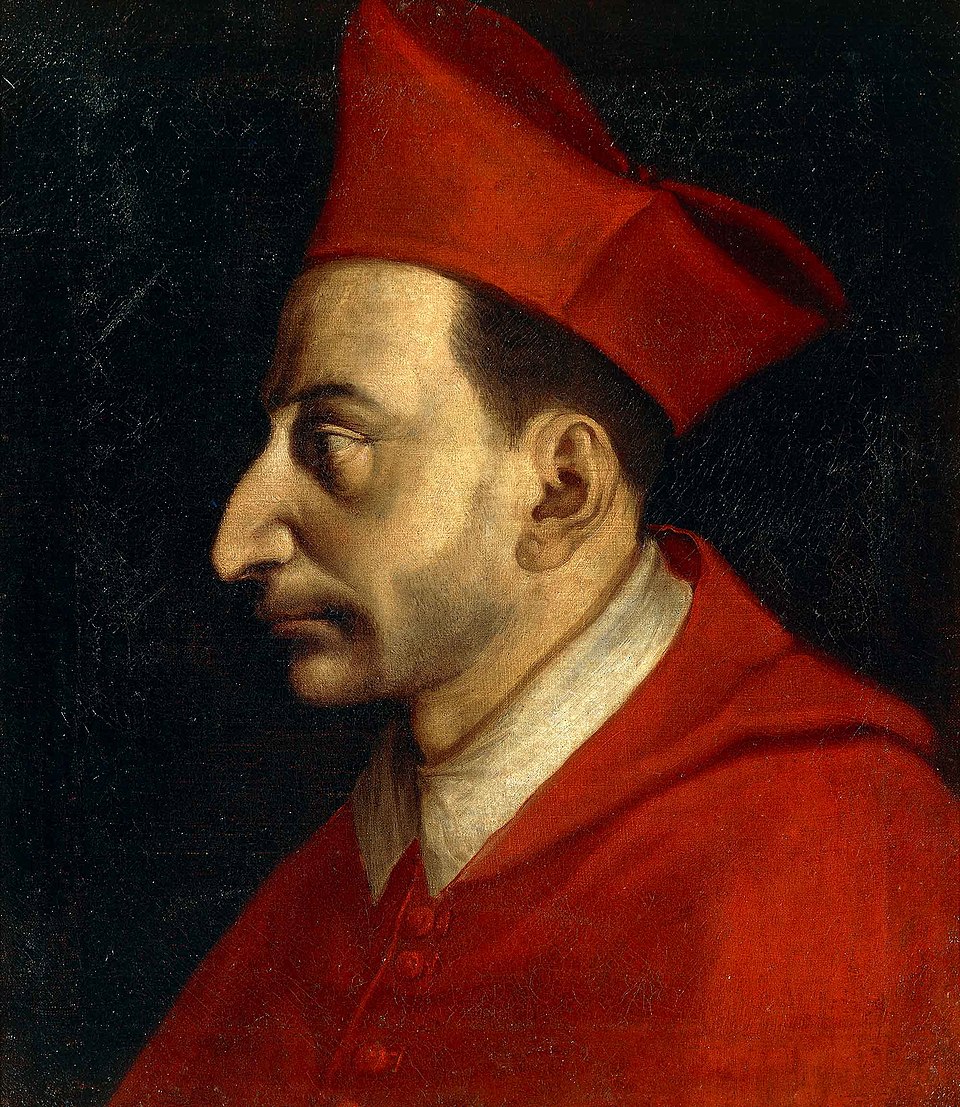
Charles Borromeo inherited rank and opportunity, but Milan remembers him for what he did with them: implementing reform, forming clergy, visiting communities, and serving during plague. The same city’s cathedral offers an unusually candid account of his display, including the silver mask over the skull. Both the life and the material object reward closer attention. [EX-01] [SAINT-SAINT-CHARLES-BORROMEO-S01] [SAINT-SAINT-CHARLES-BORROMEO-S02]
Authority put to work
Reform involved formation, visits, and service. [EX-01]
A disclosed mask
The Duomo identifies the visible silver facial covering. [SAINT-SAINT-CHARLES-BORROMEO-S01]
A separate anatomical inquiry
The chapel’s restoration does not settle the state of the remains. [SAINT-SAINT-CHARLES-BORROMEO-S01]
Explore the chapters
Privilege created an opportunity—and a test
Born in 1538 into the Borromeo family, Charles received ecclesiastical advantages young and studied law. The official biography describes a decision to continue toward priesthood rather than assume family leadership after his brother’s death. His subsequent reputation rests on the use of authority, not on pretending he began without social privilege. [EX-01]
Trent needed to become practice
Charles helped bring the Council of Trent’s work to completion and later implemented its reforms in Milan. The papal homily reproduced by the Dicastery emphasizes the movement from general principles to concrete local action. A reform document mattered only if institutions, clergy, and pastoral habits actually changed. [EX-01]
Seminaries, visits, and accountable leadership
The official account identifies seminaries, diocesan synods, provincial councils, and repeated pastoral visits among his tools. The religious logic was that reform should begin with those exercising authority. Better formation and direct knowledge of communities were intended to make pastoral responsibility real. [EX-01]
The plague made responsibility visible
During the 1576–1577 epidemic, Charles remained engaged in assistance and care. The biography and later homily interpret this through the image of the good shepherd willing to suffer with the flock. A full history would examine the practical measures in detail; the positive Catholic meaning is leadership expressed through costly presence. [EX-01]
How the shrine took shape
The Duomo describes the Scurolo designed in 1606 and prepared for his 1610 canonization. Its crystal and silver urn, decorative program, and later restoration show devotion taking architectural form. This is a documented history of a shrine, with contributions made over centuries rather than one untouched original arrangement. [SAINT-SAINT-CHARLES-BORROMEO-S01]
The face is covered by a silver mask
The cathedral explicitly states that the remains wear pontifical vestments and that a silver mask covers the face. The archdiocese attributes the mask to the period of Cardinal Montini, later Paul VI. Visitors should be told this directly: the visible facial surface is a devotional and display element, not exposed preserved skin. [SAINT-SAINT-CHARLES-BORROMEO-S01] [SAINT-SAINT-CHARLES-BORROMEO-S02]
Restoring the chapel is not a tissue examination
The Duomo’s restoration account describes work on wood, metal, textiles, and lighting. It does not provide a complete inventory of surviving human tissue or establish a natural preservation mechanism. The careful next step is to request the relevant anatomical and conservation records while preserving the custodian’s existing disclosures. [SAINT-SAINT-CHARLES-BORROMEO-S01]
Catholic reflection & discussion
Look for the person within the story
Spend a moment with the choices, relationships and hardships in this life. Consider what you might learn from the person as well as from the extraordinary claims examined in the file.
These editorial prompts invite reflection on the article. They are distinct from Church teaching and the evidence findings.
Pause and reflect
- Which choice or experience in this life stays with you, and why?
- What would you like to understand better about the person's faith and the world they lived in?
- Is there a small act of patience, courage or service that this reading invites you to consider?
Discuss with family or a group
Choose questions suited to your readers' ages and experiences. Anyone can pass or keep a response private.
- Ask each person to choose a moment from the life described here. What makes that moment worth remembering?
- Which details have clear sources, and which remain uncertain? How could you tell the story honestly without losing its human meaning?
Questions people ask
Open any question for a fuller answer and its sources.
Why is Charles associated with the Council of Trent?
He helped conclude its work and implemented its reforms through concrete institutions and pastoral practices in Milan. [EX-01]
What does the silver face represent?
The custodian identifies it as a mask covering the face of the attributed remains. [SAINT-SAINT-CHARLES-BORROMEO-S01] [SAINT-SAINT-CHARLES-BORROMEO-S02]
Did the recent restoration establish incorruption?
The published report concerns restoration of the chapel and decorative materials, not a complete bodily examination. [SAINT-SAINT-CHARLES-BORROMEO-S01]
Is his canonization documented?
The Duomo records canonization on November 1,1610. [SAINT-SAINT-CHARLES-BORROMEO-S01]
What the evidence can establish
Evidence verdict: unresolved
Do the remains in the Duomo urn constitute Charles Borromeo's naturally preserved, substantially intact body, and what parts of the visible display are body, vestments, mask, support, or conservation material?
The Duomo identifies the remains as Charles Borromeo's and candidly documents that the display includes vestments and a silver face mask. It does not establish how much human tissue is present, whether preservation was natural, or what internal reconstruction and conservation occurred. The physical claim remains unresolved.
Sources: [SAINT-SAINT-CHARLES-BORROMEO-S01; SAINT-SAINT-CHARLES-BORROMEO-S02]
Church or institutional status
Canonized Catholic saint
- Authority
- Duomo and Archdiocese of Milan
- Scope of the finding
- Roman Catholic Saint, canonized on 1 November 1610, as documented by the official Duomo. Canonization does not prove natural preservation.
- Limits of the finding
- Ecclesial recognition or custodial attribution does not authenticate the attributed remains, establish natural preservation, or prove supernatural causation.
- Official sources
- [SAINT-SAINT-CHARLES-BORROMEO-S01; SAINT-SAINT-CHARLES-BORROMEO-S02]
Sources and notes
Back to the overviewSource labels describe a document's type and role, not the strength of a claim. Where provided, notes explain its use, access limits, and outstanding checks.
- SAINT-SAINT-CHARLES-BORROMEO-S01duomomilano.it — Saint Charles Borromeo (opens in a new tab)Official source
States that the crystal-and-silver urn contains his body, describes the vestments, explicitly identifies the silver face mask commissioned by Cardinal Montini, and gives canonization on 1 November 1610. What it does not establish: Valuable display disclosure, but no anatomical inventory, biological identity testing, embalming history, or internal reconstruction details.
- SAINT-SAINT-CHARLES-BORROMEO-S02chiesadimilano.it — Saint Charles Borromeo (opens in a new tab)Official source
Confirms the urn's current ecclesial/custodial setting and veneration. What it does not establish: Devotional/custodial account rather than forensic evidence.
- EX-01Dicastery for the Causes of Saints: Charles Borromeo, biography and 1984 papal homily (opens in a new tab)Official sourceCited in this file
Read the source note for the passage used and any limits on what it supports.
Provides the reforming biography and reproduces John Paul II’s 1984 homily, including seminaries, synods, pastoral visits, and plague service; not an anatomical report.
Corrections and updates
Expanded this file with a sourced narrative, 7 chapters and 4 answers to common questions. The existing evidence verdict label and institutional status are retained. Independent human review remains pending.