
Start here
The story, in brief
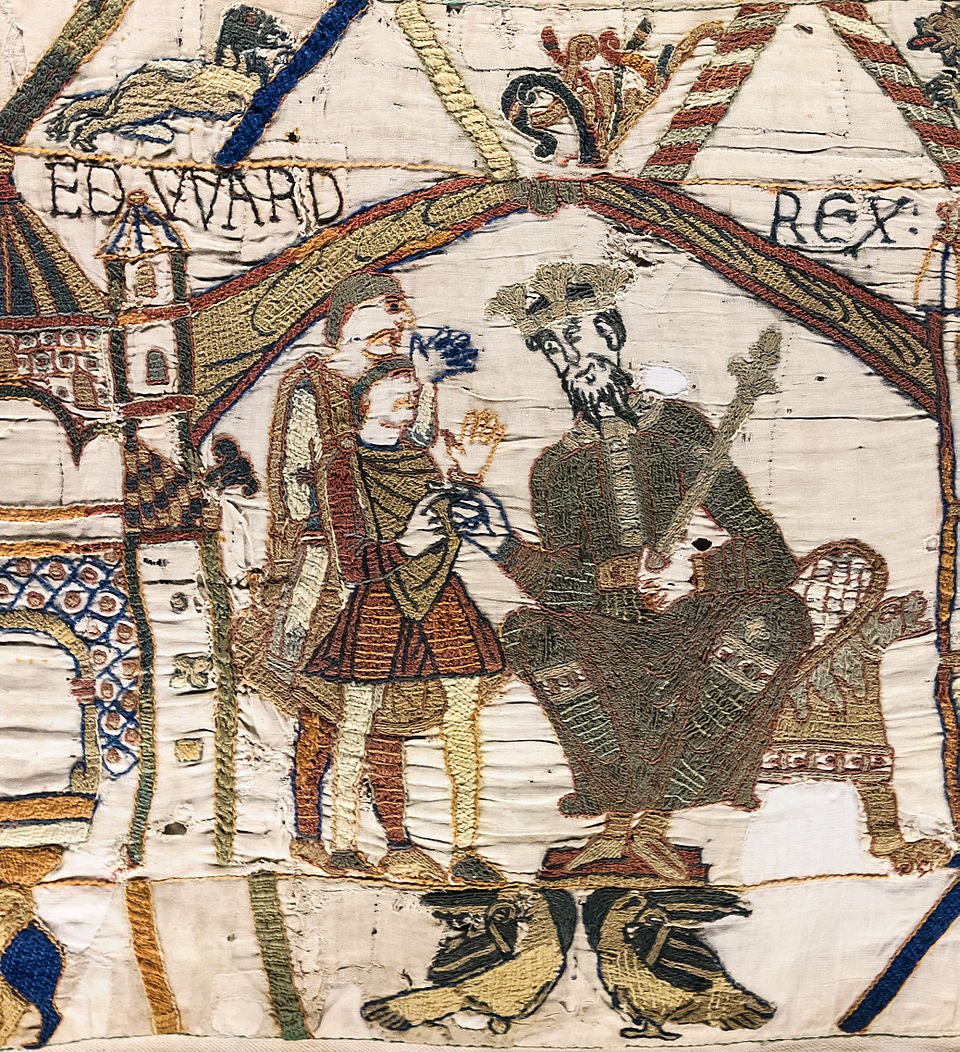
Edward did not live to enjoy the church that became his greatest memorial. Westminster’s new abbey church was consecrated in December 1065 while he lay ill; he died days later. The shrine now associated with him tells a second story, about how later generations turned a remembered king into a focus of pilgrimage and royal identity. [SAINT-SAINT-EDWARD-THE-CONFESSOR-S01]
A royal legacy
Edward’s foundation and Henry III’s shrine shaped Westminster’s sacred geography. [SAINT-SAINT-EDWARD-THE-CONFESSOR-S01]
Read the whole custody history
Aromatics, disturbance, and later references to bones complicate the bodily claim. [SAINT-SAINT-EDWARD-THE-CONFESSOR-S01]
Legend has a recognizable role
The ring story communicates charity, while the Abbey labels it as legend. [SAINT-SAINT-EDWARD-THE-CONFESSOR-S01]
Explore the chapters
A church built after exile
Westminster describes Edward’s years in Normandy and preserves a tradition that he promised a pilgrimage to Rome if he returned safely. In that account, permission to restore a monastery replaced the journey. The historical building project and the devotional explanation for it deserve distinct attention: together they show how kingship and religious patronage became intertwined. [SAINT-SAINT-EDWARD-THE-CONFESSOR-S01]
A saint was not necessarily a successful ruler
The Abbey explicitly separates Edward’s piety from an entirely favorable verdict on his political performance. His wife Edith commissioned a life of him, while later writers developed his reputation for sanctity. Catholic recognition therefore need not be read as a declaration that every royal decision was wise or every later story historically secure. [SAINT-SAINT-EDWARD-THE-CONFESSOR-S01]
How a burial became a national shrine
Edward was canonized by Alexander III in 1161, and his remains were translated in 1163. Henry III later built a more elaborate shrine and helped carry the coffin into place in 1269. Pilgrims knelt in its recesses seeking healing. Architecture gave physical form to intercession, memory, and the monarchy’s identification with a holy predecessor. [SAINT-SAINT-EDWARD-THE-CONFESSOR-S01]
The beggar and the royal ring
The famous account of Edward giving his ring to a beggar who proves to be Saint John is identified by Westminster as a legend. Its religious meaning is generosity toward a stranger and readiness for death. Calling it a legend preserves that meaning while avoiding the claim that a vivid narrative is itself contemporary testimony. [SAINT-SAINT-EDWARD-THE-CONFESSOR-S01]
The early opening includes a preservation clue
An account associated with Osbert of Clare describes the opening of Edward’s tomb in 1102 and a striking fragrance. Westminster observes that the body may have been embalmed or packed with aromatics. That detail directly challenges an assertion that no preservation measures were involved; fragrance cannot simply be counted as independent proof of miraculous incorruption. [SAINT-SAINT-EDWARD-THE-CONFESSOR-S01]
Later history does not describe an untouched body
The shrine was despoiled at the dissolution and reassembled under Mary I. Westminster also recounts a 1685 intrusion in which a man reached beneath bones and moved the skull before the coffin was secured again. These reports make a present, intact-body narrative especially problematic. They need to appear alongside, rather than disappear behind, the medieval shrine’s beauty. [SAINT-SAINT-EDWARD-THE-CONFESSOR-S01]
What the surviving shrine can tell us
The Abbey documents a wooden coffin within the shrine and continuing remembrance of Edward. Its research on medieval relic inventories also reconstructs the wider devotional setting. These sources are valuable for custody and religious history; a modern claim about surviving soft tissue would require an examination record that they do not provide. [SAINT-SAINT-EDWARD-THE-CONFESSOR-S01] [SAINT-SAINT-EDWARD-THE-CONFESSOR-S02]
Catholic reflection & discussion
Look for the person within the story
Spend a moment with the choices, relationships and hardships in this life. Consider what you might learn from the person as well as from the extraordinary claims examined in the file.
These editorial prompts invite reflection on the article. They are distinct from Church teaching and the evidence findings.
Pause and reflect
- Which choice or experience in this life stays with you, and why?
- What would you like to understand better about the person's faith and the world they lived in?
- Is there a small act of patience, courage or service that this reading invites you to consider?
Discuss with family or a group
Choose questions suited to your readers' ages and experiences. Anyone can pass or keep a response private.
- Ask each person to choose a moment from the life described here. What makes that moment worth remembering?
- Which details have clear sources, and which remain uncertain? How could you tell the story honestly without losing its human meaning?
Questions people ask
Open any question for a fuller answer and its sources.
Does “Confessor” mean Edward heard confessions?
Here it is a title for a saint who witnessed to the faith without being a martyr. It is not a claim that the king was a priest. [SAINT-SAINT-EDWARD-THE-CONFESSOR-S01]
Is Westminster’s present shrine the original tomb?
No. The history includes successive shrines, Henry III’s rebuilding, Reformation damage, and reassembly under Mary I. The monument embodies several periods. [SAINT-SAINT-EDWARD-THE-CONFESSOR-S01]
Why does the aromatics detail matter?
It introduces a possible human preservation measure into the earliest opening account. An assertion that the body was entirely untreated cannot responsibly omit it. [SAINT-SAINT-EDWARD-THE-CONFESSOR-S01]
Is the Abbey currently a Catholic monastery?
Its medieval Benedictine monastery was dissolved. The present Abbey preserves the shrine and records its continuing pilgrimage tradition; historical Catholic canonization should not be confused with uninterrupted monastic custody. [SAINT-SAINT-EDWARD-THE-CONFESSOR-S01]
What the evidence can establish
Evidence verdict: debunked
Was Edward's reported body untreated?
No. Westminster Abbey says the body, if not embalmed, was at least packed with aromatics. That evidence contradicts only the untreated-body proposition; it does not determine what caused any later preservation.
Sources: [SAINT-SAINT-EDWARD-THE-CONFESSOR-S01; SAINT-SAINT-EDWARD-THE-CONFESSOR-S02]
Church or institutional status
Anglican abbey custodial tradition; pre-Reformation Catholic saint
- Authority
- Westminster Abbey
- Scope of the finding
- The Abbey identifies Edward as a canonized royal saint and says his coffin remains within the shrine.
- Limits of the finding
- The Abbey account notes aromatics may have been used and does not establish untreated natural preservation.
- Official sources
- [SAINT-SAINT-EDWARD-THE-CONFESSOR-S01]
Sources and notes
Back to the overviewSource labels describe a document's type and role, not the strength of a claim. Where provided, notes explain its use, access limits, and outstanding checks.
- SAINT-SAINT-EDWARD-THE-CONFESSOR-S01Official Anglican custodian page — Saint Edward the Confessor (opens in a new tab)Official source
Records the 1102 opening, states the body may at least have been packed with aromatics, and says the wooden coffin remains in the shrine. What it does not establish: This is an institutional or custodial account, not an independent anatomical, conservation, identity, or causal examination.
- SAINT-SAINT-EDWARD-THE-CONFESSOR-S02Official Anglican custodian page — Saint Edward the Confessor (opens in a new tab)Official source
Current Abbey research page identifies Edward's body as the shrine's major relic. What it does not establish: This is an institutional or custodial account, not an independent anatomical, conservation, identity, or causal examination.
Corrections and updates
Expanded this file with a sourced narrative, 7 chapters and 4 answers to common questions. The existing evidence verdict label and institutional status are retained. Independent human review remains pending.