
Start here
The story, in brief
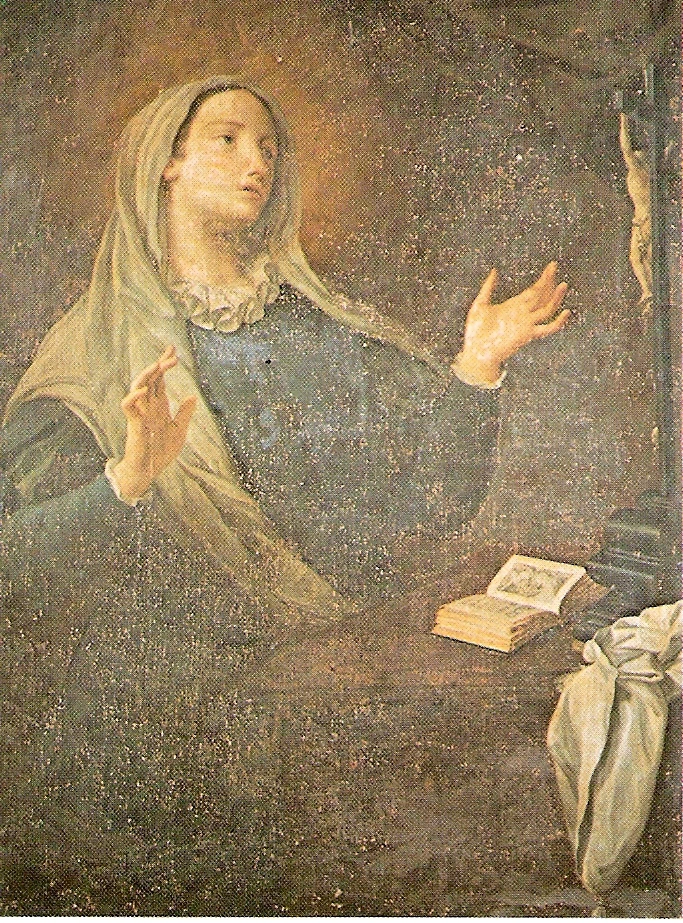
Catherine of Genoa is often introduced through purgatory. Her actual life gives that teaching a human setting: a difficult marriage, a decisive experience of conversion, and years of hospital service. Benedict XVI explains her mystical life and practical care as two connected parts of one vocation. [SAINT-SAINT-CATHERINE-OF-GENOA-S01]
A decisive conversion
The 1473 experience redirected an established adult life. [SAINT-SAINT-CATHERINE-OF-GENOA-S01]
An active mystic
Hospital service was central to her vocation. [SAINT-SAINT-CATHERINE-OF-GENOA-S01]
A careful account of purgatory
Her teaching concerns purification rather than a reported geography of the afterlife. [SAINT-SAINT-CATHERINE-OF-GENOA-S01]
Explore the chapters
A difficult first decade of marriage
Born in 1447, Catherine married Giuliano Adorno at sixteen. The official account describes a troubled marriage and an increasing sense of emptiness. This background matters because the later religious transformation involved an existing adult life, rather than a childhood already narrated as uninterrupted spiritual certainty. [SAINT-SAINT-CATHERINE-OF-GENOA-S01]
The turning point in 1473
The received account dates her conversion to March 20,1473, while preparing for confession. She understood the experience as an overwhelming recognition of God’s love and her own need for change. The biography’s mystical language expresses how that event was remembered; the concrete consequence was a radically redirected life. [SAINT-SAINT-CATHERINE-OF-GENOA-S01]
Pammatone was her working world
Catherine served at the hospital of Pammatone in Genoa and became involved in its leadership. Her husband later joined the work. The papal audience emphasizes that profound prayer did not withdraw her from other people. Her religious life unfolded amid the organizational and personal demands of care for sick people. [SAINT-SAINT-CATHERINE-OF-GENOA-S01]
Purgatory as purification by love
Benedict XVI explains that Catherine’s teaching begins with her own experience of the distance between human sin and divine holiness. Purification is described through an interior fire of love leading toward full communion with God. The point is a transformation of the person, rather than a map of a subterranean place. [SAINT-SAINT-CATHERINE-OF-GENOA-S01]
What she did not claim to provide
The pope explicitly says her mystical experience did not consist of specific revelations about purgatory or particular souls there. This distinction corrects a familiar misunderstanding. Her teaching is theological and experiential reflection on purification, not a series of independently verifiable reports from the afterlife. [SAINT-SAINT-CATHERINE-OF-GENOA-S01]
How the writings reached readers
The collection describing her life and thought appeared in 1551 and includes the Life, the Treatise on Purgatory, and a dialogue between soul and body. Benedict XVI identifies her confessor Cattaneo Marabotto with its final compilation. That transmission history matters when distinguishing Catherine’s experience from the literary form through which later readers receive it. [SAINT-SAINT-CATHERINE-OF-GENOA-S01]
A legacy of prayer and care
Catherine died in 1510. Her recognized Catholic significance lies in a life joining union with God and service to vulnerable people. The official material does not supply a complete anatomical or conservation history of attributed remains. The open preservation question should not eclipse the substantial teaching and hospital history already available. [SAINT-SAINT-CATHERINE-OF-GENOA-S01]
Catholic reflection & discussion
Look for the person within the story
Spend a moment with the choices, relationships and hardships in this life. Consider what you might learn from the person as well as from the extraordinary claims examined in the file.
These editorial prompts invite reflection on the article. They are distinct from Church teaching and the evidence findings.
Pause and reflect
- Which choice or experience in this life stays with you, and why?
- What would you like to understand better about the person's faith and the world they lived in?
- Is there a small act of patience, courage or service that this reading invites you to consider?
Discuss with family or a group
Choose questions suited to your readers' ages and experiences. Anyone can pass or keep a response private.
- Ask each person to choose a moment from the life described here. What makes that moment worth remembering?
- Which details have clear sources, and which remain uncertain? How could you tell the story honestly without losing its human meaning?
Questions people ask
Open any question for a fuller answer and its sources.
Did Catherine report tours of purgatory?
Benedict XVI says her experience did not involve specific revelations about purgatory or individual souls there. [SAINT-SAINT-CATHERINE-OF-GENOA-S01]
What does her image of fire mean?
The papal explanation presents purification as an interior transformation through love and the recognition of God’s holiness. [SAINT-SAINT-CATHERINE-OF-GENOA-S01]
Was she a cloistered nun?
Her adult religious life included marriage and active hospital service at Pammatone. [SAINT-SAINT-CATHERINE-OF-GENOA-S01]
Are her writings identical to a modern autobiography?
The 1551 collection had a compilation history involving her confessor; its different literary sections should be read accordingly. [SAINT-SAINT-CATHERINE-OF-GENOA-S01]
What the evidence can establish
Evidence verdict: unresolved
Does the available evidence establish that the displayed or attributed remains of Saint Catherine of Genoa are the naturally preserved, substantially intact body of that person, without undisclosed embalming, reconstruction, wax covering, replacement, or later conservation treatment?
Canonized Catholic saint. Official sources confirm that status or custody for Saint Catherine of Genoa. They do not provide the independent anatomical evidence, custody documentation, or treatment history needed to answer whether the remains are naturally preserved.
Sources: [SAINT-SAINT-CATHERINE-OF-GENOA-S01]
Church or institutional status
Canonized Catholic saint
- Authority
- Dicastery for the Causes of Saints
- Scope of the finding
- The cited official record documents the person's Catholic canonization and saintly title.
- Limits of the finding
- It does not authenticate the attributed remains, establish natural preservation, or prove a miracle.
- Official sources
- [SAINT-SAINT-CATHERINE-OF-GENOA-S01]
Sources and notes
Back to the overviewSource labels describe a document's type and role, not the strength of a claim. Where provided, notes explain its use, access limits, and outstanding checks.
- SAINT-SAINT-CATHERINE-OF-GENOA-S01Dicastery for the Causes of Saints profile — Saint Catherine of Genoa (opens in a new tab)Official source
Identifies this person and records the stated Catholic beatification/canonization or liturgical status; it does not establish the physical preservation claim. What it does not establish: This institutional record establishes only the stated act, status, teaching, or account; it does not independently establish material identity, preservation mechanism, or supernatural causation.
Corrections and updates
Expanded this file with a sourced narrative, 7 chapters and 4 answers to common questions. The existing evidence verdict label and institutional status are retained. Independent human review remains pending.