
Start here
The story, in brief
A persistent leg wound repeatedly disrupted Camillus de Lellis’s plans for religious life. Treatment brought him into a Roman hospital, where he recognized another vocation: improving the care of sick people. His story joins the vulnerability of being a patient with the practical discipline required to care for others. [SAINT-SAINT-CAMILLUS-DE-LELLIS-S01]
Experience shaped the vocation
Camillus knew hospital life as a patient. [SAINT-SAINT-CAMILLUS-DE-LELLIS-S01]
Care required commitment
His community pledged service even during plague. [SAINT-SAINT-CAMILLUS-DE-LELLIS-S01]
A practical legacy
Attentive bodily and spiritual care explains his Catholic significance. [SAINT-SAINT-CAMILLUS-DE-LELLIS-S01]
Explore the chapters
The patient’s experience
Born in 1550, Camillus had a military background before the conversion described in the official biography. A wound forced him to leave the Capuchins on more than one occasion and receive treatment at San Giacomo in Rome. His later ministry grew from firsthand contact with the conditions of hospital life. [SAINT-SAINT-CAMILLUS-DE-LELLIS-S01]
A community organized around the sick
He founded the Ministers of the Sick, giving practical form to sustained bodily and spiritual assistance. The task required people prepared to remain with patients and work together. This institutional response helps explain why his legacy is associated with the reform of nursing and hospital care. [SAINT-SAINT-CAMILLUS-DE-LELLIS-S01]
The distinctive fourth vow
Alongside poverty, chastity, and obedience, the community took a vow to serve sick people even when they had plague. The commitment made the most vulnerable patients central to the vocation. It also shows that the work was understood as demanding care in dangerous circumstances, not only assistance when conditions were convenient. [SAINT-SAINT-CAMILLUS-DE-LELLIS-S01]
Why a red cross appeared on the habit
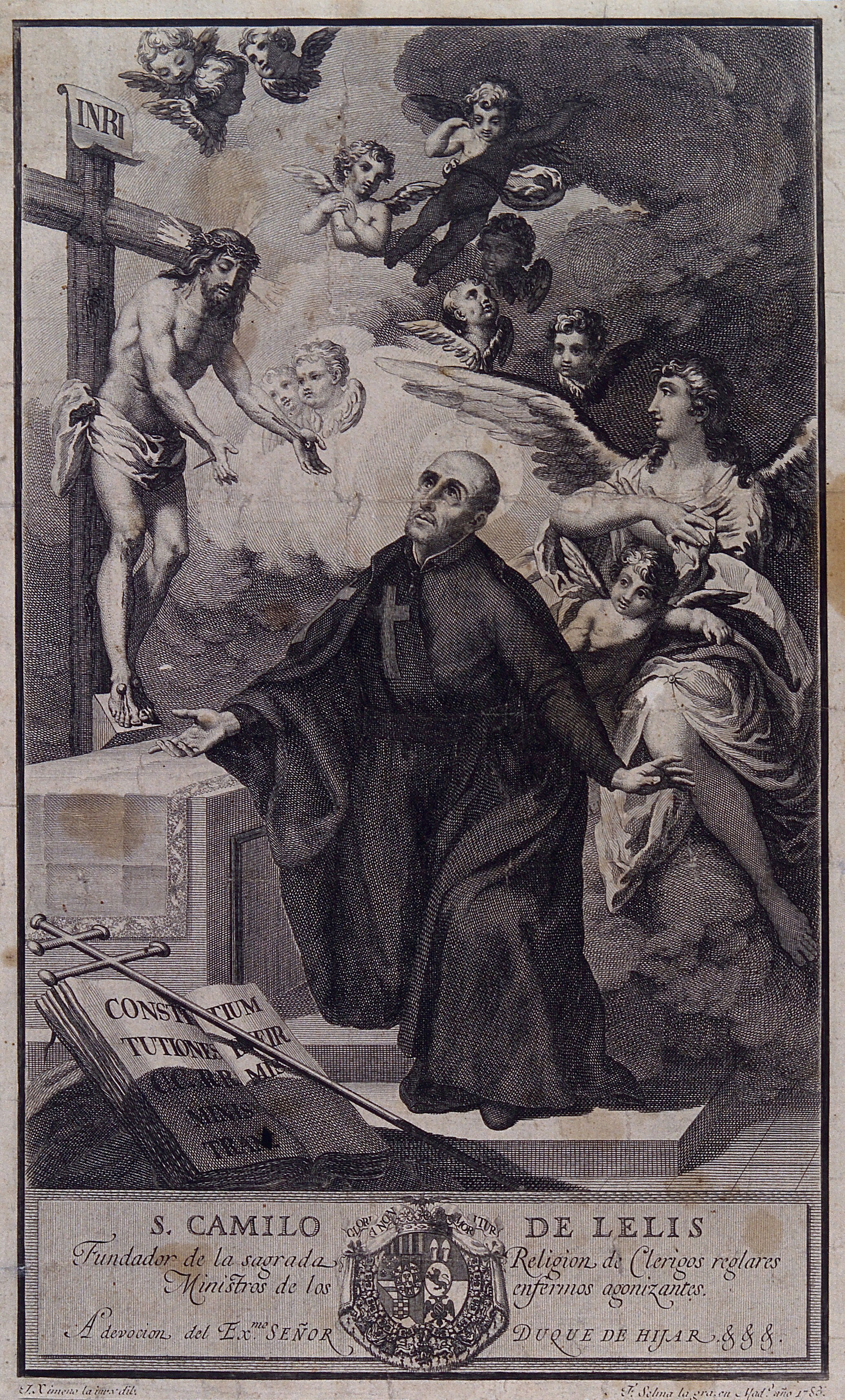
The official account dates permission for the red cross on the habit to 1586 and reproduces an early explanation of its meaning. It identified the community and signaled dedication to sick people. The emblem should be understood within Camillus’s sixteenth-century institute, without confusing that history with the later international Red Cross organization. [SAINT-SAINT-CAMILLUS-DE-LELLIS-S01]
The whole patient deserved attention
The biography emphasizes care for both bodily needs and spiritual distress. The Catholic logic is that the patient is a person whose dignity exceeds a diagnosis. The religious dimension was intended to deepen attentive service, rather than make practical treatment unnecessary. Camillus’s life is therefore directly relevant to the history of caregiving. [SAINT-SAINT-CAMILLUS-DE-LELLIS-S01]
A practical form of holiness
The official portrait describes discernment, common sense, and paternal kindness as features of his work. These are ordinary human qualities made consequential by how they are practiced. The story gives readers a positive account of Catholic sanctity grounded in the organization and quality of care. [SAINT-SAINT-CAMILLUS-DE-LELLIS-S01]
What the relic claim still needs
Camillus died in 1614. The Dicastery’s biography establishes his recognized religious identity and explains his mission, but does not supply the complete custody, anatomy, or treatment history of attributed remains. The hospital legacy can be explored in depth while the preservation question remains open. [SAINT-SAINT-CAMILLUS-DE-LELLIS-S01]
Catholic reflection & discussion
Look for the person within the story
Spend a moment with the choices, relationships and hardships in this life. Consider what you might learn from the person as well as from the extraordinary claims examined in the file.
These editorial prompts invite reflection on the article. They are distinct from Church teaching and the evidence findings.
Pause and reflect
- Which choice or experience in this life stays with you, and why?
- What would you like to understand better about the person's faith and the world they lived in?
- Is there a small act of patience, courage or service that this reading invites you to consider?
Discuss with family or a group
Choose questions suited to your readers' ages and experiences. Anyone can pass or keep a response private.
- Ask each person to choose a moment from the life described here. What makes that moment worth remembering?
- Which details have clear sources, and which remain uncertain? How could you tell the story honestly without losing its human meaning?
Questions people ask
Open any question for a fuller answer and its sources.
Why did Camillus focus on hospitals?
His own treatment at San Giacomo formed part of the experience from which the vocation emerged. [SAINT-SAINT-CAMILLUS-DE-LELLIS-S01]
What was the fourth vow?
Service to sick people, including those with plague. [SAINT-SAINT-CAMILLUS-DE-LELLIS-S01]
Did spiritual care replace bodily care?
The official account presents them as connected responsibilities toward the whole person. [SAINT-SAINT-CAMILLUS-DE-LELLIS-S01]
Is the body’s preservation established here?
No complete material investigation is supplied by the biography used in this file. [SAINT-SAINT-CAMILLUS-DE-LELLIS-S01]
What the evidence can establish
Evidence verdict: unresolved
Does the available evidence establish that the displayed or attributed remains of Saint Camillus de Lellis are the naturally preserved, substantially intact body of that person, without undisclosed embalming, reconstruction, wax covering, replacement, or later conservation treatment?
Canonized Catholic saint. Official sources confirm that status or custody for Saint Camillus de Lellis. They do not provide the independent anatomical evidence, custody documentation, or treatment history needed to answer whether the remains are naturally preserved.
Sources: [SAINT-SAINT-CAMILLUS-DE-LELLIS-S01]
Church or institutional status
Canonized Catholic saint
- Authority
- Dicastery for the Causes of Saints
- Scope of the finding
- The cited official record documents the person's Catholic canonization and saintly title.
- Limits of the finding
- It does not authenticate the attributed remains, establish natural preservation, or prove a miracle.
- Official sources
- [SAINT-SAINT-CAMILLUS-DE-LELLIS-S01]
Sources and notes
Back to the overviewSource labels describe a document's type and role, not the strength of a claim. Where provided, notes explain its use, access limits, and outstanding checks.
- SAINT-SAINT-CAMILLUS-DE-LELLIS-S01Dicastery for the Causes of Saints profile — Saint Camillus de Lellis (opens in a new tab)Official source
Identifies this person and records the stated Catholic beatification/canonization or liturgical status; it does not establish the physical preservation claim. What it does not establish: This institutional record establishes only the stated act, status, teaching, or account; it does not independently establish material identity, preservation mechanism, or supernatural causation.
Corrections and updates
Expanded this file with a sourced narrative, 7 chapters and 4 answers to common questions. The existing evidence verdict label and institutional status are retained. Independent human review remains pending.