
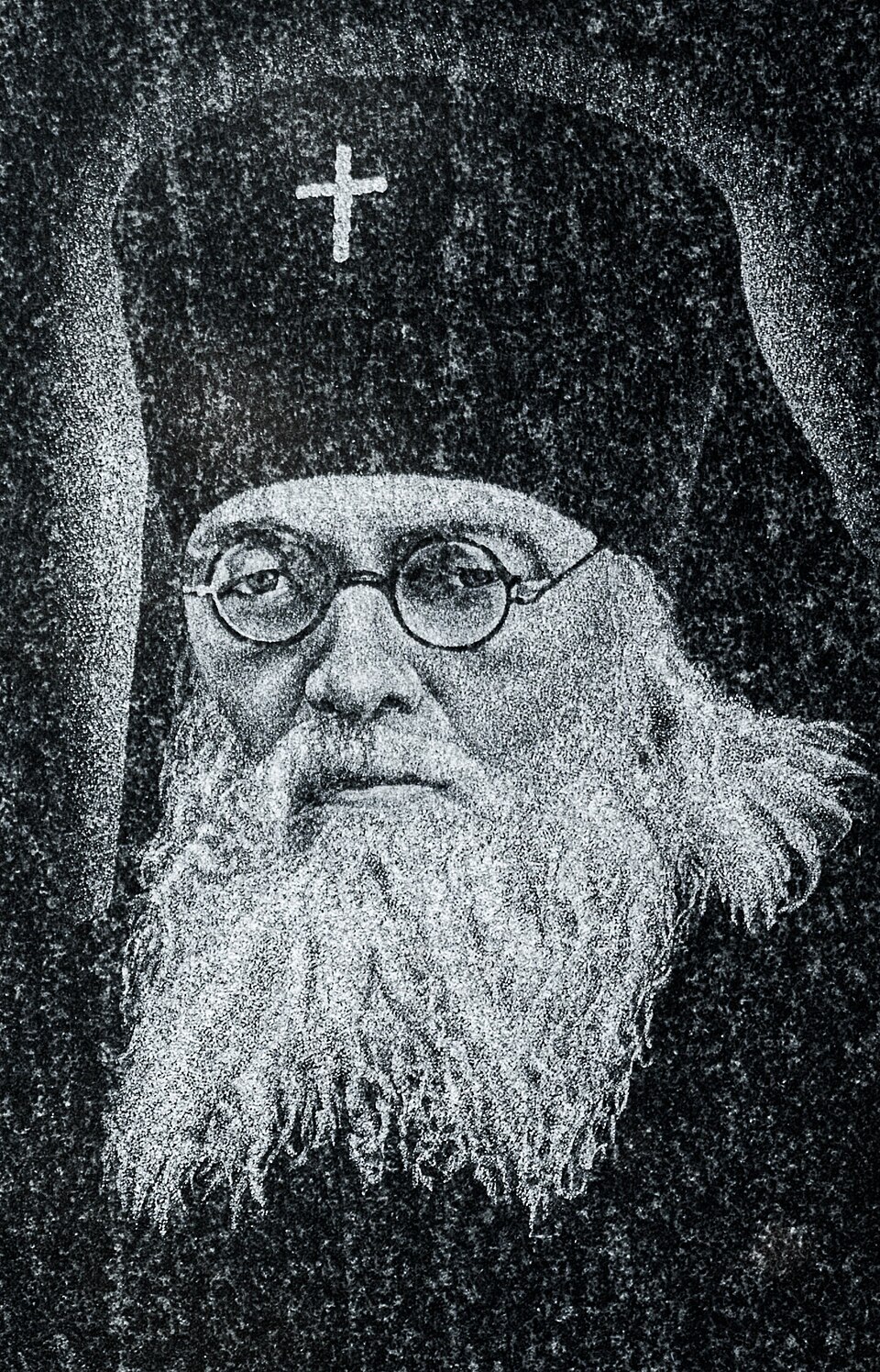
Start here
The story, in brief
Valentin Voyno-Yasenetsky chose medicine because he wanted to relieve suffering. He later became the Orthodox bishop Luke without abandoning surgical work. His life brought an operating room, a family, Soviet prisons, and an episcopal ministry into one biography. It challenges the assumption that scientific practice and religious conviction must occupy separate lives. [SAINT-LUKE-VOYNO-YASENETSKY-S01]
Two vocations together
Luke combined clinical work with Orthodox ministry. [SAINT-LUKE-VOYNO-YASENETSKY-S01]
A complex public life
Persecution and recognition both appear in his Soviet-era story. [SAINT-LUKE-VOYNO-YASENETSKY-S01]
Orthodox recognition
His documented glorification belongs to his own Church’s tradition. [SAINT-LUKE-VOYNO-YASENETSKY-S01]
Explore the chapters
Art or medicine?
The OCA biography says the young Valentin considered an artistic career before choosing medical study in Kyiv. After graduating in 1903, he sought work serving poor patients. The choice provides a concrete starting point for his later religious reputation: the desire to relieve suffering preceded his ordination. [SAINT-LUKE-VOYNO-YASENETSKY-S01]
Surgeon, husband, and father
He worked with a Red Cross hospital during the Russo-Japanese War and married Anna Lanskaya in 1904. Their family included four children. Anna died of tuberculosis in 1919. That loss belongs beside the medical career in understanding the person who later accepted priestly ministry; he had already experienced family responsibility and bereavement. [SAINT-LUKE-VOYNO-YASENETSKY-S01]
A priest who kept operating
In Tashkent he combined hospital work and teaching with active church involvement. He was ordained in 1921 and continued both medical practice and teaching. In 1923 he took the monastic name Luke and became a bishop. The OCA’s account presents his clinical and pastoral work as simultaneous responsibilities. [SAINT-LUKE-VOYNO-YASENETSKY-S01]
Prison and exile did not end the medical work
The official life recounts repeated arrests and exile under Soviet rule. In places where he was permitted to operate, he continued treating patients. These experiences form the background to his Orthodox commemoration as a confessor: the religious claim concerns steadfastness under pressure, rather than an absence of ordinary professional labor. [SAINT-LUKE-VOYNO-YASENETSKY-S01]
An uncomfortable relationship with the state
During the Second World War Luke treated wounded people; in 1946 he received the Stalin Prize for medical work. The same life contains persecution and official recognition of his scientific contribution. That tension is worth preserving. A simple story of uniform acceptance or uniform exclusion would miss the changing circumstances described by his church’s biography. [SAINT-LUKE-VOYNO-YASENETSKY-S01]
Blindness and Orthodox recognition
The OCA account describes worsening eye disease and eventual blindness before his death in 1961. It records local veneration, the 1996 transfer of relics, and Church-wide glorification at the 2000 Jubilee Council. These are Orthodox events. A Catholic beatification ladder should not be imposed on them. [SAINT-LUKE-VOYNO-YASENETSKY-S01]
A reliquary does not establish an intact body
The official account mentions a silver reliquary and reports extraordinary claims concerning the heart and fragrance. It does not provide an independent anatomical inventory or establish that visitors see a naturally intact body. Those claims need separate documentation. Luke’s documented medical and pastoral life remains the stronger starting point for understanding why he is honored. [SAINT-LUKE-VOYNO-YASENETSKY-S01]
Catholic reflection & discussion
Look for the person within the story
Spend a moment with the choices, relationships and hardships in this life. Consider what you might learn from the person as well as from the extraordinary claims examined in the file.
These editorial prompts invite reflection on the article. They are distinct from Church teaching and the evidence findings.
Pause and reflect
- Which choice or experience in this life stays with you, and why?
- What would you like to understand better about the person's faith and the world they lived in?
- Is there a small act of patience, courage or service that this reading invites you to consider?
Discuss with family or a group
Choose questions suited to your readers' ages and experiences. Anyone can pass or keep a response private.
- Ask each person to choose a moment from the life described here. What makes that moment worth remembering?
- Which details have clear sources, and which remain uncertain? How could you tell the story honestly without losing its human meaning?
Questions people ask
Open any question for a fuller answer and its sources.
Was Luke a practicing physician after ordination?
Yes. The OCA biography explicitly says he continued medical practice and teaching after becoming a priest. [SAINT-LUKE-VOYNO-YASENETSKY-S01]
Was he a Catholic saint?
The recognition documented here is Orthodox, including Church-wide glorification in 2000. [SAINT-LUKE-VOYNO-YASENETSKY-S01]
Did the Soviet state only persecute him?
His life also includes wartime medical service and the 1946 Stalin Prize. Those facts do not erase the repeated arrests and exile. [SAINT-LUKE-VOYNO-YASENETSKY-S01]
Does the OCA source prove a whole incorrupt body?
No. It reports relics and particular extraordinary claims without supplying the independent physical documentation needed for that broader conclusion. [SAINT-LUKE-VOYNO-YASENETSKY-S01]
What the evidence can establish
Evidence verdict: unresolved
Does the available evidence establish that the displayed or attributed remains of Luke Voyno-Yasenetsky are the naturally preserved, substantially intact body of that person, without undisclosed embalming, reconstruction, wax covering, replacement, or later conservation treatment?
Orthodox saint. Official sources confirm that status or custody for Luke Voyno-Yasenetsky. They do not provide the independent anatomical evidence, custody documentation, or treatment history needed to answer whether the remains are naturally preserved.
Sources: [SAINT-LUKE-VOYNO-YASENETSKY-S01]
Church or institutional status
Orthodox saint
- Authority
- Orthodox Church in America (official synodal jurisdiction website)
- Scope of the finding
- The OCA says the 2000 Jubilee Council glorified Luke for Church-wide veneration and notes a silver reliquary for his relics.
- Limits of the finding
- This is Orthodox recognition, not Catholic recognition; it does not state that his body is incorrupt.
- Official sources
- [SAINT-LUKE-VOYNO-YASENETSKY-S01]
Sources and notes
Back to the overviewSource labels describe a document's type and role, not the strength of a claim. Where provided, notes explain its use, access limits, and outstanding checks.
- SAINT-LUKE-VOYNO-YASENETSKY-S01Orthodox Church in America official record — Luke Voyno-Yasenetsky (opens in a new tab)Official source
Records Luke's 2000 glorification for Church-wide veneration and the existence of a reliquary; it does not support an incorrupt-body claim. What it does not establish: This institutional record establishes only the stated act, status, teaching, or account; it does not independently establish material identity, preservation mechanism, or supernatural causation.
Corrections and updates
Expanded this file with a sourced narrative, 7 chapters and 4 answers to common questions. The existing evidence verdict label and institutional status are retained. Independent human review remains pending.