
Start here
The story, in brief
Entry 933 in Maria Stein Shrine’s relic directory names Saint Damien of Molokai. A visitor could pass the line in a moment. The person it recalls, however, spent years accompanying people whose illness had separated them from their families and communities. [MSD-02; EX-02]
This file follows that connection from a printed name to a life of service, while keeping one question open: the directory alone does not tell us what corresponding material exists or authenticate its identity.
The story
Damien’s witness is rooted in presence and care among people subjected to isolation.
The record
The shrine directory prints his name at entry 933.
The limit
The entry does not establish an object’s material, relic class, or chain of custody.
Explore the chapters
The community Damien entered
The National Park Service describes the forced isolation of people with Hansen’s disease on the Kalaupapa peninsula beginning in 1866. Inadequate supplies, housing, and care intensified the hardship. Families sometimes hid affected relatives; others entered isolation as helpers. This history gives the saint’s ministry its human setting. [EX-03]
Damien’s arrival in 1873 formed part of a wider effort to improve conditions, supported by Hawaiian leaders and sustained by residents and other caregivers. Remembering those people prevents a familiar saint’s story from reducing an entire community to a backdrop. They had relationships, skills, faith, and decisions of their own. [EX-03]
Why Damien became a saint
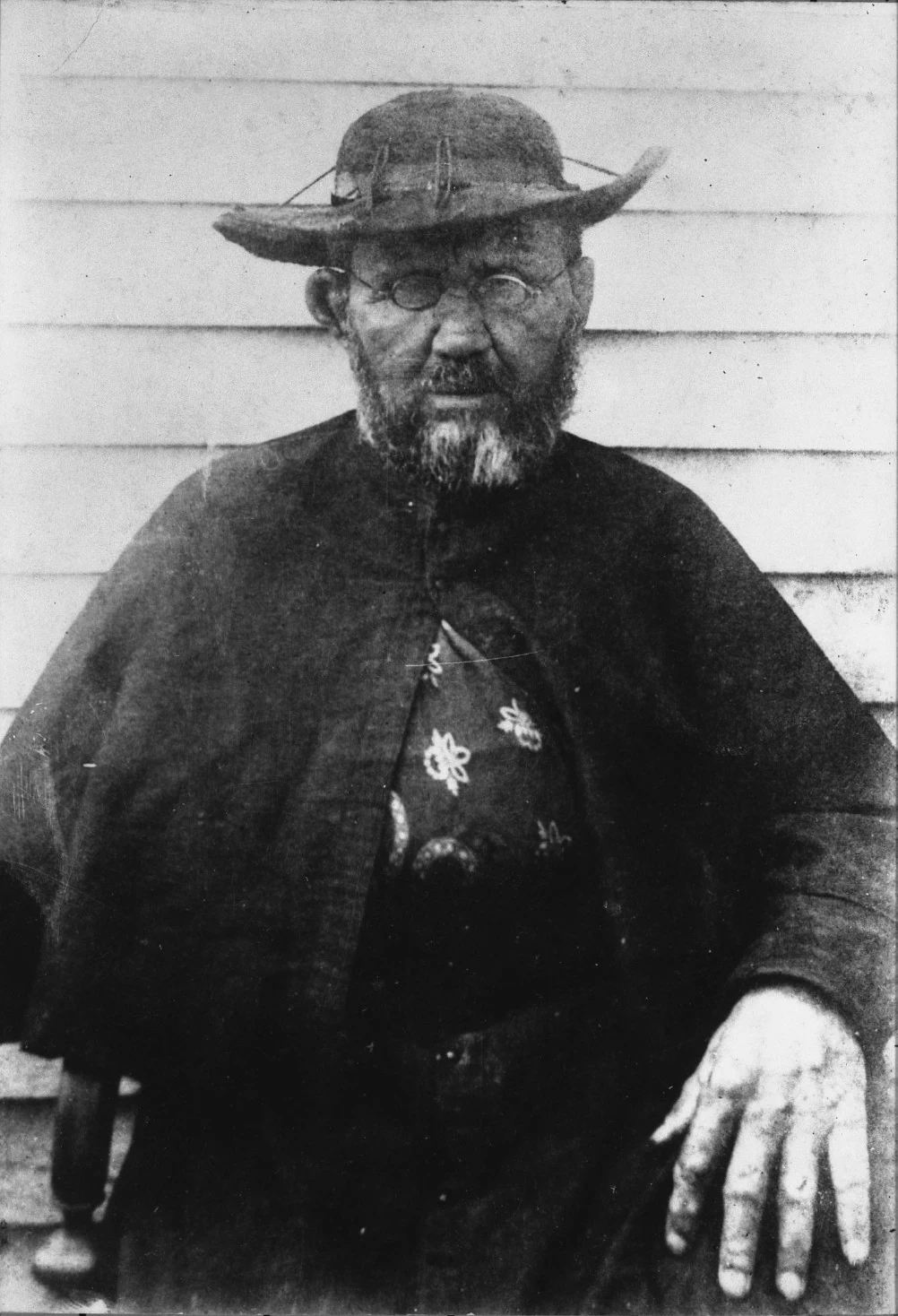
Born Josef De Veuster, Damien belonged to the Congregation of the Sacred Hearts. Benedict XVI’s 2009 canonization homily emphasized the love that led him to overcome fear and remain close to those who were suffering. Damien himself developed the disease and continued sharing the community’s life; he died in 1889. [EX-01; EX-02]
The compelling feature is sustained presence. Compassion can begin with a strong feeling, but caring for people over years requires decisions about ordinary work, attention, and companionship. In Catholic terms, such fidelity makes love of God visible in love of one’s neighbor. Benedict’s explanation directs the reader toward that lived charity. [EX-01]
How an Ohio shrine preserves memory
Maria Stein’s collection grew through nineteenth-century religious networks. The shrine’s history describes Father Francis de Sales Brunner’s collecting and Father J. M. Gartner’s contribution, including a traveling collection entrusted to the sisters. The resulting chapel gathers many saints into one place of prayer. [MSD-01]
That setting explains why a saint associated with Hawaii can appear in an Ohio directory. Catholic devotion crosses local and national boundaries. It does not follow, however, that every name in a large collection has an equally detailed public acquisition record. The story of the collection and the documentation of one entry must be examined separately.
What entry 933 actually tells us
The directory’s fifth page prints the number 933 beside Damien’s name. The final character in the place-name is rendered imperfectly, but the identification is clear in context. The line supplies no description of bone, hair, cloth, a container, or a seal. This is a documented label, not an item-level physical examination. [MSD-02]
The shrine says that most of its collection consists of first-class relics. That collection-wide statement cannot identify the class of this particular entry. Before describing it as Damien’s bone or another bodily fragment, the corresponding display and authenticum would need to be located and inspected. [MSD-01; MSD-02]
Why a relic should lead back to a life
The shrine explains relic devotion through remembrance of the saints’ example and their intercession. For Damien, the most meaningful direction of that attention is toward the people he accompanied. A devotional object should make the encounter with his witness more concrete, rather than turn his remains into a curiosity detached from his charity. [MSD-01; EX-01]
One practical question follows: who in a reader’s own surroundings has become isolated through illness, stigma, or fear? The historical situation at Kalaupapa must not be flattened into a simple modern analogy, but Damien’s sustained attention can challenge a visitor to think about companionship as well as admiration.
An honest conclusion about this file
Damien’s canonization is a documented Church act. The Maria Stein directory entry is also documented. The evidence needed to authenticate a particular physical relic is still missing from this public record. These conclusions can coexist without diminishing the importance of his life. [EX-01; MSD-02]
The next steps are concrete: identify the display corresponding to 933, record its material and classification, inspect any certificate and seals, and trace the acquisition. Until then, this page offers a grounded account of why the name matters while retaining an unresolved verdict on the relic claim.
Catholic reflection & discussion
Let the object open a larger question
Pause over what this object brings to mind: a person, a place, an act of devotion, or a question about the past. Let that curiosity guide a careful reading of both its history and its meaning.
These editorial prompts invite reflection on the article. They are distinct from Church teaching and the evidence findings.
Pause and reflect
- What draws your attention to this object, and what are you hoping to understand through it?
- How does the article distinguish the object's documented history from the meaning people give it?
- If an attribution remains uncertain, which questions about faith, memory or devotion would still be worth exploring?
Discuss with family or a group
Choose questions suited to your readers' ages and experiences. Anyone can pass or keep a response private.
- Begin with a familiar family keepsake. What can an object help someone remember, and what would be needed to establish its history?
- Choose one image or description in the file. Which things can you observe, and which would you need a source to know?
Questions people ask
Open any question for a fuller answer and its sources.
Does entry 933 prove the shrine has a piece of Damien’s body?
No. It documents the name and number. The directory does not specify a corresponding physical object or its material. [MSD-02]
Can the collection’s first-class percentage settle this entry?
No. A statement about the collection as a whole does not establish the classification of an individual item. [MSD-01]
Was Damien the only person caring for the community?
No. Residents, family helpers, Hawaiian leaders, religious workers, and other caregivers all belong to the history. The National Park Service describes this wider community. [EX-03]
What the evidence can establish
Evidence verdict: unresolved
Does the available evidence establish that Maria Stein Shrine holds an authenticated relic of Saint Damien of Molokai?
The official directory linked by Maria Stein Shrine prints entry 933 under Saint Damien of Molokai. Its typography renders the final place-name character imperfectly, but the name and number are unambiguous in context. That establishes the directory label only. It does not establish a physical object, material, relic class, or identity, so the relic claim remains unresolved.
Church or institutional status
Official shrine directory label
- Authority
- Maria Stein Shrine of the Holy Relics
- Scope of the finding
- The printed Saint Damien of Molokai label at directory entry 933.
- Limits of the finding
- Damien's canonization does not authenticate any corresponding physical object or material, and the directory alone does not establish one.
Sources and notes
Back to the overviewSource labels describe a document's type and role, not the strength of a claim. Where provided, notes explain its use, access limits, and outstanding checks.
Provides current collection context and directly links the shrine's relic directory. What it does not establish: Collection-wide percentages cannot establish entry 933's relic class.
Prints directory entry 933 under Saint Damien of Molokai. What it does not establish: Provides no physical-object type, material, class, authenticum, provenance, or identity evidence.
- EX-01Benedict XVI, canonization homily, 11 October 2009 (opens in a new tab)Official sourceCited in this file
Read the source note for the passage used and any limits on what it supports.
Primary account of Damien’s canonization and its Catholic meaning; does not authenticate the Maria Stein entry.
- EX-02National Park Service: Father Damien Monument (opens in a new tab)Official sourceCited in this file
Read the source note for the passage used and any limits on what it supports.
Institutional history of Damien’s care, illness, death, and continuing community legacy.
- EX-03National Park Service: A Brief History of Kalaupapa (opens in a new tab)Official sourceCited in this file
Read the source note for the passage used and any limits on what it supports.
Historic context for isolation, residents, family helpers, Hawaiian leadership, and the wider care community; historical terminology is paraphrased respectfully.
Corrections and updates
Expanded this file with a sourced narrative, 6 chapters and 4 answers to common questions. The existing evidence verdict label and institutional status are retained. Independent human review remains pending.