
Start here
The story, in brief
In the Šiluva tradition, shepherd children see a woman holding a child on a stone. Her sorrow concerns a place where her Son had once been worshipped and which had become farmland. The story is therefore about religious memory and loss as well as a reported apparition. [SRC-01]
The tradition is dated to 1608
The shrine preserves the account of children and other local observers. [SRC-01]
Christ is central to its meaning
The reported sorrow concerns the loss of worship of Mary’s Son. [SRC-01]
Recognition remains attributed
The official shrine reports Church recognition, but the original act has not been located here. [SRC-01; SRC-02]
Explore the chapters
The woman on the stone
The shrine’s account places Mary with the infant Jesus in the fields at Šiluva in 1608. The children are said to have called others, including members of the local Reformed community. These are elements of the received narrative, not independently inspected contemporary depositions. [SRC-01]
The mother and child give the scene its theological focus. Mary’s role in the story points to Christ and the community’s relation to him, rather than announcing a separate religion centered on the apparition itself. [SRC-01]
A divided religious landscape
The tradition develops in a setting of Catholic and Reformed Christian conflict over worship and property. The shrine connects the account with the recovery of church land and a renewal of Catholic pilgrimage. Historical reconstruction requires the actual legal and ecclesiastical records alongside the devotional retelling. [SRC-01; SRC-02]
A respectful account need not portray every Protestant participant as a foil or assume that a reported witness’s denomination settles credibility. What each person actually said, when it was written, and how it was transmitted are the important questions. [SRC-01]
Why the lost place of worship matters
The attributed message contrasts worship of Christ with ordinary cultivation of the land. In the shrine’s interpretation, this becomes a call to recover faith rather than forget it. The field carries memory: what a community once treated as sacred can become invisible to later generations. [SRC-01]
That theme gives the story a human reach beyond an argument about a single vision. People can ask what practices and commitments they have allowed to disappear, while still distinguishing that reflection from historical proof of the apparition. [SRC-01; SRC-02]
A continuing Lithuanian pilgrimage
The sanctuary presents Šiluva as an important place in Lithuania’s religious life, with Marian feasts, prayer, and pilgrimage. Its account links the devotion with national history and later public acts of dedication. Those demonstrate an enduring religious memory and community. [SRC-01; SRC-02]
National significance is not itself evidence of supernatural origin. It explains why the story matters to people and why its archives deserve care. The historical and devotional questions should enrich one another without being substituted for one another. [SRC-01; SRC-02]
What does the recognition claim establish?
The official shrine says the apparition was recognized by the Church. This is an institutional account of status, not a reproduced original decree with an independently checked date and formula. The exact instrument remains an important missing source. [SRC-01]
Likewise, a papal visit or an honor to an image belongs to the history of reception. Neither automatically supplies the original apparition judgment or authenticates each associated healing. [SRC-02]
How to read the witness tradition
The shrine’s versions name or describe local observers and acknowledge transmission through generations. The question is not simply whether a later writer calls them real people. The issue is how close the surviving account stands to their actual testimony and whether versions differ. [SRC-01]
A critical comparison of the earliest accounts, legal records, and recognition instrument would sharpen that answer. Until then, exact dialogue and confident reconstructions of each person’s reaction should remain attributed to tradition. [SRC-01; SRC-02]
A reason to look beyond the headline
Šiluva is a story of a remembered place, a mother and child, and a community rebuilding its worship. Those themes explain its devotional force. A fuller history can preserve them while leaving the event’s cause unresolved and giving readers a clear path toward the documents that would matter next. [SRC-01; SRC-02]
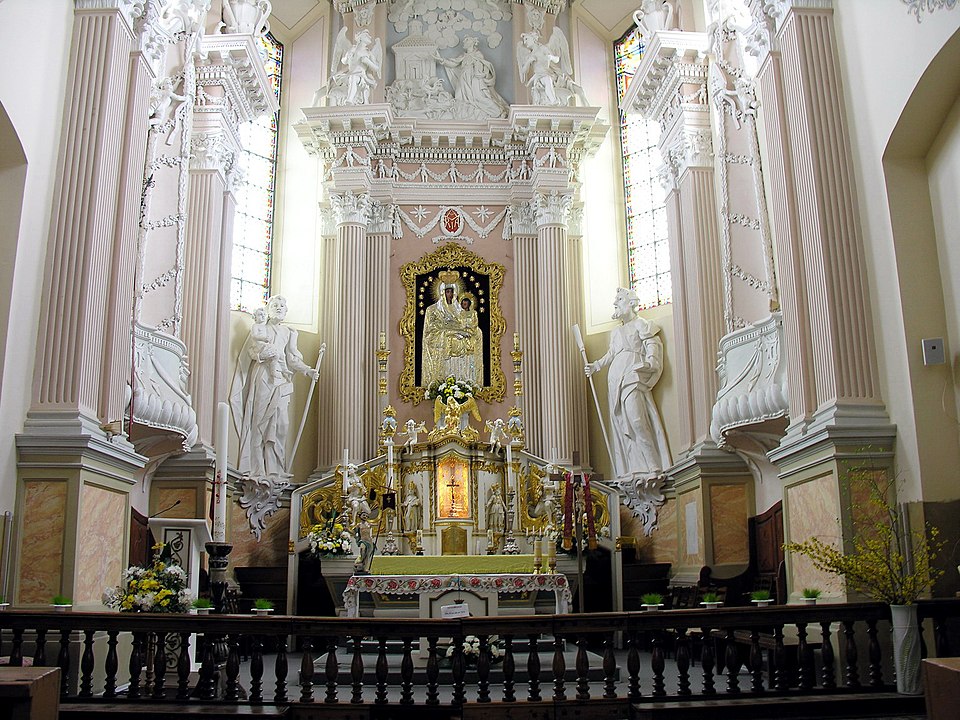
The image accompanying this dossier gives interior context for the Šiluva shrine. Its value is to show the setting of present devotion; it does not depict or independently establish the reported 1608 event. [MEDIA-01]
Catholic reflection & discussion
Consider the message as well as the event
Explore the devotional meaning described in this article alongside the history of the report and the Church's response. Make space for both a personal response and questions about the record.
These editorial prompts invite reflection on the article. They are distinct from Church teaching and the evidence findings.
Pause and reflect
- Which part of the reported message or its reception would you like to understand more deeply?
- What exactly does the Church's recorded decision cover, and which questions does it leave open?
- What would it look like to approach this story with both a receptive heart and care for the truth?
Discuss with family or a group
Choose questions suited to your readers' ages and experiences. Anyone can pass or keep a response private.
- Identify who reported the experience, who investigated it, and who made a Church decision. Why does each person's role matter?
- How could you speak respectfully with someone whose response to this story differs from your own?
Questions people ask
Open any question for a fuller answer and its sources.
Does the tradition involve Mary alone?
The shrine’s account describes her holding the infant Jesus, central to the story’s meaning. [SRC-01]
Did Reformed Christians appear in the story?
Yes, the received account includes local Reformed observers. Their exact testimony still needs source-level examination. [SRC-01]
Is the original recognition decree linked here?
The shrine reports recognition, but a complete original instrument was not located in the inspected material. [SRC-01]
Do later papal visits prove the event?
They establish the devotion’s reception and significance, not independent observation of the 1608 experience. [SRC-02]
What the evidence can establish
Evidence verdict: unresolved
What does the official shrine document about the 1608 report and ecclesiastical recognition, separate from the event's evidentiary truth?
The official Šiluva shrine reports the 1608 event and states that it was officially recognized. That recognition is an institutional fact; it does not independently prove a supernatural apparition.
Church or institutional status
Official shrine reports church recognition; original act not located
- Authority
- Šiluva Shrine, reporting an otherwise unidentified Church recognition
- Scope of the finding
- The 1608 Šiluva apparition tradition.
- Limits of the finding
- The original recognition instrument and its exact wording still require inspection.
- Official sources
- [SRC-01]
Sources and notes
Back to the overviewSource labels describe a document's type and role, not the strength of a claim. Where provided, notes explain its use, access limits, and outstanding checks.
Documents the shrine's account and states that the apparition was officially recognized. What it does not establish: The page does not reproduce the complete original decree or evidentiary file.
Documents the current sanctuary, coronation/devotion, and papal visit history. What it does not establish: Devotional history is not independent event evidence.
Documents the image source and CC BY-SA 3.0 rights record. What it does not establish: Shrine interior context; not evidence of the 1608 event.
Corrections and updates
Expanded this file with a sourced narrative, 7 chapters and 4 answers to common questions. The existing evidence verdict label and institutional status are retained. Independent human review remains pending.