
Start here
The story, in brief
The striking feature of Adele Brise’s story is the job she was given. According to the account recorded in Bishop David Ricken’s decree, the Belgian immigrant was to pray for conversion and teach children the faith. The reported apparition led into homes, catechism lessons, a school, and a community of women assisting the work. [GHL-01]
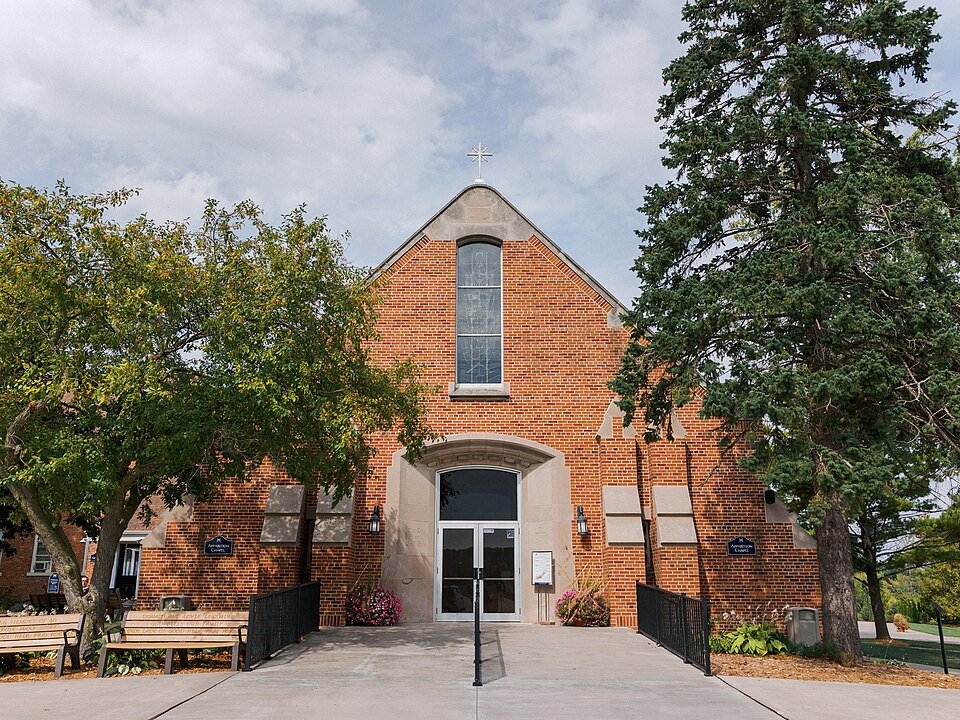
This is the Wisconsin shrine formerly known as Our Lady of Good Help and now called Our Lady of Champion. Its case includes an explicit 2010 diocesan judgment, but that judgment also acknowledges that early documents are limited. Both the mission and the limits make the story worth reading carefully. [GHL-01; GHL-04]
A practical mission
The reported request concerned catechesis, prayer, and the sacraments. [GHL-01]
An explicit episcopal judgment
Bishop Ricken declared the 1859 events worthy of belief in 2010, without making belief obligatory. [GHL-01]
Separate associated claims
The apparition decree did not declare the reported favors or fire survival individually proven miracles. [GHL-01]
Explore the chapters
A Belgian immigrant in Wisconsin
Adele reported encounters in October 1859 near Champion. The bishop’s decree describes a young immigrant receiving a challenging mission in a largely unsettled and forested area. The story’s setting explains why teaching children was a substantial undertaking rather than a symbolic request. [GHL-01]
The shrine’s own account is candid that Adele left no written first-person narrative. The received story draws on oral history and later records, some of them second- or third-hand. Consequently, quotation marks in modern retellings should not be mistaken for a surviving stenographic record of her words in 1859. [GHL-02]
What the teaching mission involved
The decree’s account names basic Christian practices: the sign of the cross, catechism, and preparation to approach the sacraments. Adele is described as visiting children’s homes, establishing a school, and gathering Third Order Franciscan women to assist. These concrete activities give the story a continuity beyond the reported encounter itself. [GHL-01]
For Catholics, religious instruction concerns a person’s capacity to understand and participate in faith, rather than merely repeat a startling claim. The enduring question becomes whether a reported spiritual experience produces patient service. Adele’s life and educational work were among the considerations the bishop weighed. [GHL-01; GHL-03]
Why prayer and instruction belong together
The reported request joins teaching with prayer for conversion and participation in the sacraments. Its religious center is not Adele’s exceptional status. The goal is a community capable of living the faith through worship, moral change, and shared responsibility for children. [GHL-01]
That is also why an apparition’s message is examined for consistency with ordinary Catholic teaching. Private revelation can direct attention toward the Gospel; it does not establish a replacement Gospel or place the visionary above the Church. [GHL-05; GHL-06]
What happened in the 2010 investigation
Bishop Ricken’s decree says three Marian experts examined the available documents, letters, and testimony. Their questions included doctrinal consistency, Adele’s character, the coherence of the accounts, and the lasting spiritual results. It explicitly acknowledges a limited early documentary record, rather than pretending abundant contemporary evidence exists. [GHL-01]
On 8 December 2010, the bishop judged the reported events and locutions to possess the substance of supernatural character and approved them as worthy of belief, but not obligatory. This is a diocesan judgment under the framework then in force, not a newly discovered Vatican laboratory verdict. [GHL-01; GHL-05]
The fire story needs its own evidence
The decree discusses the shrine’s survival during the Peshtigo fire of 1871 and the people who gathered with Adele to pray. That story became part of the site’s devotional memory. The same decree states that none of the reported favors had been officially declared a miracle by the Church. [GHL-01]
The distinction prevents an evidential shortcut. An apparition judgment cannot automatically authenticate every healing or explain every feature of a fire’s path. Those claims need their own dated records and appropriate analysis, even when they are meaningful to the community. [GHL-01; GHL-02]
Why the name changed to Champion
The shrine’s 2023 explanation uses Our Lady of Champion while preserving Good Help as the former name. The new title identifies the place associated with Adele’s report. Readers encountering both names are following the same Wisconsin history, not two rival apparitions. [GHL-04]
A name change also does not create a second recognition event or enlarge the scope of the 2010 decree. For questions about authority, the signed act remains the relevant starting point; for current devotional usage, the shrine’s naming explanation matters. [GHL-01; GHL-04]
What remains open to investigation
The complete inventory of early records, the three expert reports, and the earliest dated versions of Adele’s reported words have not been inspected. Those materials would help distinguish stable historical memory from later narrative development. The Church’s judgment can be stated clearly while that documentary work remains unfinished. [GHL-01; GHL-02]
Catholic reflection & discussion
Consider the message as well as the event
Explore the devotional meaning described in this article alongside the history of the report and the Church's response. Make space for both a personal response and questions about the record.
These editorial prompts invite reflection on the article. They are distinct from Church teaching and the evidence findings.
Pause and reflect
- Which part of the reported message or its reception would you like to understand more deeply?
- What exactly does the Church's recorded decision cover, and which questions does it leave open?
- What would it look like to approach this story with both a receptive heart and care for the truth?
Discuss with family or a group
Choose questions suited to your readers' ages and experiences. Anyone can pass or keep a response private.
- Identify who reported the experience, who investigated it, and who made a Church decision. Why does each person's role matter?
- How could you speak respectfully with someone whose response to this story differs from your own?
Questions people ask
Open any question for a fuller answer and its sources.
Is Our Lady of Champion the same as Our Lady of Good Help?
Yes. The shrine’s 2023 explanation identifies Champion as its present title and Good Help as the former name. [GHL-04]
Did the Vatican approve the apparition in 2010?
The competent act was Bishop David Ricken’s decree for the Diocese of Green Bay. It should be attributed to him, with its actual scope, rather than relabeled as a Vatican decree. [GHL-01]
Does approval mean the fire story is a proven miracle?
No. The decree discusses the fire but explicitly distinguishes the associated favors from officially declared miracles. [GHL-01]
What the evidence can establish
Evidence verdict: unresolved
Does the surviving historical evidence establish that Adele Brise encountered a supernatural Marian figure near Champion in October 1859?
The signed diocesan decree establishes the Church's 2010 moral-certainty judgment, while the Shrine discloses that the underlying narrative is reconstructed from oral and later sources. Without the expert reports and a complete early source chain, the reviewed evidence neither independently establishes nor excludes supernatural causation.
Church or institutional status
Worthy of belief—Diocese of Green Bay (2010); non-obligatory private revelation.
- Authority
- Bishop David L. Ricken, local Ordinary of Green Bay, 8 December 2010.
- Scope of the finding
- The decree covers the events, apparitions, and locutions associated with Adele Brise in October 1859.
- Limits of the finding
- The diocesan moral-certainty judgment is not an empirical demonstration, does not oblige belief, and does not declare reported cures, answered prayers, or the Peshtigo-fire survival to be miracles.
Sources and notes
Back to the overviewSource labels describe a document's type and role, not the strength of a claim. Where provided, notes explain its use, access limits, and outstanding checks.
- GHL-01Bishop David L. Ricken, "Decree on the Authenticity of the Apparitions of 1859 at the Shrine of Our Lady of Good Help", 8 December 2010 PDF (opens in a new tab)Official source
pp. 1–4, especially the signed dispositive text on p. 4 — Actual diocesan decree; states scope, review method, sparse early documentation, moral-certainty judgment, and non-obligatory belief. It also says no reported favor had been officially declared a miracle.
Official custodial narrative and provenance disclosure — States that Adele did not chronicle the experience in writing and that the account compiles oral history, archival documents, and second- and third-hand sources with some varying details.
- GHL-03United States Conference of Catholic Bishops, "U.S. Bishops Affirm Advancement of a Cause of Beatification and Canonization for Adele Brise", 14 June 2024 (opens in a new tab)Official source
Official institutional summary confirming Bishop Ricken's 2010 approval and the Shrine's national status. Its national-shrine year should not be used until reconciled with the Shrine timeline.
- GHL-04National Shrine of Our Lady of Champion, "An Update from the National Shrine of Our Lady of Good Help", 20 April 2023 (opens in a new tab)Official source
Official explanation of the transition from Our Lady of Good Help to Our Lady of Champion; preserves the former title as historical and devotional context.
- GHL-05Congregation for the Doctrine of the Faith, "Norms Regarding the Manner of Proceeding in the Discernment of Presumed Apparitions or Revelations", 25 February 1978 (opens in a new tab)Official source
Preliminary note and sections I–III — Framework then in force for positive and negative criteria and the competence of the local Ordinary. General framework, not a substitute for the unpublished expert reports.
Recognized private revelations do not belong to the deposit of faith and do not improve or complete Christ's definitive Revelation.
Corrections and updates
Expanded this file with a sourced narrative, 7 chapters and 4 answers to common questions. The existing evidence verdict label and institutional status are retained. Independent human review remains pending.