
Start here
The story, in brief
A visitor can encounter several objects associated with one saint and mistake them for one continuous body. Tolentino’s sanctuary distinguishes an empty stone ark, a statue, arm relics, and remains in the crypt. That distinction makes the shrine more interesting, not less. [SAINT-SAINT-NICHOLAS-OF-TOLENTINO-S01] [SAINT-SAINT-NICHOLAS-OF-TOLENTINO-S02] [SAINT-SAINT-NICHOLAS-OF-TOLENTINO-S03]
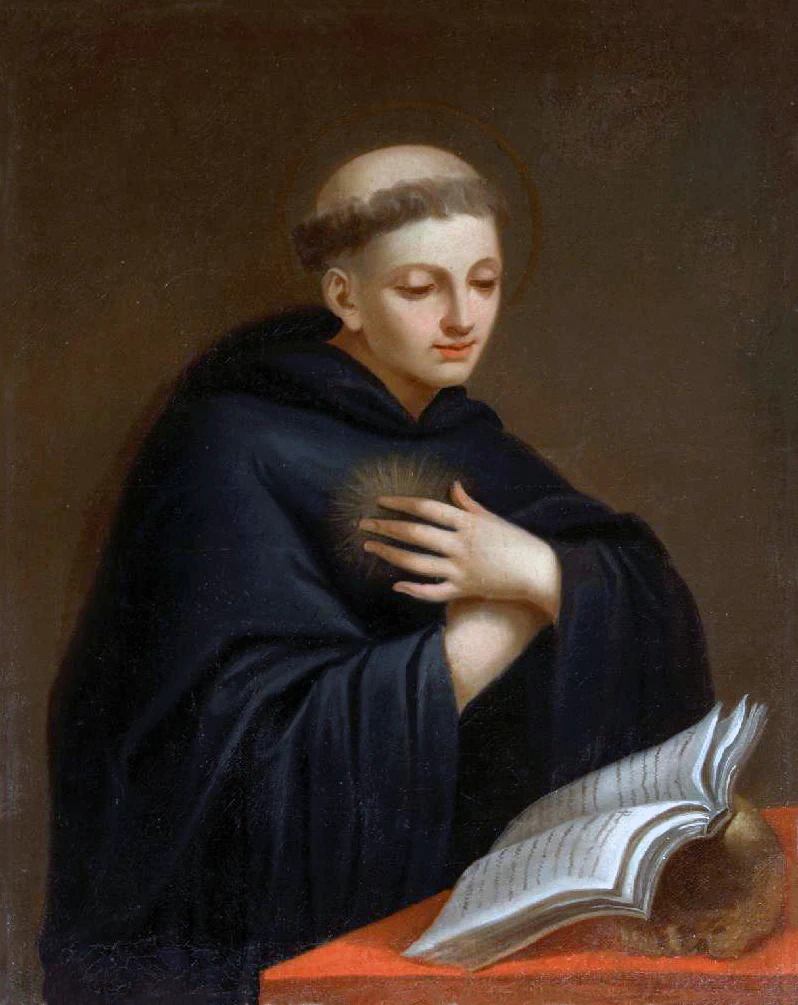
Nicholas himself was an Augustinian preacher and confessor whose final decades were spent caring for people in Tolentino. The Order presents him as a model of contemplation joined to practical service. [SAINT-SAINT-NICHOLAS-OF-TOLENTINO-S04]
Prayer and service
The Order presents him as a model of their integration. [SAINT-SAINT-NICHOLAS-OF-TOLENTINO-S04]
Multiple memorial objects
Ark, statue, arms, and other remains must be distinguished. [SAINT-SAINT-NICHOLAS-OF-TOLENTINO-S01] [SAINT-SAINT-NICHOLAS-OF-TOLENTINO-S02] [SAINT-SAINT-NICHOLAS-OF-TOLENTINO-S03]
Documented recognition
Canonization in 1446 does not settle every physical claim. [SAINT-SAINT-NICHOLAS-OF-TOLENTINO-S04] [SAINT-SAINT-NICHOLAS-OF-TOLENTINO-S05]
Explore the chapters
A friar after the Grand Union
The Augustinian Order places his birth in 1245 and his entrance into religious life shortly after the Order’s Grand Union. His early ministry involved preaching in different houses of his province. This puts his personal story within a newly consolidated religious community seeking a coherent way of life. [SAINT-SAINT-NICHOLAS-OF-TOLENTINO-S04]
Thirty years in one town
The Order’s account says his last thirty years were spent in Tolentino, particularly as confessor, helper of poor people, and minister to the sick. His enduring local significance grew through repeated contact. The later monumental shrine commemorates a ministry that was much closer to individual households and human needs. [SAINT-SAINT-NICHOLAS-OF-TOLENTINO-S04]
Prayer for the dead
Nicholas’s devotion to the faithful departed is central to his Augustinian memory. Catholics understand such prayer within the communion of the Church and hope for those undergoing purification. The Order associates that devotion with his patronage of souls in Purgatory. It is a theological practice, not a claim that a shrine object physically controls the afterlife. [SAINT-SAINT-NICHOLAS-OF-TOLENTINO-S04]
What the Augustinians regard as exemplary
The Order explicitly joins love of God with love ofneighbor, prayer with good works, and common life with ministry. Nicholas is important because those activities are represented as mutually sustaining. A purely spectacular account of relics would miss the very balance his religious family asks people to imitate. [SAINT-SAINT-NICHOLAS-OF-TOLENTINO-S04]
One saint, several objects
The sanctuary’s descriptions identify the stone ark as empty and distinguish it from a statue and the separate chapel of the Holy Arms. Other remains are associated with the crypt. A visitor should therefore ask which object a particular claim concerns. An artistic figure cannot establish the condition of relic material located elsewhere. [SAINT-SAINT-NICHOLAS-OF-TOLENTINO-S01] [SAINT-SAINT-NICHOLAS-OF-TOLENTINO-S02] [SAINT-SAINT-NICHOLAS-OF-TOLENTINO-S03]
Recognition has a specific date
The Order records canonization by Eugene IV in 1446. A Holy See homily supplies the more precise date 5 June 1446. These sources establish Catholic recognition, while the shrine’s object descriptions establish a more complicated custodial setting than the phrase incorrupt body suggests. [SAINT-SAINT-NICHOLAS-OF-TOLENTINO-S04] [SAINT-SAINT-NICHOLAS-OF-TOLENTINO-S05]
What would strengthen the physical history
A complete inventory linking each reliquary to custody documents and dated examinations would help establish identity and surviving anatomy. Until then, the known distinctions among objects should remain visible. Nicholas’s life and theology provide a reason to explore the shrine that does not depend on collapsing every object into one unsupported preservation claim. [SAINT-SAINT-NICHOLAS-OF-TOLENTINO-S01] [SAINT-SAINT-NICHOLAS-OF-TOLENTINO-S02] [SAINT-SAINT-NICHOLAS-OF-TOLENTINO-S03] [SAINT-SAINT-NICHOLAS-OF-TOLENTINO-S04]
Catholic reflection & discussion
Look for the person within the story
Spend a moment with the choices, relationships and hardships in this life. Consider what you might learn from the person as well as from the extraordinary claims examined in the file.
These editorial prompts invite reflection on the article. They are distinct from Church teaching and the evidence findings.
Pause and reflect
- Which choice or experience in this life stays with you, and why?
- What would you like to understand better about the person's faith and the world they lived in?
- Is there a small act of patience, courage or service that this reading invites you to consider?
Discuss with family or a group
Choose questions suited to your readers' ages and experiences. Anyone can pass or keep a response private.
- Ask each person to choose a moment from the life described here. What makes that moment worth remembering?
- Which details have clear sources, and which remain uncertain? How could you tell the story honestly without losing its human meaning?
Questions people ask
Open any question for a fuller answer and its sources.
Does the stone ark hold his body?
The sanctuary distinguishes an empty ark from the other relic locations. [SAINT-SAINT-NICHOLAS-OF-TOLENTINO-S03]
Why are the arm relics discussed separately?
They have their own chapel and custodial description; they should not be visually merged with a statue or remains in the crypt. [SAINT-SAINT-NICHOLAS-OF-TOLENTINO-S01] [SAINT-SAINT-NICHOLAS-OF-TOLENTINO-S02]
Why do Catholics connect him with Purgatory?
The Order emphasizes his prayer for the faithful departed and the patronage that developed from it. [SAINT-SAINT-NICHOLAS-OF-TOLENTINO-S04]
Was he the first Augustinian saint canonized?
The Order describes him as its first canonized member, with recognition in 1446. [SAINT-SAINT-NICHOLAS-OF-TOLENTINO-S04]
What the evidence can establish
Evidence verdict: unresolved
Do the urn and arm relics at Tolentino constitute Nicholas’s naturally preserved, substantially intact body with documented identity and treatment?
The sanctuary carefully identifies distinct objects and remains, but does not publish enough physical evidence for that conclusion. The sanctuary distinguishes an empty stone ark, a polychrome statue, arm relics, and an urn of attributed bodily remains. This prevents a misleading visual claim, but the published material does not establish a naturally intact untreated body.
Sources: [SAINT-SAINT-NICHOLAS-OF-TOLENTINO-S01; SAINT-SAINT-NICHOLAS-OF-TOLENTINO-S02; SAINT-SAINT-NICHOLAS-OF-TOLENTINO-S03; SAINT-SAINT-NICHOLAS-OF-TOLENTINO-S04; SAINT-SAINT-NICHOLAS-OF-TOLENTINO-S05]
Church or institutional status
Canonized Catholic saint
- Authority
- Basilica/Sanctuary of Saint Nicholas of Tolentino
- Scope of the finding
- Roman Catholic saint, canonized by Eugene IV on 5 June 1446.
- Limits of the finding
- Ecclesial recognition, commemoration, or custodial attribution is separate from physical identity and preservation evidence.
Sources and notes
Back to the overviewSource labels describe a document's type and role, not the strength of a claim. Where provided, notes explain its use, access limits, and outstanding checks.
- SAINT-SAINT-NICHOLAS-OF-TOLENTINO-S01Official Basilica/Sanctuary of Saint Nicholas of Tolentino — crypt (opens in a new tab)Official source
It says the body was found in 1926 and describes the later urn. What it does not establish: no excavation, canonical-recognition, anatomy, or conservation file is published.
- SAINT-SAINT-NICHOLAS-OF-TOLENTINO-S02Official sanctuary — Chapel of the Holy Arms (opens in a new tab)Official source
It distinguishes the arm relics and associated objects/textiles. What it does not establish: relic attribution does not state completeness or treatment.
- SAINT-SAINT-NICHOLAS-OF-TOLENTINO-S03Official sanctuary — ark and statue (opens in a new tab)Official source
It explains that the Renaissance stone ark was empty, that the polychrome figure is a statue, and that mortal remains were buried below. What it does not establish: material distinctions are clear, but authentication/anatomy remain unpublished.
- SAINT-SAINT-NICHOLAS-OF-TOLENTINO-S04Order of Saint Augustine — Saint Nicholas (opens in a new tab)Official source
It says his body/remains are venerated at the basilica and gives canonization by Eugene IV in 1446. What it does not establish: devotional biography, not physical examination.
- SAINT-SAINT-NICHOLAS-OF-TOLENTINO-S05Vatican Secretariat of State, 20 May 2000 (opens in a new tab)Official source
It identifies 5 June 1446 as Nicholas’s canonization date. What it does not establish: status only.
Corrections and updates
Expanded this file with a sourced narrative, 7 chapters and 4 answers to common questions. The existing evidence verdict label and institutional status are retained. Independent human review remains pending.