
Start here
The story, in brief
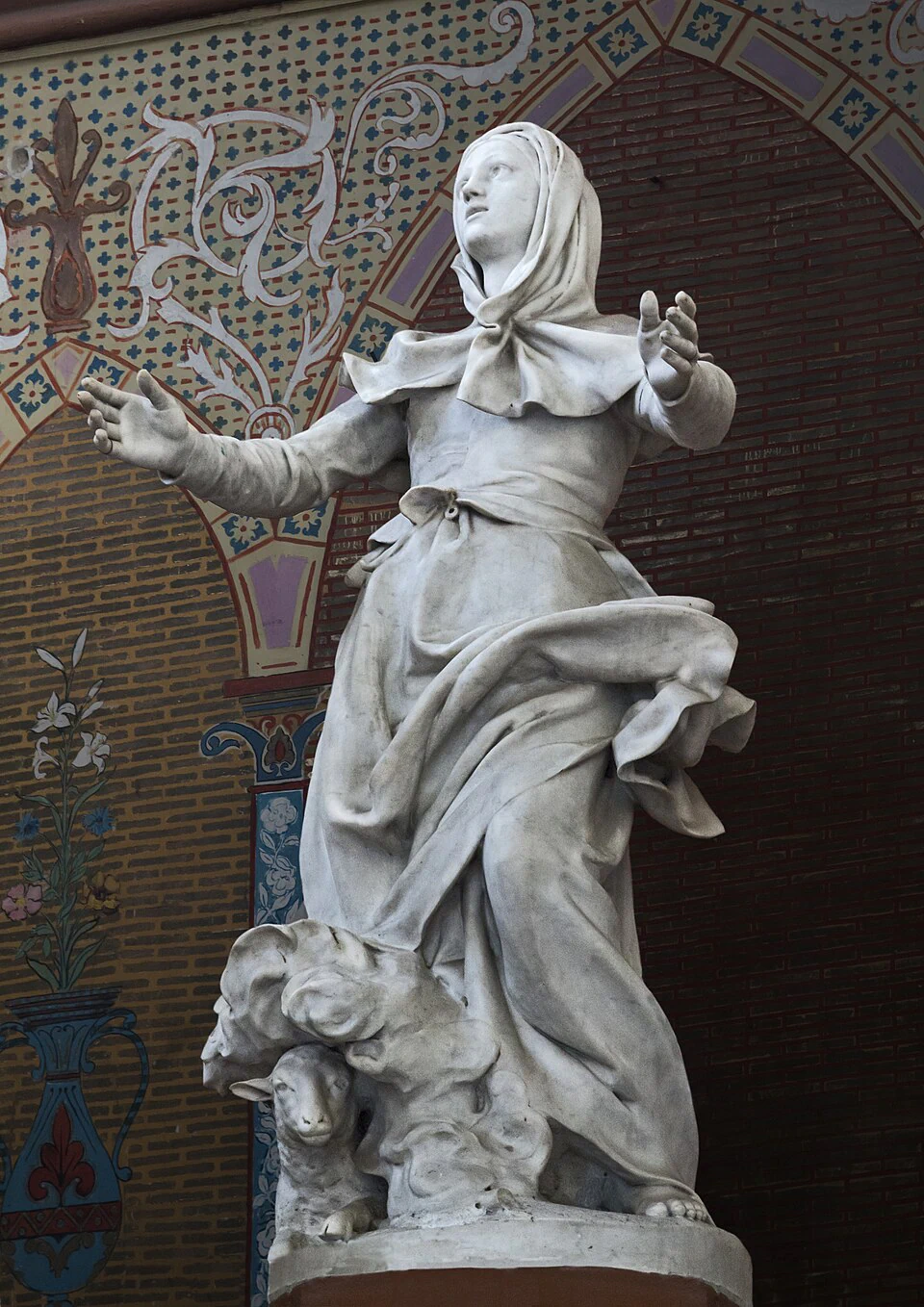
Germaine Cousin had little of what usually makes a person visible in history: no powerful office, no major institution, and little access to education. The Church’s account instead remembers a disabled young woman made to tend sheep and sleep apart from the household. Her inclusion among the saints asks whose life a community considers worth remembering. [SAINT-SAINT-GERMAINE-COUSIN-S01]
Dignity exceeds social status
The Church remembers someone denied education and ordinary household care. [SAINT-SAINT-GERMAINE-COUSIN-S01]
Endurance does not justify harm
Her virtue should not be used to excuse the deprivation described. [SAINT-SAINT-GERMAINE-COUSIN-S01]
Keep the account proportionate
A short biography cannot support invented clinical or preservation details. [SAINT-SAINT-GERMAINE-COUSIN-S01]
Explore the chapters
A vulnerable child near Toulouse
The Dicastery places Germaine’s birth at Pibrac in 1570 and describes a modest family setting and a physical malformation. The brief source does not supply a clinical diagnosis. Respecting that limit matters: a modern diagnostic label would add an appearance of medical precision that the biography cannot support. [SAINT-SAINT-GERMAINE-COUSIN-S01]
Exclusion was part of the story
The biography describes her rejection after her mother’s death, denial of education, and work with the flock. It also says she was made to sleep in the sheepfold. Those circumstances should be recognized as deprivation and mistreatment. The Church’s recognition of her endurance does not require a reader to regard the treatment itself as good. [SAINT-SAINT-GERMAINE-COUSIN-S01]
Religious life without social importance
Germaine attended the village church and developed a strong devotional life. The official account presents prayer as accessible even to someone denied ordinary status and opportunity. The Catholic claim is therefore about a person’s relationship with God exceeding the value assigned to her by social position, household authority, or physical ability. [SAINT-SAINT-GERMAINE-COUSIN-S01]
The excluded person could still help others
The biography says that other marginalized people turned to her for a word of faith. This reverses the assumption that a vulnerable person can only receive help. Within the Church’s account, Germaine’s own difficult circumstances became a setting in which others found understanding and religious encouragement. [SAINT-SAINT-GERMAINE-COUSIN-S01]
A neglected death, followed by public recognition
Germaine died in 1601. The official profile records beatification in 1854 and canonization by Pius IX in 1867. The contrast is striking: the woman remembered for exclusion eventually received public liturgical honor. That recognition concerns the holiness of her life; the short biography does not document the complete historical process behind it. [SAINT-SAINT-GERMAINE-COUSIN-S01]
What this source can and cannot carry
The official account is brief, and its introductory formula and narrative are not entirely consistent about her family background. Details of household relationships therefore deserve further historical checking. It supplies no examination of her remains, so neither vivid body descriptions nor a preservation mechanism should be invented to make the story more dramatic. [SAINT-SAINT-GERMAINE-COUSIN-S01]
Catholic reflection & discussion
Look for the person within the story
Spend a moment with the choices, relationships and hardships in this life. Consider what you might learn from the person as well as from the extraordinary claims examined in the file.
These editorial prompts invite reflection on the article. They are distinct from Church teaching and the evidence findings.
Pause and reflect
- Which choice or experience in this life stays with you, and why?
- What would you like to understand better about the person's faith and the world they lived in?
- Is there a small act of patience, courage or service that this reading invites you to consider?
Discuss with family or a group
Choose questions suited to your readers' ages and experiences. Anyone can pass or keep a response private.
- Ask each person to choose a moment from the life described here. What makes that moment worth remembering?
- Which details have clear sources, and which remain uncertain? How could you tell the story honestly without losing its human meaning?
Questions people ask
Open any question for a fuller answer and its sources.
What disability did Germaine have?
The source describes a physical malformation but gives no clinical diagnosis. Naming a specific condition would require further evidence. [SAINT-SAINT-GERMAINE-COUSIN-S01]
Does honoring her endurance excuse her treatment?
The source praises the person who endured deprivation. Readers can recognize her faith and dignity while understanding the exclusion, lack of education, and harsh living conditions as harms. [SAINT-SAINT-GERMAINE-COUSIN-S01]
Why might Catholics find her life relevant today?
Her story directs attention to people overlooked because of disability, poverty, or exclusion. The source also remembers her ability to offer encouragement to others in difficult circumstances. [SAINT-SAINT-GERMAINE-COUSIN-S01]
Is miraculous preservation established by this biography?
No. It records her recognition and presents a short religious life, but contains no anatomical inventory or conservation study of her remains. [SAINT-SAINT-GERMAINE-COUSIN-S01]
What the evidence can establish
Evidence verdict: unresolved
Does the available evidence establish that the displayed or attributed remains of Saint Germaine Cousin are the naturally preserved, substantially intact body of that person, without undisclosed embalming, reconstruction, wax covering, replacement, or later conservation treatment?
Canonized Catholic saint. Official sources confirm that status or custody for Saint Germaine Cousin. They do not provide the independent anatomical evidence, custody documentation, or treatment history needed to answer whether the remains are naturally preserved.
Sources: [SAINT-SAINT-GERMAINE-COUSIN-S01]
Church or institutional status
Canonized Catholic saint
- Authority
- Dicastery for the Causes of Saints
- Scope of the finding
- The cited official record documents the person's Catholic canonization and saintly title.
- Limits of the finding
- It does not authenticate the attributed remains, establish natural preservation, or prove a miracle.
- Official sources
- [SAINT-SAINT-GERMAINE-COUSIN-S01]
Sources and notes
Back to the overviewSource labels describe a document's type and role, not the strength of a claim. Where provided, notes explain its use, access limits, and outstanding checks.
- SAINT-SAINT-GERMAINE-COUSIN-S01Dicastery for the Causes of Saints profile — Saint Germaine Cousin (opens in a new tab)Official source
Identifies this person and records the stated Catholic beatification/canonization or liturgical status; it does not establish the physical preservation claim. What it does not establish: This institutional record establishes only the stated act, status, teaching, or account; it does not independently establish material identity, preservation mechanism, or supernatural causation.
Corrections and updates
Expanded this file with a sourced narrative, 6 chapters and 4 answers to common questions. The existing evidence verdict label and institutional status are retained. Independent human review remains pending.