
Start here
The story, in brief
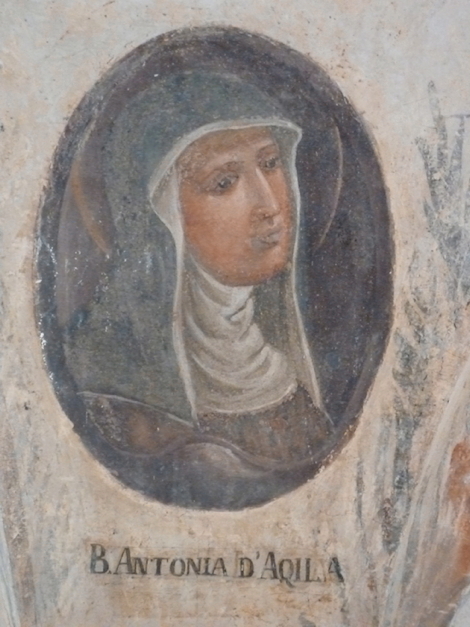
Antonia of Florence’s religious life began after marriage, widowhood, and responsibility for a son. It then changed form again, from a Franciscan tertiary community to a Poor Clare foundation in L’Aquila. Her story is one of successive commitments, not a life defined only by what was later reported about her body. [SAINT-SAINT-ANTONIA-OF-FLORENCE-S01] [SAINT-SAINT-ANTONIA-OF-FLORENCE-S02]
Several stages of vocation
Marriage, motherhood, and two forms of Franciscan life belong to the biography. [SAINT-SAINT-ANTONIA-OF-FLORENCE-S01]
A community legacy
Antonia’s leadership helped shape a Poor Clare foundation. [SAINT-SAINT-ANTONIA-OF-FLORENCE-S01]
A received preservation account
The incorruption narrative needs its original material records. [SAINT-SAINT-ANTONIA-OF-FLORENCE-S01] [SAINT-SAINT-ANTONIA-OF-FLORENCE-S02]
Explore the chapters
A mother before the monastery
The Poor Clare custodian places Antonia’s birth around 1400–1401 and recounts an early marriage followed by widowhood. She cared for her son before entering religious life. That sequence is important because her later contemplative vocation emerged after family responsibilities rather than outside their experience. [SAINT-SAINT-ANTONIA-OF-FLORENCE-S01]
The Franciscan reforming world
The custodial biography connects her decision with Bernardino of Siena’s preaching and the wider Observant renewal. She entered the regular Franciscan Third Order associated with Angelina of Marsciano around 1429. These names and communities locate her within a particular religious movement rather than an isolated mystical biography. [SAINT-SAINT-ANTONIA-OF-FLORENCE-S01]
Fourteen years leading Saint Elizabeth’s
In 1433, Antonia was sent with companions to establish the community of Saint Elizabeth in L’Aquila. The custodian says she led it for fourteen years. Sustained responsibility for others preceded the next change in her own vocation, giving the later Poor Clare foundation an experienced leader. [SAINT-SAINT-ANTONIA-OF-FLORENCE-S01]
Choosing Clare’s rule
With the assistance of John of Capistrano, Antonia and companions moved in 1447 to the Monastery of the Eucharist, later known as Saint Clare the Poor. The account presents this transition as a desire for deeper contemplation and stricter poverty under Clare’s rule. It was a change of community form within Franciscan life. [SAINT-SAINT-ANTONIA-OF-FLORENCE-S01]
How the sisters remembered her leadership
The custodial narrative emphasizes maternal care, simplicity, shared poverty, and support for sick or discouraged sisters. These qualities explain the positive religious meaning of her legacy. The language is devotional and should be read as the community’s received portrait, not as a substitute for contemporary administrative records. [SAINT-SAINT-ANTONIA-OF-FLORENCE-S01]
The exhumation tradition
The same source recounts repeated findings of incorruption after her 1472 death and describes episcopal interventions in the handling of the body. These are historical claims transmitted by the present custodians. The underlying examination and transfer documents remain necessary before they can support a modern anatomical conclusion. [SAINT-SAINT-ANTONIA-OF-FLORENCE-S01] [SAINT-SAINT-ANTONIA-OF-FLORENCE-S02]
The title and the body remain distinct
Official sources identify Antonia as Blessed; the custodian reports formal confirmation in 1848. They also locate the continuing tradition of her remains. The current inventory, conservation history, and identity evidence have not been established here, so the material verdict remains unresolved despite the clearly documented devotional status. [SAINT-SAINT-ANTONIA-OF-FLORENCE-S01] [SAINT-SAINT-ANTONIA-OF-FLORENCE-S02] [SAINT-SAINT-ANTONIA-OF-FLORENCE-S03]
Catholic reflection & discussion
Look for the person within the story
Spend a moment with the choices, relationships and hardships in this life. Consider what you might learn from the person as well as from the extraordinary claims examined in the file.
These editorial prompts invite reflection on the article. They are distinct from Church teaching and the evidence findings.
Pause and reflect
- Which choice or experience in this life stays with you, and why?
- What would you like to understand better about the person's faith and the world they lived in?
- Is there a small act of patience, courage or service that this reading invites you to consider?
Discuss with family or a group
Choose questions suited to your readers' ages and experiences. Anyone can pass or keep a response private.
- Ask each person to choose a moment from the life described here. What makes that moment worth remembering?
- Which details have clear sources, and which remain uncertain? How could you tell the story honestly without losing its human meaning?
Questions people ask
Open any question for a fuller answer and its sources.
Was Antonia a mother?
The custodial biography says she was widowed and cared for a son before entering religious life. [SAINT-SAINT-ANTONIA-OF-FLORENCE-S01]
Why did she change communities?
The received account connects the move to a desire to follow Clare’s rule with stricter poverty and deeper contemplation. [SAINT-SAINT-ANTONIA-OF-FLORENCE-S01]
Is she formally called Saint?
The established title in the inspected sources is Blessed. The older route wording is retained. [SAINT-SAINT-ANTONIA-OF-FLORENCE-S01] [SAINT-SAINT-ANTONIA-OF-FLORENCE-S02]
Are the exhumations independently verified here?
The custodial source recounts them, but this file does not contain the original examinations or a complete modern material report. [SAINT-SAINT-ANTONIA-OF-FLORENCE-S01]
What the evidence can establish
Evidence verdict: unresolved
Do the custodian's historical exhumation reports establish the present remains as Antonia's naturally preserved, substantially intact body with a documented modern condition and treatment history?
The Poor Clare custodian and Vatican State transmit a tradition that Antonia's body was found incorrupt and is preserved at Paganica. They establish her Blessed status and current devotional custody, but not present anatomy, biological identity, treatment history, or a natural preservation mechanism. The physical claim remains unresolved.
Sources: [SAINT-SAINT-ANTONIA-OF-FLORENCE-S01; SAINT-SAINT-ANTONIA-OF-FLORENCE-S02; SAINT-SAINT-ANTONIA-OF-FLORENCE-S03]
Church or institutional status
Beatified Catholic
- Authority
- Holy See/Vatican State and Poor Clare custodian
- Scope of the finding
- Roman Catholic Blessed, not Saint. The current Vatican State record says Pope Pius IX formally confirmed her cult or beatified status in 1848. That act does not scientifically verify an incorrupt body.
- Limits of the finding
- Ecclesial recognition or custodial attribution does not authenticate the attributed remains, establish natural preservation, or prove supernatural causation.
Sources and notes
Back to the overviewSource labels describe a document's type and role, not the strength of a claim. Where provided, notes explain its use, access limits, and outstanding checks.
- SAINT-SAINT-ANTONIA-OF-FLORENCE-S01clarissepaganica.it — Blessed Antonia of Florence (opens in a new tab)Official source
Gives the monastery's history of exhumations, its tradition that the body was found incorrupt/movable, papal confirmation of cult/Beatified status, and current preservation at Paganica. What it does not establish: A devotional custodial narrative; underlying recognition, anatomy, and conservation documents are not published.
- SAINT-SAINT-ANTONIA-OF-FLORENCE-S02vaticanstate.va — Blessed Antonia of Florence (opens in a new tab)Official source
Calls her Blessed Antonia of Florence, reports repeated recognitions and the traditional incorrupt-body account, and records Pius IX's formal declaration on 28 July 1848. What it does not establish: A short current devotional profile; it does not reproduce the examinations or explain present anatomy/treatment.
- SAINT-SAINT-ANTONIA-OF-FLORENCE-S03liturgico.chiesacattolica.it — Blessed Antonia of Florence PDF (opens in a new tab)Official source
Lists Blessed Antonia at L'Aquila/Paganica. What it does not establish: Ecclesial status only.
Corrections and updates
Expanded this file with a sourced narrative, 7 chapters and 4 answers to common questions. The existing evidence verdict label and institutional status are retained. Independent human review remains pending.