
Start here
The story, in brief
Turin’s tradition says stolen church goods arrived on a mule in 1453, and a consecrated host remained suspended in the air until the bishop came. The most useful caution comes from within the Church’s own record: the regional liturgical book distinguishes the recovery from a much later written narrative embellished with marvelous details. [TUR-01; TUR-02]
A recovery tradition
The liturgical source records Eucharistic bread taken from Exilles and recovered exceptionally in Turin. [TUR-01]
A later spectacular narrative
The same source acknowledges oral transmission and later elaboration. [TUR-01]
A civic legacy
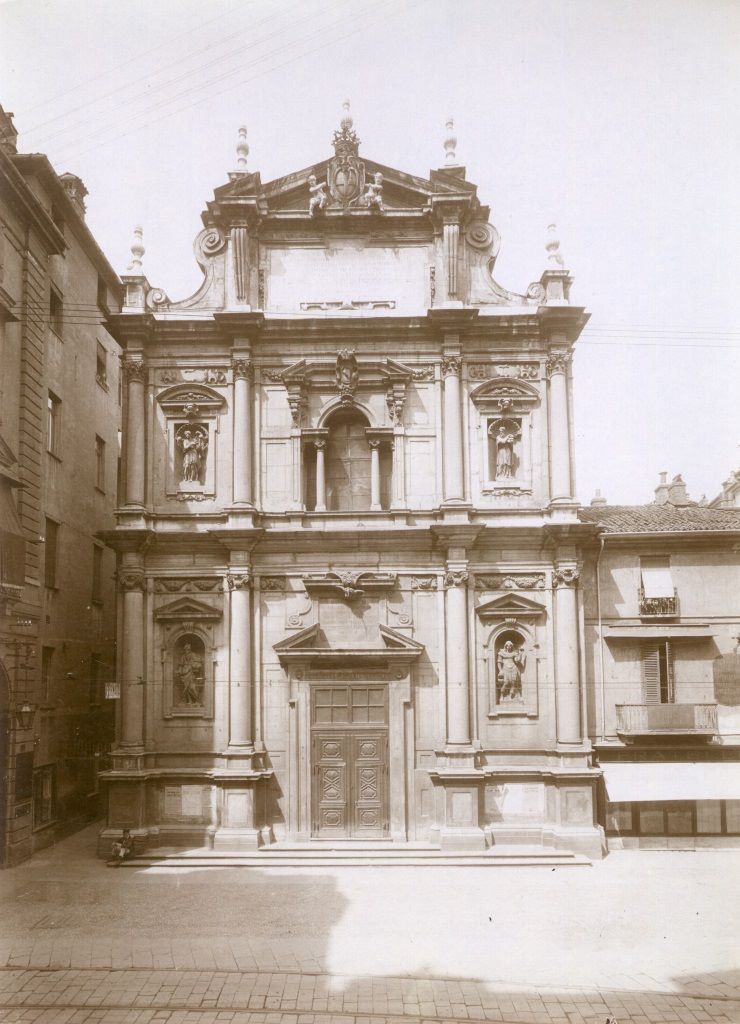
The shrine and Corpus Domini church document how Turin chose to remember the event. [TUR-03]
Explore the chapters
From a looted church to the city
The diocese’s current retelling sets the story amid conflict between the Dauphiné and Savoy. Soldiers reportedly took valuables, including a monstrance containing the sacrament, from Exilles and brought them toward Turin for sale. The mule’s collapse and the host’s suspension then interrupt that journey. These details are presented by the diocese as transmitted tradition, not a newly discovered eyewitness account. [TUR-02]
The Eucharist turns theft into a religious drama
Catholics distinguish the valuable vessel from the sacrament it holds. Their reverence is directed to Christ believed really present under the Eucharistic appearances. That explains why recovering the host matters beyond recovering stolen metalwork: the event is remembered as restoring reverent treatment of the sacrament. [EX-01; TUR-01]
The story’s image of a host above the city also gives visible form to a belief normally received through faith. Catholic doctrine does not teach that hosts ordinarily float or that levitation is needed to establish Christ’s presence at Mass. The airborne-host narrative is an additional historical claim. [EX-01; TUR-02]
The unusually candid liturgical source
The approved regional book says the tradition was oral and was written much later, with spectacular elements added according to the mentality of the period. This is a substantial source-critical judgment. It allows the reader to take the recovery tradition seriously without assigning the same evidential weight to every later dramatic episode. [TUR-01]
The bishop in the received account
The modern diocesan narrative says the host remained aloft until the bishop arrived and descended in response to an evangelical invocation. Within the story, ecclesial worship replaces the disorder of theft. Historically, the scene still requires evaluation through the text’s transmission. A later devotional retelling cannot provide the missing contemporary observation simply by repeating the scene confidently. [TUR-02; TUR-01]
How the city made memory permanent
MuseoTorino records an earlier shrine promoted in 1528 and the city’s beginning of the present church in 1604 after a 1598 vow. The liturgical book gives 1609 for construction, while the civic history distinguishes the start from later work. The differences point to stages in a building project, not necessarily competing miracles. [TUR-03; TUR-01]
A feast still directs attention to worship
The 2025 diocesan commemoration included Mass and Eucharistic adoration at Corpus Domini. Its public program demonstrates continuing religious reception. The event’s pastoral focus is the Eucharist celebrated and adored now, while the historical investigation concerns how the earlier recovery came to be told. [TUR-02]
What can be tested about a lost moment
No event host or contemporary technical description of suspension was identified. The productive research path is comparison of the earliest recovery references with later narrative forms, rather than claiming a modern laboratory can recreate an undocumented sight. The physical levitation remains unresolved; the city’s long commemoration is well established. [TUR-01; TUR-02; TUR-03]
Catholic reflection & discussion
Hold wonder and careful questions together
Notice what this account awakens in you: hope, curiosity, gratitude, or a difficult question. Give that response room while examining what the sources actually support.
These editorial prompts invite reflection on the article. They are distinct from Church teaching and the evidence findings.
Pause and reflect
- What makes this account meaningful to you, and which part would you most want to understand better?
- How do the article's evidence and its Catholic interpretation answer different questions?
- What response might this reading invite in ordinary life, even while a historical or scientific question remains open?
Discuss with family or a group
Choose questions suited to your readers' ages and experiences. Anyone can pass or keep a response private.
- Let each person describe what surprised them before discussing whether they found the account convincing.
- Pick one precise claim. What supports it, what remains uncertain, and what would a stronger source need to show?
Questions people ask
Open any question for a fuller answer and its sources.
Is this the Shroud of Turin?
Does the Church acknowledge later embellishment?
Yes. The regional liturgical book explicitly distinguishes oral tradition from later written elaboration. [TUR-01]
Was the current basilica built in 1453?
The civic source dates the present project’s beginning to 1604 after a 1598 vow; earlier commemoration preceded it. [TUR-03]
What the evidence can establish
Evidence verdict: unresolved
Does inspectable evidence establish that a consecrated host physically remained suspended in the air at Turin on 6 June 1453?
The Church's approved liturgical history preserves a 1453 recovery but explicitly says the written tradition is much later and its spectacular details were added in transmission. The current retelling, later commemorative architecture, and absence of inspected contemporary or physical evidence do not establish levitation.
Church or institutional status
Officially commemorated in the Archdiocese of Turin with an approved annual liturgical memorial, whose own text distinguishes the core recovery from later spectacular details.
- Authority
- The Piedmont Episcopal Conference and the Archdiocese of Turin through the approved regional liturgical book and continuing diocesan observance.
- Scope of the finding
- An annual 6 June liturgical memorial and authorized Eucharistic devotion centered on the 1453 recovery tradition.
- Limits of the finding
- The authorized memorial is not a scientific authentication of levitation; its own historical introduction says the written tradition is much later and contains marvelous, spectacular coloring.
Sources and notes
Back to the overviewSource labels describe a document's type and role, not the strength of a claim. Where provided, notes explain its use, access limits, and outstanding checks.
- TUR-01Piedmont Episcopal Conference, Messale Romano per le celebrazioni locali, 6 June: Memoria del Miracolo di Torino PDF (opens in a new tab)Official source
Approved regional liturgical book. Its historical introduction distinguishes the reported 1453 recovery from oral transmission and much later written spectacular detail; liturgical approval is not physical verification.
- TUR-02Archdiocese of Turin, 2025 commemoration at the Basilica of Corpus Domini (opens in a new tab)Official source
Current official observance and received narrative. The page's traditional levitation account is not a contemporary source or independent physical evidence.
Official civic heritage record documenting the 1528 shrine, the 1598 civic vow, and construction beginning in 1604. The commemorative building is not event evidence.
- EX-01Catechism of the Catholic Church, 1373–1381 (opens in a new tab)Official sourceCited in this file
Read the source note for the passage used and any limits on what it supports.
Official teaching on the Real Presence, transubstantiation, reservation, and Eucharistic worship; general doctrine, not a ruling on this reported event.
Corrections and updates
Expanded this file with a sourced narrative, 7 chapters and 4 answers to common questions. The existing evidence verdict label and institutional status are retained. Independent human review remains pending.