
Start here
The story, in brief
At O Cebreiro, the traditional turning point is a journey that seems disproportionate to its destination. A local worshipper comes to Mass through severe weather; the celebrating monk doubts that bread and wine warrant the effort. The story then describes a visible manifestation of Christ’s body and blood. The Xunta’s encyclopedia presents this explicitly as Jacobean tradition. [OCB-02]
The Diocese of Lugo also preserves the Eucharistic tradition and identifies the shrine’s chalice and later vessels. The interesting question is not merely whether a vessel is old, but what the story teaches about an apparently ordinary Mass—and what those objects can establish historically. [OCB-01; EX-01]
The journey carries the meaning
The contrast between a determined worshipper and a doubtful celebrant expresses the value Catholics place on the Eucharist. [OCB-02; EX-01]
The sources do not agree on the century
Lugo’s account places the tradition in the twelfth century; the Xunta encyclopedia places it in the early thirteenth. [OCB-01; OCB-02]
Objects and events require different evidence
A medieval chalice can establish material history without proving the extraordinary event associated with it. [OCB-01; OCB-02]
Explore the chapters
A sanctuary on the pilgrim road
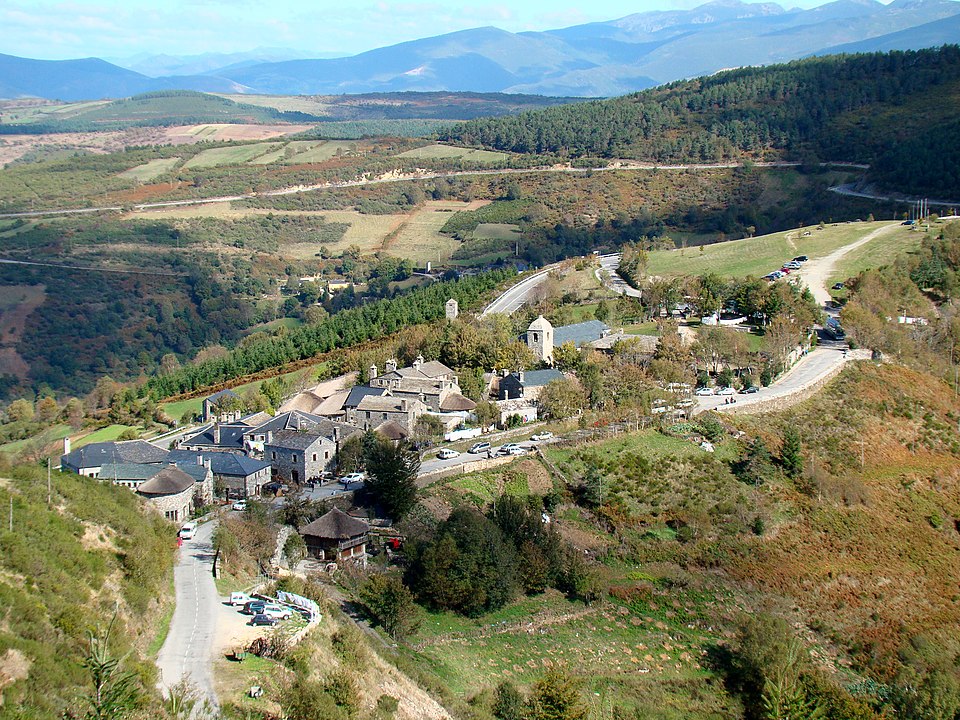
The Xunta sources connect O Cebreiro’s church with hospitality along the Camino to Santiago. In that setting, the story’s difficult approach to Mass is more than scenery: the shrine belongs to a landscape shaped by journeys undertaken for religious reasons. Its architectural and devotional history make it worth understanding even before judging the miracle claim. [OCB-02; OCB-03]
What the traditional account actually contrasts
The account places doubt inside the sanctuary: the monk minimizes what he celebrates, while the visitor’s effort expresses trust. The reported transformation answers that contrast. It is a narrative about recognition, not evidence that difficult travel earns a miracle or that every hesitant believer will receive a visible sign. Those latter rules do not follow from the story. [OCB-02; EX-01]
Bread and wine: appearance and reality
Catholic teaching holds that consecration changes the substance of bread and wine into Christ’s body and blood, while their usual appearances remain. The ordinary Eucharist therefore already contains the reality to which the story points. A visible transformation would be an additional sign; it would not create a higher grade of Christ’s presence than at a Mass without unusual appearances. [EX-01]
What the chalice and vessels contribute
The diocesan account describes a Romanesque chalice and vessels associated with the generosity of the Catholic Queen. The regional encyclopedia also records a medieval chalice and paten and a royal reliquary. These objects anchor the devotion in material culture. Establishing their dates, however, does not independently date a transformation or identify the origin of their present contents. [OCB-01; OCB-02]
Why the date should remain open
The twelfth-century diocesan dating and early-thirteenth-century regional dating should be displayed together. Choosing a precise year would conceal the uncertainty. The difference does not disprove every part of the tradition, but it shows why a modern shrine description cannot substitute for an identified early witness or original investigation. [OCB-01; OCB-02]
The Holy Grail association
A Xunta cultural account connects the sanctuary with Grail legend and describes the association as legendary. Readers should not turn that literary and devotional connection into a demonstrated identification with a vessel from Christ’s Passion. The value of tracing the association is to understand the shrine’s wider cultural influence. [OCB-03]
What the Church’s support establishes
Lugo presents O Cebreiro as an important Eucharistic and Marian sanctuary and publishes its pilgrimage observance. That clearly supports a living religious tradition. The cited notice supplies neither a modern laboratory report nor a separately documented judgment establishing supernatural causation. Catholic Eucharistic belief rests on the sacrament, while the particular medieval event remains a historical question. [OCB-01; EX-01]
Catholic reflection & discussion
Hold wonder and careful questions together
Notice what this account awakens in you: hope, curiosity, gratitude, or a difficult question. Give that response room while examining what the sources actually support.
These editorial prompts invite reflection on the article. They are distinct from Church teaching and the evidence findings.
Pause and reflect
- What makes this account meaningful to you, and which part would you most want to understand better?
- How do the article's evidence and its Catholic interpretation answer different questions?
- What response might this reading invite in ordinary life, even while a historical or scientific question remains open?
Discuss with family or a group
Choose questions suited to your readers' ages and experiences. Anyone can pass or keep a response private.
- Let each person describe what surprised them before discussing whether they found the account convincing.
- Pick one precise claim. What supports it, what remains uncertain, and what would a stronger source need to show?
Questions people ask
Open any question for a fuller answer and its sources.
Did the event happen in the twelfth or thirteenth century?
Does the Romanesque chalice prove the miracle?
Is this the verified Holy Grail?
No such identification is established here. The regional cultural account presents the Grail connection as legend. [OCB-03]
Why would a Catholic care if the event cannot be proved?
The account directs attention to a central Catholic claim: the ordinary-looking Eucharist is worthy of worship because Christ is present. That teaching can be understood without treating this particular story as compulsory evidence. [EX-01]
What the evidence can establish
Evidence verdict: unresolved
What evidence supports the O Cebreiro Eucharistic tradition and the identity of the chalice and vessels displayed there?
The Diocese of Lugo identifies O Cebreiro as an important Eucharistic and Marian sanctuary and explicitly frames the miracle as tradition. Xunta sources call it tradition or legend and document the Romanesque chalice and later vessels. Those objects' existence does not establish the claimed transformation.
Church or institutional status
Diocesan eucharistic sanctuary
- Authority
- Diocese of Lugo
- Scope of the finding
- Official diocesan Eucharistic/Marian sanctuary status and pilgrimage at O Cebreiro
- Limits of the finding
- The official page calls the miracle a tradition and does not document a formal authenticity decree.
- Official sources
- [OCB-01]
Sources and notes
Back to the overviewSource labels describe a document's type and role, not the strength of a claim. Where provided, notes explain its use, access limits, and outstanding checks.
Calls O Cebreiro a major diocesan Eucharistic and Marian sanctuary and says there is a tradition of a twelfth-century miracle; identifies the Romanesque chalice and later vessels. What it does not establish: The Diocese itself frames the event as tradition; custody of objects is not proof they contain transformed species.
- OCB-02Xunta de Galicia encyclopedia, Santa María Real do Cebreiro (opens in a new tab)Official source
Documents the church and objects and describes the miracle as a Jacobean tradition. What it does not establish: Government encyclopedia content is heritage context, not event authentication.
Uses the label legend and documents veneration of the chalice. What it does not establish: Legend and veneration do not establish a physical transformation.
- EX-01Catechism of the Catholic Church, 1373–1381 (opens in a new tab)Official sourceCited in this file
Read the source note for the passage used and any limits on what it supports.
Official teaching on the Real Presence, transubstantiation, reservation, and Eucharistic worship; general doctrine, not a ruling on this reported event.
Corrections and updates
Expanded this file with a sourced narrative, 7 chapters and 4 answers to common questions. The existing evidence verdict label and institutional status are retained. Independent human review remains pending.