
Start here
The story, in brief
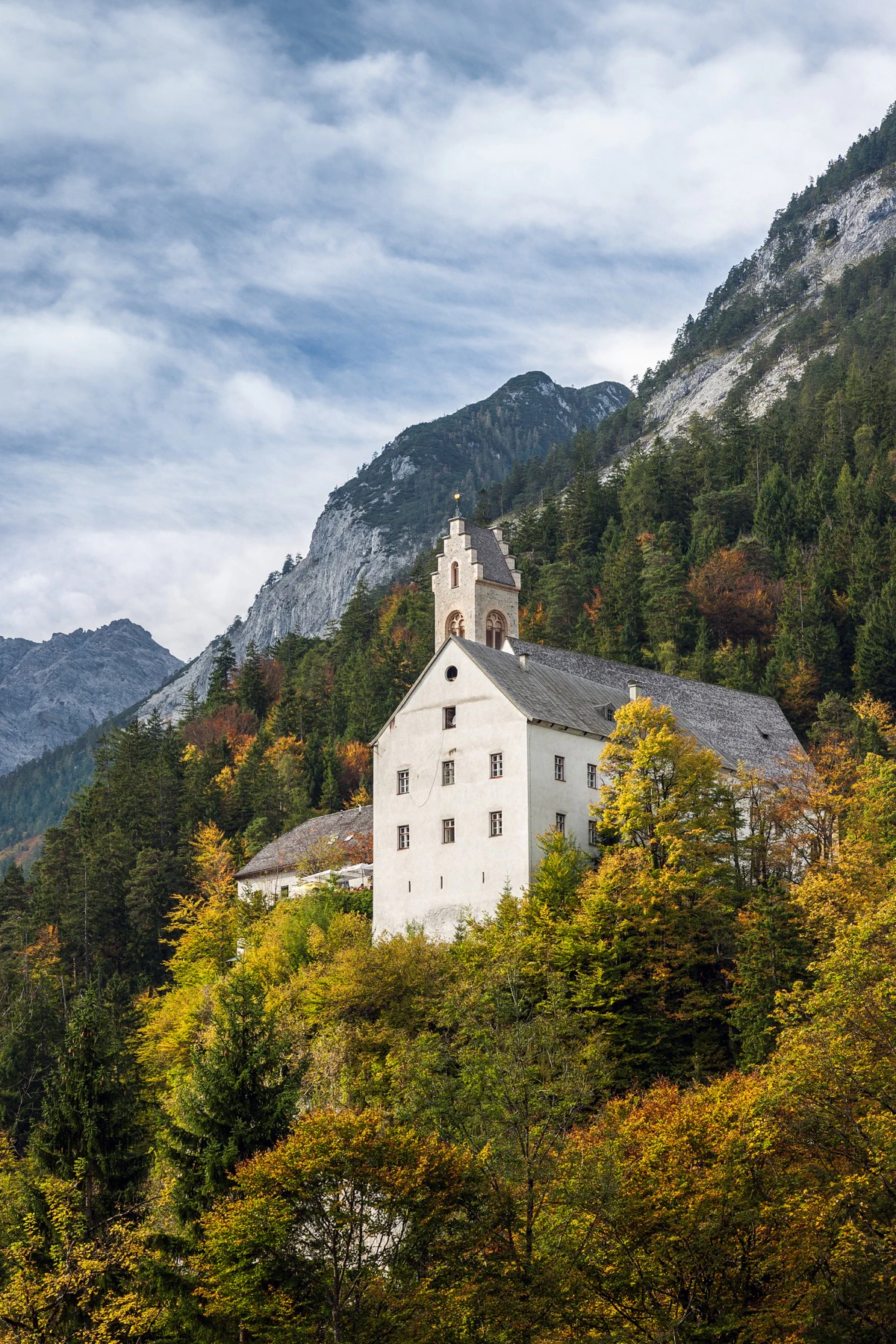
Above the Wolfsklamm near Stans, St. Georgenberg brings together mountain pilgrimage and Benedictine prayer. A diocesan publication says a blood miracle is reported to have occurred during worship in 1310 and identifies a chapel built in 1977 to remember it. Its cautious wording is the appropriate starting point. [FIE-01; FIE-02]
A reported medieval event
The diocesan text says the miracle is said to have occurred in 1310. [FIE-01]
A later memorial
The Holy Blood chapel dates to 1977 in that account. [FIE-01]
A wider sacred landscape
The place’s pilgrimage history includes Saint George and Marian devotion as well as the blood tradition. [FIE-01]
Explore the chapters
The mountain comes before the miracle story
The diocesan publication places the church on a rocky spur above the gorge and identifies Rathold of Aibling as the traditional tenth-century founder and hermit. It recounts a chapel dedicated to Saint George with family support. This longer setting matters: the site’s religious identity is not reducible to a single alleged event in 1310. [FIE-01]
What the 1310 source actually says
The inspected diocesan text gives a brief, explicitly qualified reference to a blood miracle during worship. It does not reproduce a contemporary witness account or describe verified quantities, laboratory observations, or a full investigation. A fuller dramatic narrative would require additional source work; the short official account should not be expanded with invented dialogue or measurements. [FIE-01]
How Catholics understand Eucharistic blood
Catholic doctrine says consecrated wine becomes Christ’s blood in substance while ordinary appearances remain. The whole Christ is present sacramentally under either species. A visible change associated with the 1310 tradition would therefore be an additional phenomenon, not the normal meaning of every Mass. [EX-01]
The blood language directs devotion toward Christ’s saving self-gift. It does not make a pilgrimage object a mechanism for producing wonders, nor does it remove the need to examine a particular material claim. The belief and the reported event have different evidential foundations. [EX-01; FIE-01]
Three buildings, several layers of memory
The diocesan account dates the present main church’s completion to 1735, describes Our Lady under the Linden as arising around 1240, and identifies the Holy Blood chapel of 1977. These are distinct building histories. The recent chapel commemorates the medieval report; it should not be presented as architecture preserved unchanged from the alleged event. [FIE-01]
Benedictine care gives pilgrimage continuity
The official abbey site establishes the present Benedictine institution, while the diocesan description places prayer and hospitality within the site’s pilgrimage life. This is a concrete religious setting, not merely a location pinned on a miracle map. Present custody of the sanctuary, however, does not establish custody of an authenticated event specimen. [FIE-01; FIE-02]
Why the careful grammar should remain
The phrase indicating a miracle is said to have occurred preserves a distinction between tradition and demonstrated history. Replacing it with scientifically proved or formally authenticated would change the source’s claim. No inspected formal decree or material report warrants that upgrade. [FIE-01; FIE-02]
Where deeper research should begin
The earliest narrative, any episcopal or monastic inquiry, and the history of any object associated with the event are the next useful targets. The present sources support a longstanding pilgrimage place and a commemorated Eucharistic tradition. They leave the reported physical transformation unresolved rather than disproving the place’s religious significance. [FIE-01; FIE-02]
Catholic reflection & discussion
Hold wonder and careful questions together
Notice what this account awakens in you: hope, curiosity, gratitude, or a difficult question. Give that response room while examining what the sources actually support.
These editorial prompts invite reflection on the article. They are distinct from Church teaching and the evidence findings.
Pause and reflect
- What makes this account meaningful to you, and which part would you most want to understand better?
- How do the article's evidence and its Catholic interpretation answer different questions?
- What response might this reading invite in ordinary life, even while a historical or scientific question remains open?
Discuss with family or a group
Choose questions suited to your readers' ages and experiences. Anyone can pass or keep a response private.
- Let each person describe what surprised them before discussing whether they found the account convincing.
- Pick one precise claim. What supports it, what remains uncertain, and what would a stronger source need to show?
Questions people ask
Open any question for a fuller answer and its sources.
Is Fiecht the same institutional setting as St. Georgenberg?
Is the Holy Blood chapel medieval?
The inspected diocesan publication dates that commemorative chapel to 1977. [FIE-01]
Does the source state the event as an established fact?
Its wording is explicitly qualified: the blood miracle is said to have occurred in 1310. [FIE-01]
What the evidence can establish
Evidence verdict: unresolved
Does evidence establish that consecrated wine visibly became blood at Fiecht/St. Georgenberg in 1310?
A Diocese of Innsbruck publication records that a blood miracle is said to have occurred in 1310 and documents the later commemorative chapel. Its cautious grammar supports tradition and commemoration, not a verified transformation or object chain.
Church or institutional status
Abbey tradition and commemoration
- Authority
- Diocese of Innsbruck and St. Georgenberg-Fiecht Benedictine Abbey
- Scope of the finding
- Diocesan reception, commemorative chapel, and current abbey custody
- Limits of the finding
- No formal authenticity decree was located in the available sources.
Sources and notes
Back to the overviewSource labels describe a document's type and role, not the strength of a claim. Where provided, notes explain its use, access limits, and outstanding checks.
- FIE-01Diocese of Innsbruck publication on St. Georgenberg/Fiecht (opens in a new tab)Official source
Says the blood miracle is reported to have occurred in 1310 and records a chapel erected in 1977 to commemorate it. What it does not establish: The wording is explicitly cautious and no primary inquiry, custody chain, or material report is reproduced.
Confirms the current official Benedictine custodian and site identity. What it does not establish: Legal/custodial identity does not authenticate the miracle claim.
- EX-01Catechism of the Catholic Church, 1373–1381 (opens in a new tab)Official sourceCited in this file
Read the source note for the passage used and any limits on what it supports.
Official teaching on the Real Presence, transubstantiation, reservation, and Eucharistic worship; general doctrine, not a ruling on this reported event.
Corrections and updates
Expanded this file with a sourced narrative, 7 chapters and 4 answers to common questions. The existing evidence verdict label and institutional status are retained. Independent human review remains pending.