
Start here
The story, in brief
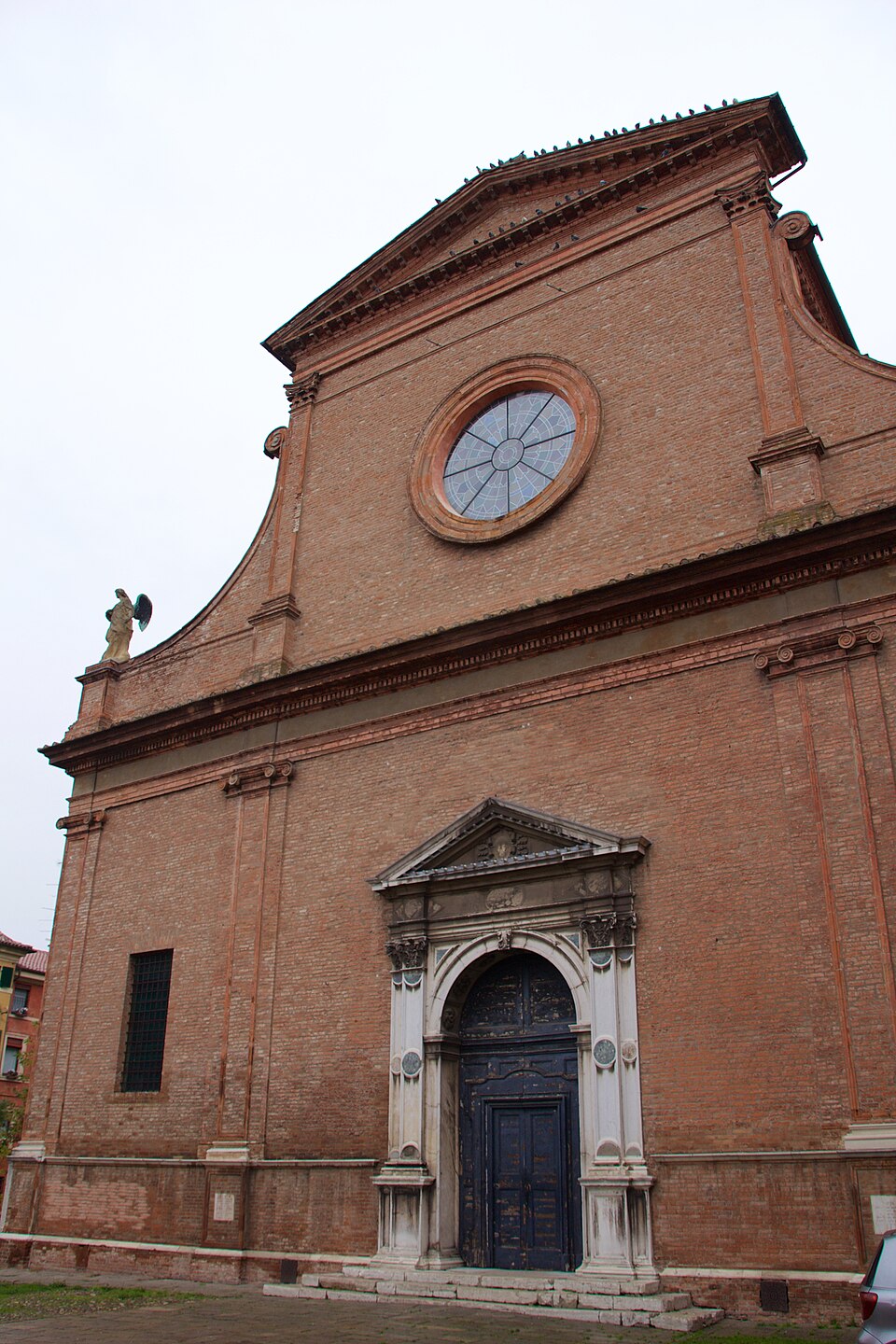
Ferrara’s received account says that when a priest broke the host at Easter Mass in 1171, blood marked the small vault above the altar. The remembered surface was later incorporated into a much larger basilica. Here the story is written not only in texts but into the architecture of a place of worship. [FER-01; FER-03]
A specific reported moment
The tradition locates the event at the breaking of the host on Easter Sunday. [FER-02; FER-03]
An early literary lead
The bishops’ heritage article quotes a reference attributed to Gerald of Wales roughly twenty-five years later. [FER-03]
A relocated setting
The small vault was incorporated into the later basilica, according to the heritage account. [FER-03]
Explore the chapters
The Easter Mass in the sanctuary’s account
The custodian dates the received event to 28 March 1171 and names Pietro da Verona as the priest celebrating with other canons. The extraordinary claim is that blood issued from the broken host and reached the plaster above. These are details of the sanctuary tradition, not a modern material identification of a surviving stain. [FER-02; FER-03]
The host is broken; Christ is not divided
Catholic teaching explicitly holds that breaking the Eucharistic bread does not divide Christ, who is whole in each part while the appearances subsist. Ferrara’s dramatic setting at the fraction therefore relates to a precise doctrinal point: the sacramental gift is not understood as cutting Christ into biological portions. [EX-01]
The reported visible blood would be an additional sign of Christ’s self-gift. It is not what Catholics expect to observe whenever a host is broken, and it is not required for their belief in the Real Presence. The physical event must be assessed separately. [EX-01; FER-03]
A literary reference close to the tradition’s beginning
The Italian bishops’ heritage article identifies a passage in Gemma ecclesiastica attributed to Gerald of Wales, about twenty-five years after the event. It connects a Eucharistic change at Ferrara with local religious controversy. That is an important early-text lead, stronger than a purely modern anecdote, but the complete work and manuscript context require direct critical study before every inference is fixed. [FER-03]
How a small vault survived a larger church
The heritage account says the old vault was transferred carefully into the new Renaissance basilica from 1501. Its later setting includes a small shrine structure associated with Alessandro Balbi around 1594. This is a history of relocation and architectural framing. A moved surface’s material history needs its own conservation documentation; its present position is not the original arrangement of 1171. [FER-03]
The name remembers a river crossing
The church’s name refers to a ford across an earlier course of the Po. The diocesan and heritage histories place the sanctuary within that older landscape, then describe later rebuilding and artistic work. The alleged event became one layer of a site with a longer history, rather than the sole reason anything existed there. [FER-01; FER-03]
A shrine that teaches through art and worship
The official heritage page describes pastoral teaching, pilgrimage, confession, and works of charity alongside the basilica’s art. Successive custodial communities and later papal visits document substantial ecclesial reception. These are meaningful facts about what the shrine does; they are not substitute evidence for a physical transformation in the twelfth century. [FER-01; FER-03]
What remains open in the material claim
No inspected contemporary witness dossier, authenticated event sample, or controlled study establishes that human blood issued from a host. The early literary lead and the transferred vault deserve further historical work, with material findings scoped to what was actually sampled. The case remains unresolved on supernatural cause while its devotional and architectural history is substantial. [FER-01; FER-02; FER-03]
Catholic reflection & discussion
Hold wonder and careful questions together
Notice what this account awakens in you: hope, curiosity, gratitude, or a difficult question. Give that response room while examining what the sources actually support.
These editorial prompts invite reflection on the article. They are distinct from Church teaching and the evidence findings.
Pause and reflect
- What makes this account meaningful to you, and which part would you most want to understand better?
- How do the article's evidence and its Catholic interpretation answer different questions?
- What response might this reading invite in ordinary life, even while a historical or scientific question remains open?
Discuss with family or a group
Choose questions suited to your readers' ages and experiences. Anyone can pass or keep a response private.
- Let each person describe what surprised them before discussing whether they found the account convincing.
- Pick one precise claim. What supports it, what remains uncertain, and what would a stronger source need to show?
Questions people ask
Open any question for a fuller answer and its sources.
Did the story concern a stain on cloth?
The Ferrara tradition concerns marks on the small vault above the altar, later incorporated into the basilica. [FER-03]
Is there an early written reference?
The bishops’ heritage article quotes a passage attributed to Gerald of Wales about twenty-five years after the event; the full critical context still needs inspection. [FER-03]
Has the old vault always been in its current place?
No. The heritage account describes its transfer into the later basilica. [FER-03]
Do papal visits establish a laboratory conclusion?
They establish ecclesial reception and the shrine’s importance. They do not identify the material or prove a supernatural origin. [FER-01]
What the evidence can establish
Evidence verdict: unresolved
Does inspectable evidence establish that blood physically issued from a consecrated host at Santa Maria in Vado in 1171?
Official shrine and archdiocesan sources document the received 1171 account, the continuing sanctuary, and later papal visits. The inspected sources do not supply a contemporary witness record, a surviving event sample, or controlled material evidence.
Church or institutional status
Diocesan sanctuary
- Authority
- Archdiocese of Ferrara-Comacchio
- Scope of the finding
- Current diocesan sanctuary status and devotional reception at Santa Maria in Vado
- Limits of the finding
- No inspected decree with a defined authentication scope was located.
Sources and notes
Back to the overviewSource labels describe a document's type and role, not the strength of a claim. Where provided, notes explain its use, access limits, and outstanding checks.
Repeats the 1171 narrative and documents the church's continuing diocesan and papal devotional importance. What it does not establish: A current diocesan summary is institutional reception, not a primary 1171 source or scientific report.
Confirms the present sanctuary and its custodial presentation of the reported event. What it does not establish: Custody of the site does not establish that a physical transformation occurred.
Identifies Santa Maria in Vado and its association with the received Eucharistic account. What it does not establish: Heritage/pastoral description, not source-critical event analysis.
- EX-01Catechism of the Catholic Church, 1373–1381 (opens in a new tab)Official sourceCited in this file
Read the source note for the passage used and any limits on what it supports.
Official teaching on the Real Presence, transubstantiation, reservation, and Eucharistic worship; general doctrine, not a ruling on this reported event.
Corrections and updates
Expanded this file with a sourced narrative, 7 chapters and 4 answers to common questions. The existing evidence verdict label and institutional status are retained. Independent human review remains pending.