
Start here
The story, in brief
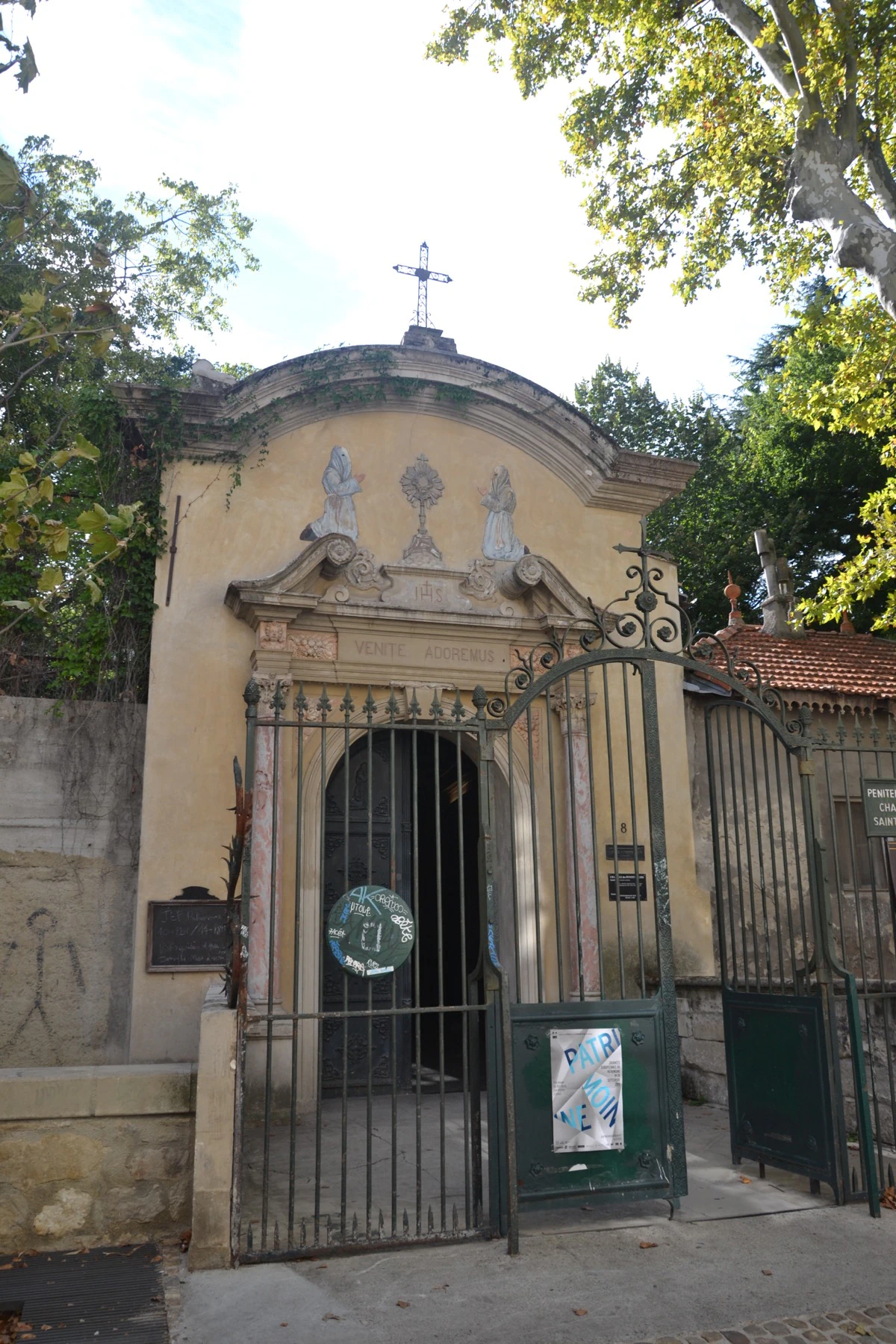
The Grey Penitents of Avignon remember a 1433 flood in which the waters reportedly parted inside their chapel so members could reach the Eucharist on dry ground. The Diocese of Avignon preserves the account. It also tells a wider story about lay Catholics who joined prayer to works of charity across the city. [AVI-01]
A flood-separation tradition
The 1433 account is preserved in diocesan memory, without contemporary hydrological measurements in this record. [AVI-01]
Laypeople at its center
The penitents are a confraternity, not simply a group of miracle witnesses. [AVI-01]
Worship continues
The documented religious practice is Eucharistic adoration and annual commemoration. [AVI-01]
Explore the chapters
The path through the water
The diocesan account says the chapel flooded and the confrères could enter on dry ground to rescue the Blessed Sacrament. The remarkable claim is localized: water allegedly stood apart inside an inundated building. That is more precise than saying the entire Rhône stopped or the whole city remained dry, neither of which the inspected source establishes. [AVI-01]
A community older than the flood
The diocese traces the confraternity to 1226 and an expiatory ceremony after Avignon’s capitulation at the end of the Albigensian campaign. Its history is therefore tied to a difficult political and religious setting as well as to worship. The 1433 story reinforced an already existing Eucharistic identity; it did not create the confraternity from nothing. [AVI-01]
What adoration means in Catholic life
The Catechism describes Christ’s Eucharistic presence as real and substantial, distinct from merely remembering an absent teacher. Adoration outside Mass follows from the belief that this presence continues while the Eucharistic appearances subsist. Silence, prayer, and careful reservation are responses to that presence. [EX-01]
This helps explain why the penitents’ narrative centers on reaching the sacrament in danger. It does not turn the Eucharist into a guarantee against flooding. An alleged intervention in water movement remains a separate claim about this particular event. [EX-01; AVI-01]
More than a dramatic rescue
The diocesan history describes confraternities distinguished by colors and associated with care for the sick, prisoners, the dead, and people in poverty. The grey habit belongs to a life of penitence and service, not a special rank of clergy. This broader context prevents the community’s history from being reduced to one spectacular afternoon. [AVI-01]
Suppression and a later return
The same account records suppression of the confraternities in 1792 and the later reconstitution of the Grey, Black, and White groups under the Restoration. That interruption should remain visible when describing centuries of devotion. A tradition can endure through recovery and rebuilding without every institutional practice continuing uninterrupted. [AVI-01]
Commemoration carries meaning, not measurements
The annual penitential remembrance and current diocesan listing document reception of the flood story. They do not supply the chapel’s water levels, entry conditions, eyewitness comparison, or a reconstruction of the event. The source supports what the community remembers and practices, while leaving the physical separation of water unresolved. [AVI-01]
A useful way to approach the chapel
The strongest questions concern how the account was first recorded, how it entered the confraternity’s observance, and how worship and service shaped its members. Establishing supernatural water movement would require a much stronger event record than the modern diocesan summary provides. Visitors can understand the community’s purpose while recognizing that difference. [AVI-01; EX-01]
Catholic reflection & discussion
Hold wonder and careful questions together
Notice what this account awakens in you: hope, curiosity, gratitude, or a difficult question. Give that response room while examining what the sources actually support.
These editorial prompts invite reflection on the article. They are distinct from Church teaching and the evidence findings.
Pause and reflect
- What makes this account meaningful to you, and which part would you most want to understand better?
- How do the article's evidence and its Catholic interpretation answer different questions?
- What response might this reading invite in ordinary life, even while a historical or scientific question remains open?
Discuss with family or a group
Choose questions suited to your readers' ages and experiences. Anyone can pass or keep a response private.
- Let each person describe what surprised them before discussing whether they found the account convincing.
- Pick one precise claim. What supports it, what remains uncertain, and what would a stronger source need to show?
Questions people ask
Open any question for a fuller answer and its sources.
Did the whole river stop flowing?
The inspected diocesan account concerns a dry passage within the flooded chapel. It does not establish the suspension of the entire river’s flow. [AVI-01]
Are the Grey Penitents priests?
The diocese describes penitents as lay Catholics organized for prayer, penitence, and charity. [AVI-01]
Has the devotion been uninterrupted institutionally?
The diocesan history includes suppression in 1792 and later reconstitution. That break should not be erased. [AVI-01]
Does the Church listing authenticate the hydrology?
It establishes the confraternity and its received tradition. No contemporary physical record or formal authentication decree is supplied. [AVI-01]
What the evidence can establish
Evidence verdict: unresolved
Does evidence establish the 1433 claim that flood water stood apart inside the Grey Penitents' chapel around the exposed Eucharist?
The Diocese of Avignon officially presents the 1433 flood-separation narrative and documents annual commemoration and the current confraternity. The inspected source supplies institutional memory, not contemporary measurements or physical evidence.
Sources: [AVI-01]
Church or institutional status
Diocesan confraternity commemoration
- Authority
- Diocese of Avignon
- Scope of the finding
- Official diocesan confraternity status and annual commemoration of the 1433 tradition
- Limits of the finding
- No formal authentication decree or contemporary physical record is documented.
- Official sources
- [AVI-01]
Sources and notes
Back to the overviewSource labels describe a document's type and role, not the strength of a claim. Where provided, notes explain its use, access limits, and outstanding checks.
Presents the 1433 flood-separation tradition and documents the current confraternity and annual commemoration. What it does not establish: A diocesan devotional history is not a contemporary hydrological record or controlled physical observation.
- EX-01Catechism of the Catholic Church, 1373–1381 (opens in a new tab)Official sourceCited in this file
Read the source note for the passage used and any limits on what it supports.
Official teaching on the Real Presence, transubstantiation, reservation, and Eucharistic worship; general doctrine, not a ruling on this reported event.
Corrections and updates
Expanded this file with a sourced narrative, 7 chapters and 4 answers to common questions. The existing evidence verdict label and institutional status are retained. Independent human review remains pending.