
Start here
The question, explored through Catholic faith
A faint image of a wounded man appears on a long linen cloth. Seen in a photographic negative, its features become strikingly recognizable. Could this be the cloth that covered Jesus after the Crucifixion? The Shroud of Turin remains compelling because one object brings together art, history, laboratory science, and the central Christian claim about death and resurrection.
The strongest widely cited direct dating result is the 1988 radiocarbon investigation, published in Nature in 1989, which concluded that the tested linen was medieval. Questions about sampling and image formation deserve careful examination, but an unanswered image question does not cancel a date by itself. [SH-01]
The Catholic explanation adds another distinction: the cloth can serve as a focus for meditation on Christ’s Passion without its historical authenticity becoming an article of faith. Understanding the controversy requires keeping the cloth’s age, the formation of its image, the identity of the figure, and its devotional meaning separate.
The object and the attribution differ
The cloth is a real, documented object in Turin. Identifying it as Jesus’s burial cloth is an additional historical claim. [SRC-02]
The medieval date remains serious evidence
Later objections and alternative methods must address the radiocarbon findings directly; a list of mysteries does not do that.
Catholic devotion permits scientific inquiry
John Paul II explicitly entrusted the scientific questions to researchers rather than declaring their answer as doctrine. [SH-03]
Explore the chapters
What exactly is on the cloth?
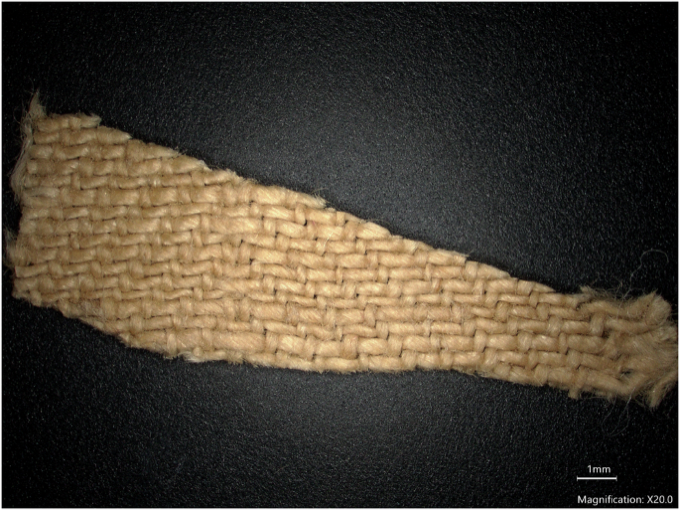
The custodian describes a long linen sheet with a herringbone weave and faint frontal and dorsal images of a man bearing signs associated with crucifixion. The cloth is roughly 4.4 meters long and a little over a meter wide. Its image is sufficiently subtle that photography plays a major part in how most people encounter it. [SRC-02]
The name connects it with a proposed function: a burial shroud. That function is part of the historical interpretation to be examined. A depiction of wounds compatible with a Passion narrative would not, by itself, establish that the fabric covered Jesus or that it existed in the first century.
An investigation must therefore begin by identifying the feature under discussion. The linen, the body image, alleged blood areas, later damage, and repairs need not have the same origin or provide the same evidence. A finding about one region cannot simply be assigned to every other part of the cloth.
How far back can its history be followed?
The 1989 Nature paper locates the Shroud’s clearly recorded emergence in fourteenth-century France. An attribution to Jesus requires a connection reaching much further back. The difference between the earliest secure record and the date claimed for the object is a central historical problem. [SH-01]
Proposed earlier identifications need more than a resemblance between a description and the Turin image. A source must be dated and translated accurately; the described object must be identifiable; transfers and changes in custody need support. An account written much later can preserve a tradition without supplying contemporary evidence for every event it narrates.
Missing records do not demonstrate that an earlier history was impossible. They also cannot be filled by joining attractive possibilities into a continuous route and then citing the route as proof. The honest distinction is between a documented connection, a plausible proposal, and an unsupported identification.
The cloth’s religious reception is easier to document in modern times. The custodian’s account of the 2015 exhibition records its presentation in Turin Cathedral and Pope Francis’s visit. Those events establish public devotion and custody, not the object’s first-century origin. [SH-09]
What did the 1988 radiocarbon test find?
Three laboratories—Arizona, Oxford, and Zurich—analyzed portions taken from one sampled area. The published combined result placed the linen in AD 1260–1390 at at least 95 percent confidence. The investigators also analyzed control textiles and concluded that the Shroud sample was medieval. Three laboratories did not mean three independently selected areas across the entire cloth. [SH-01]
The result is substantial evidence against a first-century date for the sampled linen. A serious challenge must address why that material would fail to represent the cloth’s original fabric or why the measurement or analysis would be misleading. Merely observing that carbon dating can have complications does not show that the complications occurred here.
The question also has an important boundary: dating linen does not tell a researcher how an image was produced. A medieval cloth could still present a difficult technical puzzle. Conversely, a proposed first-century date would not identify whose image appears on it. Chronology, mechanism, and personal identity are connected questions with different evidentiary requirements.
Could repairs or contamination have distorted the date?
These are legitimate hypotheses to investigate, particularly because the original material came from one location. But an effective explanation must identify the proposed additional material, show that it was present in the tested sample, explain how it affected the measurement, and account for the magnitude of the proposed age shift.
The Oxford laboratory’s account describes tests of one carbon-monoxide contamination proposal and reports no significant reaction under the conditions tested. That result addresses a particular mechanism and experiment. It should not be expanded into proof that every conceivable contaminant has been eliminated. [SH-08]
A 2019 analysis by Casabianca and colleagues argued that the released raw radiocarbon data were not homogeneous and that the dating procedure deserved reconsideration. This is a statistical criticism, not a new laboratory date placing the cloth in the first century. Its force must be evaluated against the data and the statistical assumptions involved. [SH-06]
The difference between a possible concern and a demonstrated defect is essential. A reader should be able to see the evidence supporting the proposed repair or contaminant, rather than encountering the objection only as a confident assertion that the original test has been overturned.
What does the 2026 study add?
In April 2026, Rachel Freer-Waters and A. J. Timothy Jull published an examination of two retained Arizona fragments from the 1988 sampling. They reported textile characteristics consistent with the main cloth and did not observe cotton fibers in those fragments. Their analysis therefore weighs against presenting a different repair fabric as an established explanation of the radiocarbon result. [SH-07]
The limits are specific. The study produced no new radiocarbon dates. Its scanning electron microscopy examined a small portion of one fragment, and the authors acknowledged that this might not represent either fragment in full. A finding of no significant surface contamination in that examined portion should not become a claim that the whole Shroud was exhaustively cleared of every possible contaminant. [SH-07]
This is how an evidence account should change when research develops: incorporate the new observation, state which hypothesis it bears on, and preserve the actual sampling limits. An older objection cannot be kept immune from later evidence simply because it has become familiar in popular discussions.
Did scientists determine how the image was made?
The Shroud of Turin Research Project’s 1981 summary reported chemical and optical findings and argued against an ordinary painted image. The team interpreted the image as involving changes in the linen’s surface material and said it had not explained the complete formation process. These are the team’s published conclusions, rather than a declaration that every researcher accepts every interpretation. [SH-04]
The phrase unexplained image is easily stretched beyond its proper meaning. Failure to establish a complete mechanism does not demonstrate that no human process could have produced the image. It also does not identify the image with a resurrection event. Those are additional conclusions requiring additional arguments.
Experiments that reproduce some visual or chemical properties can help evaluate a proposed mechanism. Their value depends on which properties match, which do not, and whether the necessary conditions are independently plausible. Producing a vaguely similar picture is insufficient; requiring an experiment to recreate an entire unknown history before it can teach anything is also unreasonable.
The useful question is therefore specific: which observed feature does this experiment explain, and at what cost in assumptions? That makes competing proposals testable rather than treating mystery itself as the conclusion.
What about newer tests suggesting an ancient cloth?
A 2022 study by De Caro and colleagues used wide-angle X-ray scattering to study structural degradation in a small linen sample. The authors interpreted the result as compatible with an age of about two millennia under specified assumptions about long-term temperature and humidity. This was a different method from radiocarbon dating. [SH-05]
Those assumptions matter because the cloth’s environmental history for the proposed earlier centuries is not established. A measured present-day material property must be related to an aging model before it becomes a calendar-age inference. If the model depends on storage conditions, uncertainty about those conditions belongs in the conclusion.
The authors called for more systematic X-ray investigation of additional samples. Their study therefore supplies a research claim to scrutinize and reproduce, not a direct replacement of the three-laboratory radiocarbon result. It would be misleading to report that a new test simply proved a date around the lifetime of Jesus. [SH-05]
Conflicting methods should not be resolved by selecting whichever answer better fits a preferred story. The relevant comparison concerns sample provenance, calibration, assumptions, uncertainty, and independent replication. A later publication date by itself does not make a technique more reliable.
Would blood, DNA, or “three-dimensional information” identify Jesus?
The STURP summary reports tests interpreted as supporting blood constituents and describes a relationship between image intensity and apparent bodily relief. Those observations, as reported by the team, address properties of sampled material and the image. They do not supply a personal identification. [SH-04]
A three-dimensional rendering is a transformation of measured or assigned image values. To assess its significance, the reader needs to know the transformation, controls, and competing explanations. The existence of a compelling rendering cannot by itself decide whether the cloth contacted a body, when it was made, or whom it depicts.
The same discipline applies to a biological claim. Even a securely identified human biological sample would need a documented connection to the relevant event and authenticated comparison material before a named person could be identified. A blood-group label shared by many people would not bridge that gap.
Claims involving extraordinary ancestry or a supernatural biological signature require much more than a dramatic headline. This article does not treat unverified blood-type or DNA stories as evidence of Jesus’s identity.
What is the Catholic explanation of its importance?
John Paul II’s 1998 address presents the Shroud as a means of contemplating Christ’s suffering and the suffering of humanity. He also states that the Church does not possess a special competence to settle its scientific questions and encourages research without prejudgment. Devotional significance and scientific authentication are deliberately distinguished. [SH-03]
The Gospel of John describes burial cloths in its account of the empty tomb. It does not identify a currently surviving cloth or describe the Turin image. Connecting the Gospel’s objects to this particular artifact requires historical evidence beyond the biblical text. [SH-10]
For Catholics, the object’s religious power lies in directing attention to the Passion, compassion, and hope in resurrection. That explains why a person might find contemplation of the image meaningful while remaining uncertain about its origin. The experience of meaning does not need to masquerade as a laboratory conclusion.
Where does that leave an honest verdict?
The evidence does not establish the Shroud as Jesus’s first-century burial cloth. The medieval radiocarbon result is a major obstacle to that claim, and neither uncertainty about image formation nor the existence of later critiques makes the obstacle disappear.
At the same time, identifying the precise image-production process remains a separate research problem. An account can take that problem seriously while giving substantial weight to the medieval dating. It need not create a false choice between an entirely solved fabrication and a scientifically demonstrated miracle.
Progress would come from carefully documented access, representative sampling where authorized, transparent methods, and independent assessment of competing explanations. The medieval radiocarbon result, the disputed aging models, and the incomplete account of the image remain distinct findings. Catholics can contemplate the Passion through the cloth without turning that contemplation into a doctrinal authentication of its origin.
Catholic reflection & discussion
Make room for the question
Bring your own question to this explanation. Take time with the parts that offer understanding and with the parts that still leave you wondering.
These editorial prompts invite reflection on the article. They are distinct from Church teaching and the evidence findings.
Pause and reflect
- Which part of the Catholic explanation helps you understand the question more deeply?
- What objection or uncertainty would you want to discuss with someone you trust?
- What would be a useful next step: reading a source, asking a question, or taking time to reflect?
Discuss with family or a group
Choose questions suited to your readers' ages and experiences. Anyone can pass or keep a response private.
- Invite each person to name one idea they understood and one question they still have. Can everyone finish before the discussion moves to answers?
- Choose one claim together. Is it Church teaching, an interpretation, or a historical or scientific finding? Where does the article explain the difference?
Questions people ask
Open any question for a fuller answer and its sources.
Has the Catholic Church declared it authentic?
John Paul II’s 1998 address leaves the scientific question to research. Catholic custody, public veneration, and a pope praying before the cloth should not be reported as a scientific or doctrinal determination that it covered Jesus. [SH-03]
Has the radiocarbon date been conclusively overturned?
The sources reviewed here do not establish that conclusion. There are published objections, but an objection must explain the result with evidence. The 2026 retained-fragment study also supplies evidence relevant to sample integrity rather than a new first-century date.
Does an unexplained image prove a miracle?
No. An incomplete account of a mechanism leaves a mechanism question open. It does not automatically establish a supernatural cause or identify the person represented.
Do the Gospels mention the Shroud of Turin?
The Gospel account mentions burial cloths. It does not identify the textile now kept in Turin. Establishing that connection requires a separate historical argument. [SH-10]
Would a medieval date disprove the Resurrection?
It would bear on the attribution of this artifact. The Christian claim about Jesus’s Resurrection is not logically identical to the claim that this surviving cloth covered him. Rejecting one proposed relic does not by itself settle the broader historical and theological question.
What the evidence can establish
Finding on the stated question: unresolved
Do the cited evidence and Church statements establish the Shroud as Jesus’s first-century burial cloth?
They do not establish that identity. The 1988 radiocarbon result is substantial evidence for medieval linen; critiques and alternative studies require evaluation within their limits. Catholic veneration does not supply the missing historical authentication.
Sources: [SH-01; SH-03; SH-05; SH-06; SH-07]
This finding addresses the precise question above. It is not a rating of Catholic faith or of the reader's belief.
Catholic teaching and scope
Catholic veneration; scientific authenticity left to research
- Authority
- Catholic Church / official Shroud custodian
- Scope of the teaching
- Custody and devotional presentation of the cloth.
- Limits of this explanation
- Veneration does not establish its date, image mechanism, or identity as Jesus’s burial cloth.
Sources and notes
Back to the explanationSource labels describe a document's type and role, not the strength of a claim. Where provided, notes explain its use, access limits, and outstanding checks.
- SH-01Damon and colleagues — Radiocarbon Dating of the Shroud of Turin, Nature (1989) (opens in a new tab)Peer-reviewed research
Full text reprinted with publisher permission; original DOI 10.1038/337611a0. Dates the sampled linen, not an image-production mechanism.
Custodial description of the cloth and its identification with the object in Turin; not independent proof of the claimed first-century identity.
Explains devotional meaning while leaving scientific questions to researchers.
- SH-04Shroud of Turin Research Project — Summary of conclusions (1981) (opens in a new tab)Reference source
The research team’s own public summary; its interpretations are attributed, not treated as universal present-day consensus.
- SH-05De Caro and colleagues — X-ray Dating of a Turin Shroud’s Linen Sample, Heritage (2022) (opens in a new tab)Peer-reviewed research
Original WAXS study. Age inference depends on assumed long-term temperature and humidity history.
- SH-06Casabianca and colleagues — Radiocarbon Dating of the Turin Shroud: New Evidence from Raw Data (2019) (opens in a new tab)Peer-reviewed research
Statistical critique; the publisher-deposited abstract was checked. It proposes reconsideration, not a measured first-century date.
- SH-07Freer-Waters and Jull — Analysis of textile fragments from the 1988 radiocarbon samples (2026) (opens in a new tab)Peer-reviewed research
Full original study of retained Arizona fragments, including explicit limits on the small SEM sample. No new radiocarbon dating.
First-party laboratory response to carbon-monoxide contamination claims; describes tested conditions and limits.
Historical account of the 2015 exhibition and papal visit; past event information, not a current visiting schedule.
The Gospel’s account of burial cloths; it does not identify a surviving museum or cathedral object.
Corrections and updates
Expanded the brief overview into a source-mapped explanation with 10 substantive sections and 5 common questions. Clarified the Catholic teaching, the evidence and objections, and the exact question assessed by the verdict. Independent human review remains pending.